
What is a personal fall arrest system, and what are its parts?
A personal fall arrest system is the equipment that catches a worker who has already fallen. OSHA defines it as an anchorage, connectors and a body harness, which may include a lanyard, deceleration device, lifeline or a combination of these. The trade calls it the ABCs: A for anchorage, the point the system hangs from, rated for 5,000 pounds; B for body support, a full-body harness with a D-ring between the shoulder blades; C for connectors, the lanyard or self-retracting lifeline with its snap hooks that links the two. A fourth letter, D for descent and rescue, is not in the definition but is in the rule, because the employer must provide for prompt rescue after a fall. Each part has to meet the numbers in 1926.502(d), and the whole system has to be rigged so the worker neither free falls more than 6 feet nor hits anything below.
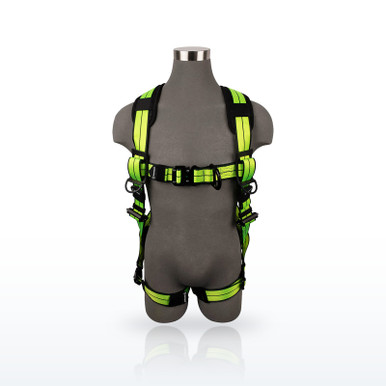
Why is it a system and not a harness? A harness alone does nothing. It has to be connected to something that holds, through something that limits the force, and the whole chain has to be short enough that the worker stops before the ground. Most fall arrest failures are not broken parts; they are a sound harness clipped to an anchor that pulled out, a lanyard too long for the clearance, or a snap hook on a D-ring it could roll out of. OSHA wrote the definition and the criteria as a system so that every link is covered.
What are the parts, and what does each one have to meet?
The definition names the parts. Paragraph (d) gives each one a number.
What does the whole system have to do in a fall?
- Limit the maximum arresting force on the worker to 1,800 pounds with a body harness.
- Be rigged so the worker can neither free fall more than 6 feet nor contact any lower level.
- Bring the worker to a complete stop and limit the deceleration distance to 3.5 feet.
- Have enough strength to withstand twice the potential impact energy of a worker free falling 6 feet, or the free fall the system permits, whichever is less.
- A system that meets the test criteria in Appendix C to Subpart M is deemed to comply for a combined worker and tool weight under 310 pounds; above that the employer has to modify the criteria, which in practice means the manufacturer’s stated capacity.
What are the use rules once the parts are right?
- Inspect before each use for wear, damage and other deterioration; defective components come out of service.
- Any component subjected to impact loading comes out of service immediately and stays out unless a competent person determines it is undamaged and suitable for reuse.
- Harnesses and components are used only for employee protection, never for hoisting materials.
- Do not attach to guardrail systems or to hoists, except as other subparts allow.
- Provide for prompt rescue, or make sure the worker can rescue themselves.
Which ANSI standard covers each part?
OSHA sets the minimums; the ANSI/ASSP Z359 series is what manufacturers test and label to, and the label is how you tell what a given part was built for. Z359.11 is full-body harnesses. Z359.12 is connecting components: snap hooks, carabiners and D-rings, with the 3,600-pound gate rating. Z359.13 is energy-absorbing lanyards. Z359.14 is self-retracting devices, Class 1 for overhead anchorage and Class 2 for anchorage at or below the D-ring and over an edge. Z359.18 is anchorage connectors: beam clamps, straps, roof anchors, tie-off adapters. Z359.15 covers vertical lifelines and rope grabs, and Z359.3 positioning and restraint lanyards, which are not fall arrest. Each product in the band shows the standard its manufacturer lists for it.
ANSI/ASSP Z359 series titles and scopes as published by ASSP and cited on the manufacturer spec sheets for the products below. OSHA does not incorporate Z359 by reference in Subpart M.Harnesses, lanyards, SRLs and anchorage connectors by ANSI standard
32 items · prices liveThe ANSI standard shown is the one each manufacturer lists for the item. Capacity, length and connector type are on the product page. Free shipping on orders over $199.
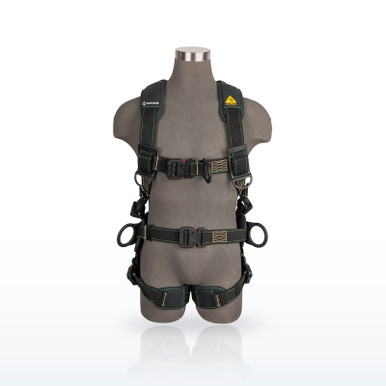
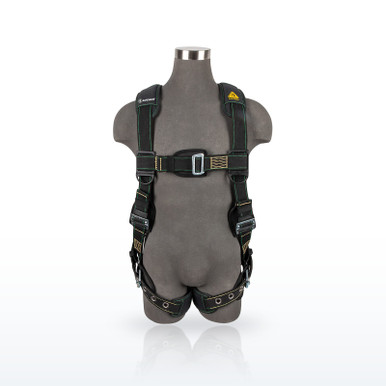
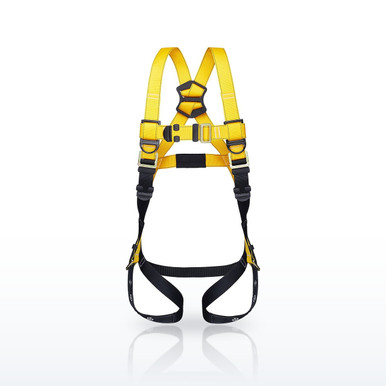
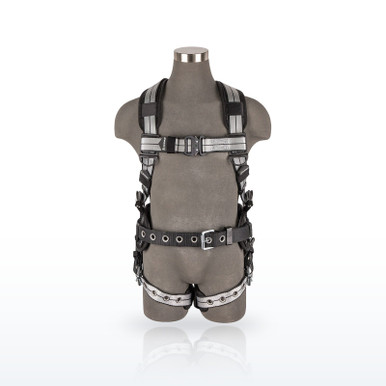
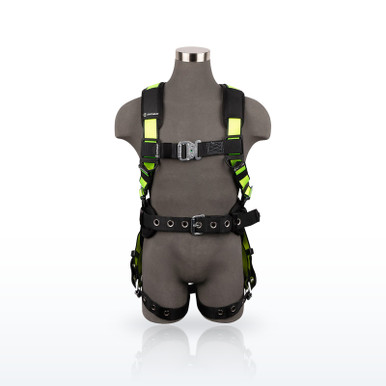
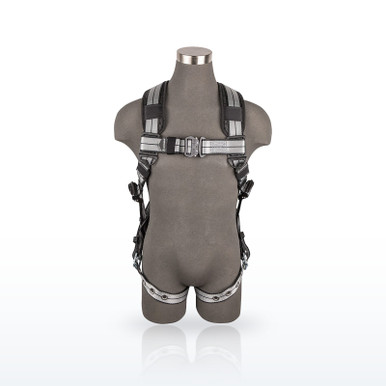
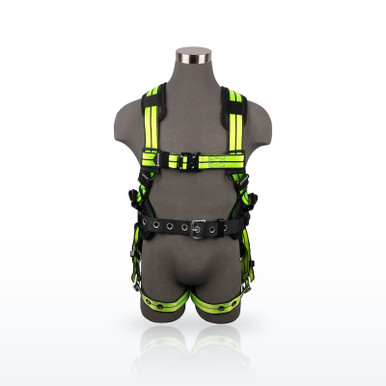
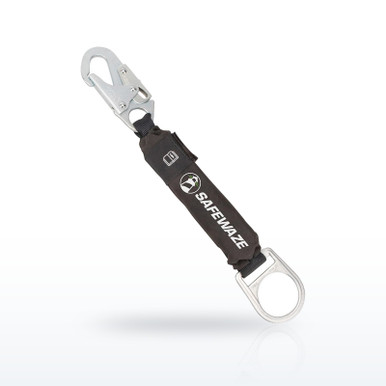
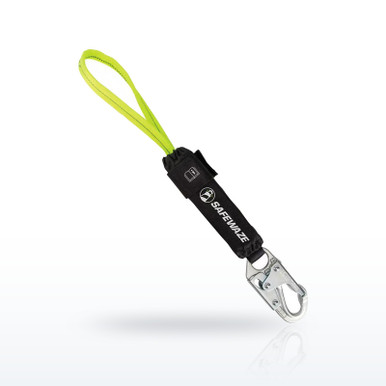
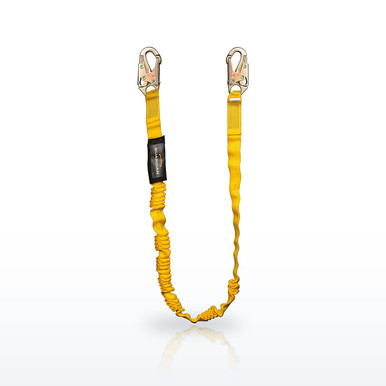
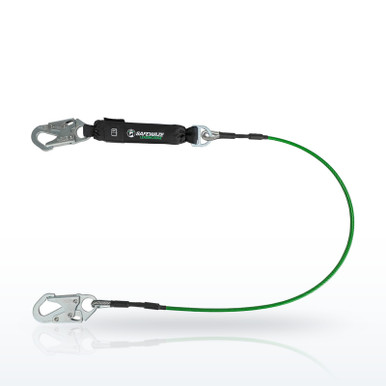
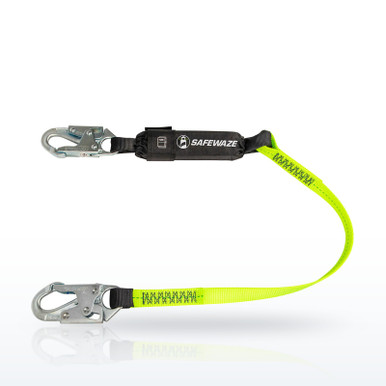
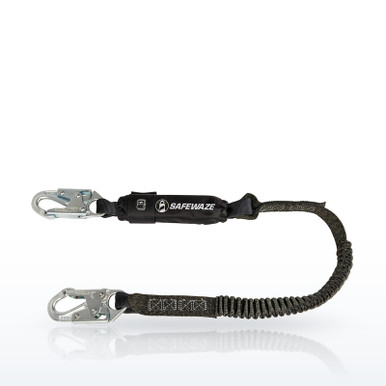
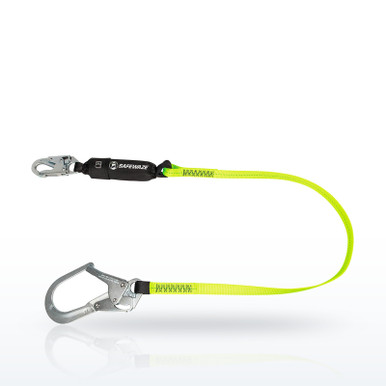
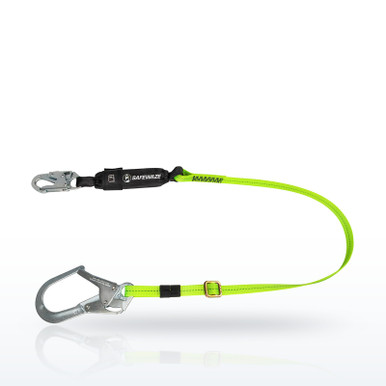
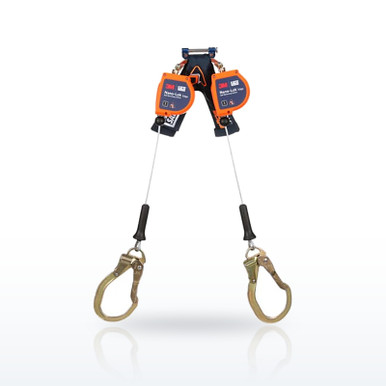
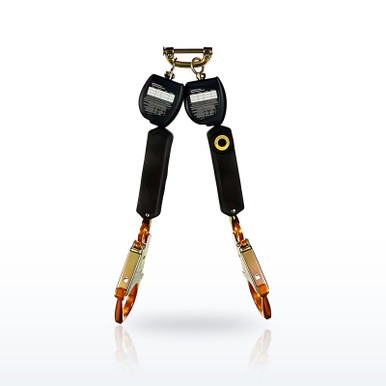
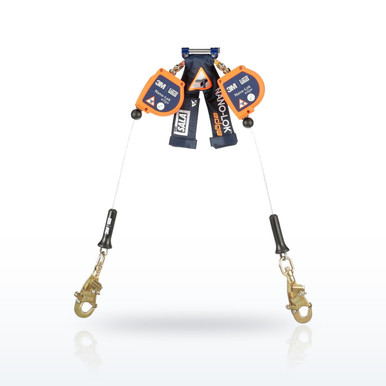
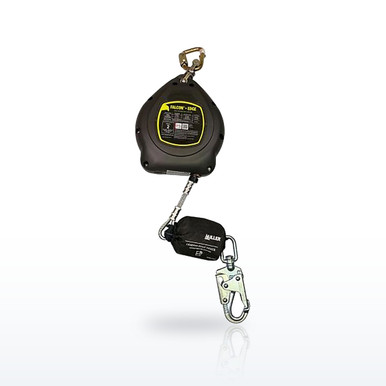
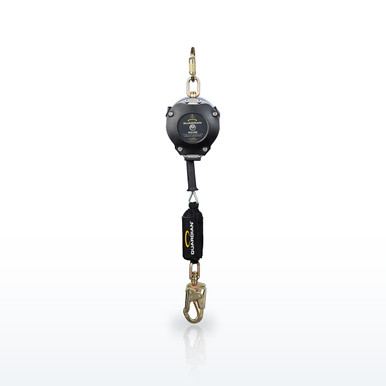
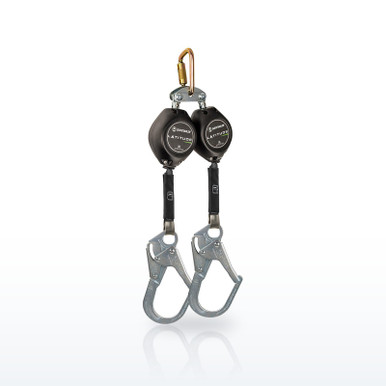
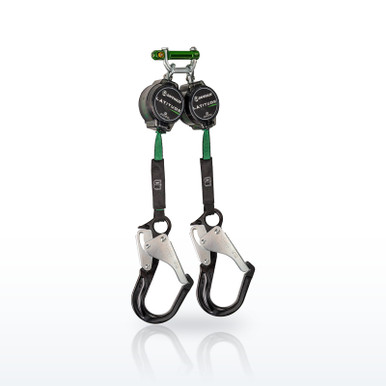
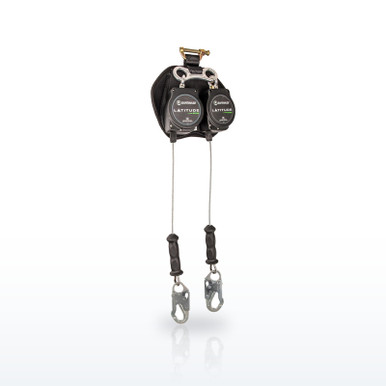
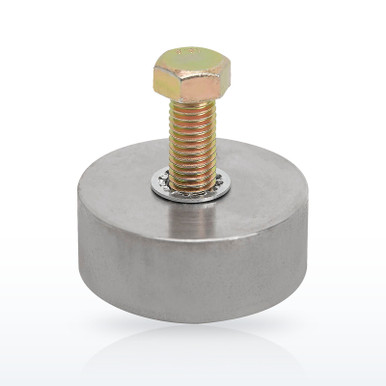
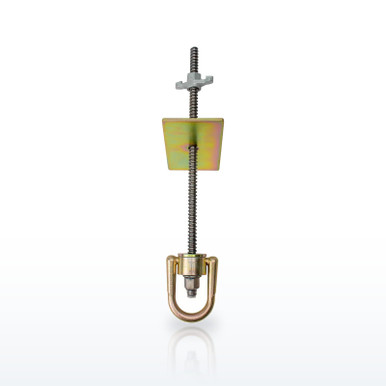
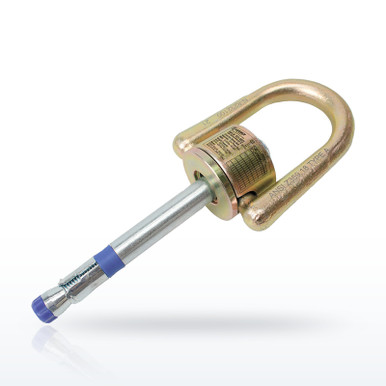
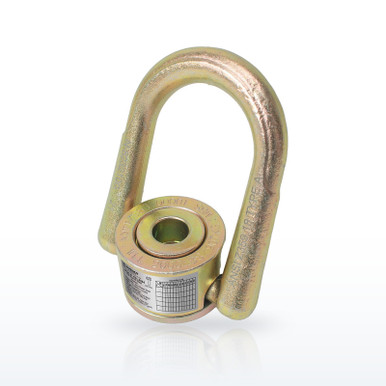
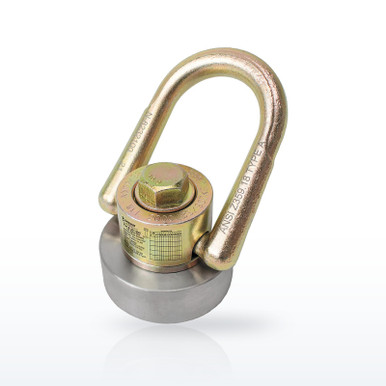
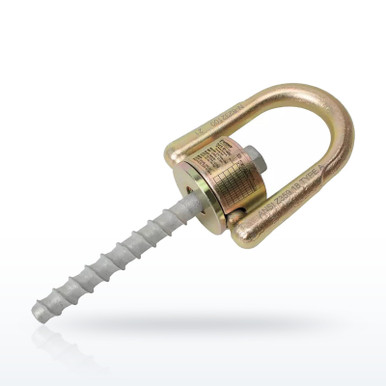
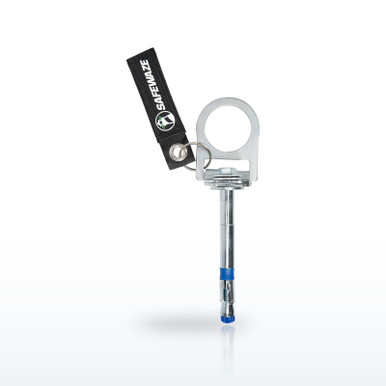
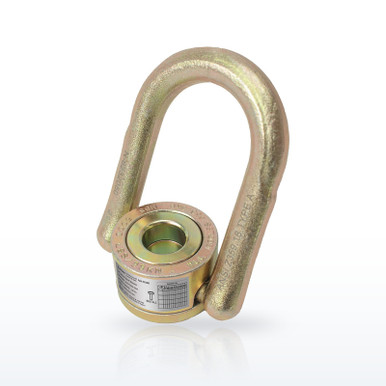
Carabiners and snap hooks (ANSI Z359.12) and fall protection kits that bundle a harness, lanyard and anchor are in the fall protection finder.
Questions people ask
What are the three parts of a personal fall arrest system?
Anchorage, connectors and a body harness, per the OSHA definition. A lanyard, deceleration device and lifeline may be included (1926.500(b)).
What are the ABCs of fall protection?
A, anchorage; B, body support (the harness); C, connectors (lanyard or SRL and hooks). Many programs add D for descent and rescue, which 1926.502(d)(20) requires the employer to provide for.
How much weight must an anchor hold?
5,000 pounds per worker attached, or it must be part of a system with a safety factor of at least two designed under a qualified person (1926.502(d)(15)).
What is the maximum arresting force?
1,800 pounds with a body harness (1926.502(d)(16)(ii)).
How far can you free fall?
No more than 6 feet, and the system must stop you within 3.5 feet of deceleration and before you contact a lower level (1926.502(d)(16)(iii) and (iv)).
Can a body belt be part of a fall arrest system?
No, not since January 1, 1998. Body belts are allowed in positioning device systems (1926.502(d) introductory text and (e)).
What is the difference between a lanyard and a lifeline?
A lanyard connects the harness to the anchorage or to a lifeline and has a connector at each end. A lifeline hangs from an anchorage (vertical) or stretches between two (horizontal) and is what the lanyard or rope grab connects to (1926.500(b)).
Do the same rules apply in general industry?
Yes, with the same numbers: 5,000-pound anchorage, 1,800-pound force, 6-foot free fall, 3.5-foot deceleration, body belts prohibited for arrest, prompt rescue (1910.140(c)(13), (d)(1), (d)(2), (d)(3) and (c)(21)).
Standards and ratings on this page are as published in the documents named and by the manufacturers named. The employer’s hazard assessment and written program decide what applies at a given workplace. Verify a rating on the product and its spec sheet before use.