
Bayshore Safety & Industrial Supplies Guide
What does PPE stand for? What counts as personal protective equipment, the types OSHA names, and examples by body part
PPE stands for personal protective equipment: in OSHA’s words, equipment worn to minimize exposure to hazards that cause serious workplace injuries and illnesses, from contact with chemical, radiological, physical, electrical, mechanical or other hazards. The general industry rule, 29 CFR 1910.132(a), lists what the term covers: protective equipment for the eyes, face, head and extremities, protective clothing, respiratory devices, and protective shields and barriers, to be provided, used and maintained in a sanitary and reliable condition wherever hazards of a process or environment, chemical or radiological hazards, or mechanical irritants can injure any part of the body by absorption, inhalation or physical contact. OSHA’s own examples are gloves, safety glasses and shoes, earplugs or muffs, hard hats, respirators, coveralls, vests and full body suits. The bloodborne pathogens standard gives the medical definition: specialized clothing or equipment worn by an employee for protection against a hazard, with ordinary work clothes such as uniforms, pants and shirts expressly excluded. There is no official list of “7 types” or “10 examples”; the counts people search for come from training courses that sort the same equipment by body part, which is how the table below is arranged: head, eyes and face, hearing, respiratory, hands and arms, body, feet, and fall protection. Each type has its own OSHA paragraph and the consensus standard OSHA names for it, and the rating on the label (Z87.1+, Z89.1 Type I Class E, NRR 33, ANSI/ISEA 105 A4, ANSI/ISEA 107 Class 2) is what tells one item of a type from another.
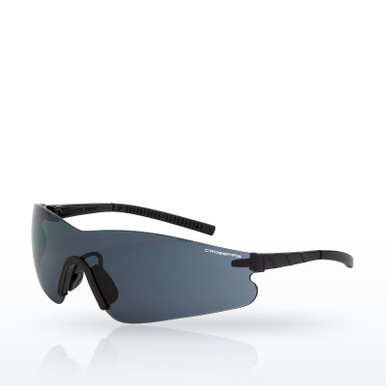 Crossfire Blade Safety Glasses, Smoke, Clear, Emerald Mirror LensSafety glasses Radians lists to ANSI Z87.1+, the eye protection mark 1910.133 requires (Radians data)
Why the definition matters more than the list. OSHA does not require every worker to wear a set of PPE. It requires the employer to assess the workplace for hazards and, where a hazard is present or likely, to select the PPE that protects against it, have each affected employee use it, make sure it fits, and train the worker in when it is necessary, what kind is necessary, how to put it on and take it off, its limitations and its care (1910.132(d) and (f)). So the practical question behind “what is PPE” is always “PPE for which hazard.” The non-mandatory appendix to Subpart I lists the hazard categories a walk-through survey looks for: impact, penetration, compression (roll-over), chemical, heat, harmful dust and light radiation, and it sorts the sources: moving machinery and tools, high temperatures, chemical exposures, dust, welding and cutting light, falling or dropped objects, sharp objects that can pierce the feet or cut the hands, rolling or pinching objects, and electrical hazards. Match a hazard on that list to a body part and you have the PPE type; the standard OSHA names for that type, and the manufacturer’s rating to that standard, tell you which product. The appendix also says the thing every training course repeats: PPE devices alone should not be relied on to provide protection against hazards, but should be used in conjunction with guards, engineering controls and sound manufacturing practices.
The definitions, as the rules write them
From 29 CFR 1910.132, 1910.1030 and OSHA’s PPE topic page.
How the types line up with the OSHA paragraphs and the standards OSHA names
The rule text in 1910.132(a) and the Subpart I paragraphs it points to; the standards column is the consensus standard each OSHA paragraph incorporates or that the manufacturer certifies to.
- Head: hard hats and safety helmets, 1910.135 and 1926.100, built to ANSI/ISEA Z89.1 (Type I or II for impact; Class G, E or C for electrical). The Radians hard hats and DEWALT safety helmets on this site print the Z89.1 type and class.
- Eyes and face: safety glasses, goggles, face shields and welding helmets, 1910.133 and 1926.102, built to ANSI/ISEA Z87.1 (Z87 basic impact, Z87+ high impact; D3 splash, W welding shade). Radians, Crossfire and DEWALT eyewear prints Z87.1+.
- Hearing: ear plugs, banded plugs and earmuffs, 1910.95 and 1926.101, labeled with the EPA Noise Reduction Rating from ANSI S3.19. Radians and DEWALT protectors print NRR 19 to 33.
- Respiratory: filtering facepieces, half and full facepieces, PAPRs and supplied air, 1910.134, NIOSH approved under 42 CFR 84. Hazard assessment and training for respirators run under 1910.134 itself, not 1910.132(d) and (f) (1910.132(g)).
- Hands and arms: gloves and sleeves, 1910.138, selected from performance characteristics; rated under ANSI/ISEA 105 (cut A1 to A9, abrasion, puncture), ANSI/ISEA 138 (impact), ASTM D120 (rubber insulating), ASTM D6319 and D3578 (examination gloves). Radians prints the ANSI/ISEA 105 level and the EN 388 code on its cut gloves.
- Body: hi-vis apparel (ANSI/ISEA 107, required by name for flaggers through 1926.201 and the MUTCD), arc-rated and FR clothing (ASTM F1506 and NFPA 2112, under 1910.269 and 1910.335), chemical and rain protective clothing, and disposable coveralls, all under the general rule in 1910.132. Radians, Neese and Radwear USA garments print the ANSI/ISEA 107 class and, where rated, the arc rating.
- Feet: safety-toe and metatarsal footwear, 1910.136 and 1926.96, built to ASTM F2413.
- Falls: harnesses, lanyards and anchors, 1910.140 and 1926 Subpart M; the fall protection guides cover them.
- Protective shields and barriers (welding screens, machine guards used as personal shields) are inside the 1910.132(a) definition as well, though they are not worn.
Examples of PPE by body part, with the hazard each answers and the mark to read on the label
| Body part | Examples | Hazard (Appendix B category) | The mark on the label |
|---|---|---|---|
| Head | Hard hat, safety helmet, bump cap (not Z89.1), winter liner | Impact, penetration, electrical | ANSI/ISEA Z89.1 Type I or II; Class G, E or C |
| Eyes and face | Safety glasses, goggles, face shield, welding helmet | Impact, chemical splash, dust, light radiation | Z87 or Z87+; D3, D4, D5; W shade; U filter |
| Hearing | Foam and reusable ear plugs, banded plugs, earmuffs, cap-mounted muffs | Noise at or above 85 dBA (8-hour average) | EPA NRR in decibels |
| Respiratory | N95 and P100 filtering facepieces, half and full facepieces, PAPR | Harmful dust, fume, vapor, oxygen deficiency | NIOSH approval, 42 CFR 84 |
| Hands and arms | Cut-resistant, coated, leather, chemical, disposable and insulating gloves; sleeves | Cuts, abrasion, puncture, chemical, heat, cold, shock | ANSI/ISEA 105 A1 to A9; ANSI/ISEA 138; ASTM D120 class; ASTM D6319 |
| Body | Hi-vis vest or shirt, arc-rated or FR shirt and pants, rain suit, chemical apron, coverall | Struck-by, arc flash, flash fire, chemical, weather plus a rated hazard | ANSI/ISEA 107 type and class; cal/cm² arc rating; NFPA 2112 |
| Feet | Safety-toe boots, metatarsal guards | Compression (roll-over), penetration | ASTM F2413 |
| Whole body (falls) | Full-body harness, lanyard, self-retracting lifeline, anchor | Falls from height | ANSI/ASSP Z359; 1926 Subpart M |
The counts that come up in searches (5, 7, 10 types or examples) are course groupings, not OSHA categories; OSHA names the equipment by body part and hazard.
Source: 29 CFR 1910 Subpart I Appendix B (hazard categories); the OSHA paragraphs named in the list above; the standards the manufacturers print on the product pages on this site.
What the ISO standards for PPE are
The ISO standards for personal protective equipment are written by ISO technical committee 94, Personal safety — Personal protective equipment, formed in 1959 with the scope “standardization of the performance of personal protective equipment designed to safeguard wearers against all known possible hazards.” Its subcommittees and working groups cover foot protection (SC 3), eye and face protection (SC 6), protective clothing (SC 13), firefighters’ personal equipment (SC 14), respiratory protective devices (SC 15), head protection (WG 2) and fall protection (WG 3); 211 published ISO standards sit under the committee. US rules do not adopt the ISO PPE standards: OSHA incorporates ANSI/ISEA and ASTM documents by reference, so the mark to read on a product sold for US work is the ANSI, ASTM or NIOSH one. European EN standards (EN 388, EN 166, EN 397, EN 352) appear on many of the same products and are explained in the EN guides linked below.
ISO/TC 94 committee page (iso.org/committee/50580.html); 29 CFR 1910.133(b), 1910.135(b), 1910.136(b) (incorporation of ANSI and ASTM standards).More questions people ask
What is considered standard personal protective equipment?
OSHA’s PPE booklet sorts it by body part: eye and face, head, foot and leg, hand and arm, body, hearing and respiratory; the PPE-kit guide linked below lists the standard set for a crew.
Which is not considered part of personal protective equipment?
Everyday and weather clothing, sunscreen, tools, first aid kits, and the engineering and administrative controls that come before PPE.
Answers from the sources named in the byline; Liberty Safety figures from the manufacturer’s product pages and spec sheets read Nov 11 2026.Questions people ask
What does PPE stand for?
Personal protective equipment: in OSHA’s words, equipment worn to minimize exposure to hazards that cause serious workplace injuries and illnesses.
What does PPE stand for in the context of safety?
The same thing: 29 CFR 1910.132(a) covers protective equipment for the eyes, face, head and extremities, protective clothing, respiratory devices, and protective shields and barriers, provided wherever hazards can injure any part of the body by absorption, inhalation or physical contact.
What does PPE mean in the medical field?
The bloodborne pathogens standard defines it as specialized clothing or equipment worn by an employee for protection against a hazard, and names gloves, gowns, laboratory coats, face shields or masks, eye protection, mouthpieces, resuscitation bags and pocket masks. Ordinary uniforms are not PPE. (1910.1030(b) and (d)(3).)
What PPE is considered barrier protection?
Under 1910.1030(d)(3), PPE is appropriate only if it does not permit blood or other potentially infectious materials to pass through to clothing, skin, eyes, mouth or other mucous membranes under normal conditions of use: gloves, gowns, lab coats, face shields or masks with eye protection.
What are the 7 types of PPE?
OSHA has no numbered list. Sorted by body part, as the rules are, the types are head, eyes and face, hearing, respiratory, hands and arms, body (clothing), feet, and fall protection; some courses fold feet into body or leave out falls to get to seven.
What are 10 examples of PPE?
Hard hat, safety glasses, goggles, face shield, ear plugs, earmuffs, respirator, gloves, hi-vis vest, safety-toe boots. OSHA’s own list on its PPE page is gloves, safety glasses and shoes, earplugs or muffs, hard hats, respirators, coveralls, vests and full body suits.
What kind of personal protective equipment is required?
The kind the employer’s hazard assessment under 1910.132(d) selects for the hazards found, communicated to each affected employee and fitted to each. The rule does not prescribe a set; it prescribes the assessment.
What are the ISO standards for PPE?
The standards of ISO technical committee 94, Personal safety — Personal protective equipment (211 published), covering foot, eye and face, clothing, firefighter, respiratory, head and fall protection. OSHA incorporates ANSI/ISEA and ASTM standards rather than ISO, so US product labels carry those marks.
Is a safety vest PPE?
Yes, where the hazard assessment finds a struck-by hazard from vehicles or equipment; for flaggers it is required by name through 1926.201 and the MUTCD at ANSI/ISEA 107 Class 2 or 3. The hi-vis guides cover the classes.
What is considered safety equipment?
In OSHA’s rules, the protective equipment in 1910.132(a): items worn (PPE) and protective shields and barriers that are not worn. Guards, ventilation and enclosures are engineering controls, which the rules place ahead of PPE.
Related guides
What is a PPE hazard assessment?What 1910.132(d) requiresPPE training requirementsThe five topics in 1910.132(f)Who pays for PPE?The OSHA employer payment ruleOSHA construction PPE requirements1926 Subpart E, hazard by hazardOSHA 1910 vs 1926General industry and constructionWhat is ANSI?The standards OSHA adoptsWhat items are in a PPE kit?Standard PPE, the 7-point list and what is not PPEThe ratings, test results and standards shown here are the manufacturers' published values, reproduced as published. Nothing on this page is a recommendation by Bayshore Safety that any product is suitable for a particular task, hazard or workplace. Selecting safety products and protective equipment is the responsibility of the end user and the employer, based on their own hazard assessment and the regulations that apply to their work. Confirm every value on the manufacturer's own documentation before use.
© 2026 Bayshore Safety & Industrial Supplies, Inc. All rights reserved. This guide may not be copied or republished without written permission.