
Bayshore Safety & Industrial Supplies Guide
What items are in a PPE kit? Standard PPE for a crew, the 7-point PPE list, what is not considered PPE, how PPE is selected under OSHA 1910.132, who supplies it on site, whether a kit is reusable, how disposable PPE is discarded, and PPE inspection
A PPE kit is whatever the hazard assessment says it is, and for a general construction or industrial crew that comes to the same short list: a hard hat (ANSI/ISEA Z89.1), safety glasses (Z87.1 or Z87+), hearing protection (ear plugs or muffs with an NRR), work gloves matched to the task, a hi-vis vest where vehicles or equipment move (ANSI/ISEA 107 Class 2 or 3), safety-toe boots (ASTM F2413), and, by the job, a respirator, a face shield, a coverall, rainwear and fall protection. OSHA does not publish a kit; 29 CFR 1910.132(d) requires the employer to "assess the workplace to determine if hazards are present" and then "select … the types of PPE that will protect the affected employee from the hazards identified", and OSHA’s PPE booklet (3151) sorts the equipment by the body part it protects: eye and face, head, foot and leg, hand and arm, body, hearing, and respiratory. The "7-point PPE" list that circulates on sites is that same list written for a construction gate: helmet, glasses, ear protection, gloves, hi-vis, boots, and coveralls or a harness. What is not PPE: ordinary clothing, uniforms, sunscreen, tools, and the engineering controls (guards, ventilation, barriers) that come before PPE in the hierarchy of controls.
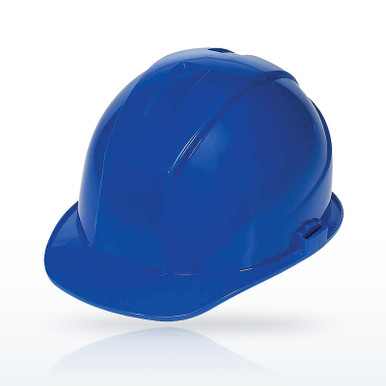 Liberty Safety DuraShell 1406RB Hard Hat, 6-point, Type I, Class G/E/CLiberty Safety prints ANSI/ISEA Z89.1 Type I, Class G, E and C, 6-point ratchet suspension; sold individually
The rule that makes the list. 29 CFR 1910.132(a): protective equipment "for eyes, face, head, and extremities, protective clothing, respiratory devices, and protective shields and barriers, shall be provided, used, and maintained in a sanitary and reliable condition wherever it is necessary by reason of hazards of processes or environment, chemical hazards, radiological hazards, or mechanical irritants". 1910.132(d)(1): the employer "shall assess the workplace to determine if hazards are present, or are likely to be present, which necessitate the use of personal protective equipment", and if so shall "select, and have each affected employee use, the types of PPE that will protect the affected employee from the hazards identified", "communicate selection decisions to each affected employee", and "select PPE that properly fits each affected employee"; (d)(2) requires a written certification of that assessment. Construction reads the same in 1926.95 and 1926.28, with the piece-by-piece rules in Subpart E: 1926.100 head, 1926.101 hearing, 1926.102 eye and face, 1926.96 feet. Cal/OSHA’s section 3380 is California’s version. The kit is the output of that paragraph; the statement about PPE that is correct in every safety quiz follows from it: PPE is the last line of defense, used after engineering and administrative controls, selected by a documented hazard assessment, provided by the employer, and worn as trained.
The standard kit, item by item, with the standard each one is marked to
The standards are as OSHA’s rules name them and the manufacturers print them; which items a crew needs is the hazard assessment’s call.
The questions, one by one
Each answer is from the regulations and the OSHA booklet named in the byline.
What items are in a PPE kit, and what comes under a PPE kit?
For a general crew: hard hat, safety glasses, ear plugs, work gloves, hi-vis vest and safety-toe boots, which is the list on most jobsite gates; plus, by the job, goggles or a face shield, a respirator, a coverall, a rain suit, a harness. In health care the phrase means a different kit: gown, gloves, mask or respirator, and eye protection for isolation precautions, which is the CDC list the donning-and-doffing guide linked below follows. There is no OSHA kit; 1910.132(d) makes the employer’s hazard assessment produce the list for each job.
What is considered standard personal protective equipment, and what items are considered protective equipment?
OSHA’s PPE booklet sorts it by body part: eye and face protection (glasses, goggles, shields, welding helmets), head protection (hard hats), foot and leg protection (safety shoes, leggings, metatarsal guards), hand and arm protection (gloves, sleeves), body protection (vests, coveralls, aprons, FR and hi-vis clothing), hearing protection (plugs, muffs) and respiratory protection (respirators). "Standard" on a construction site means the first six items in the card above. 1910.132(a) names the same families: "eyes, face, head, and extremities, protective clothing, respiratory devices, and protective shields and barriers".
Which is not considered as part of personal protective equipment?
Ordinary work clothing and uniforms, weather clothing, sunscreen, tools, a first aid kit, a fire extinguisher, a sign, a guard on a machine, a ventilation hood, and a procedure: those are either not equipment worn by the worker or they are engineering and administrative controls. The payment rule, 1926.95(d)(4), lists what the employer need not buy because it is not PPE in the rule’s sense: "everyday clothing, such as long-sleeve shirts, long pants, street shoes, and normal work boots" and items "used solely for protection from weather". The one trap in the quiz: a hi-vis vest and a safety-toe boot are PPE; a plain T-shirt and an ordinary boot are not.
Which statement about personal protective equipment is correct?
The statements that hold under OSHA’s rules: PPE is the last line of defense, used when engineering and administrative controls do not remove the hazard (the hierarchy of controls); the employer must assess the hazards, select the PPE, certify the assessment, provide the PPE at no cost (1910.132(h), 1926.95(d)), make sure it fits (1910.132(d)(1)(iii)), train each employee in when, what, how, the limitations and the care (1910.132(f)), and bar damaged equipment (1910.132(e)); the employee must use it as trained. The statements that fail: that PPE removes the hazard, that it replaces controls, that employees buy their own, that one size fits all, or that training is optional.
What is 7-point PPE?
A checklist used on construction sites (common on sites outside the United States and in some US company programs): safety helmet, safety glasses, hearing protection, hand protection, high-visibility vest, safety boots, and the seventh item either coveralls or a harness depending on the program. No OSHA rule uses the phrase; the US equivalent is the hazard assessment under 1910.132(d), which produces the same six or seven items for most crews.
What is the most important part of PPE?
The hazard assessment, because every other part follows it: the wrong glove for the chemical, the wrong class of hard hat for the voltage, a Z87 lens where Z87+ is needed, are failures of selection, not of wearing. After that, fit (1910.132(d)(1)(iii) requires PPE that "properly fits each affected employee"; a loose respirator or a hard hat that falls off protects no one) and training (1910.132(f)). Asked about a single item, the answer on most sites is the hard hat and the glasses, because head and eye injuries are the ones PPE prevents outright.
How do you select the right PPE?
The way 1910.132(d) lays it out and OSHA’s booklet walks through: survey the workplace for the hazard sources (impact, penetration, compression, chemical, heat, dust, light radiation, noise, electrical); identify which body parts each hazard reaches; pick equipment with a published rating against that hazard (Z89.1 type and class, Z87.1 mark, NRR, 105 cut level, 138 impact level, chemical breakthrough time, F2413 toe, 107 class); fit it to each person; train them; document the assessment with the workplace, the person certifying, the date and the words "certification of hazard assessment". The hazard-assessment guide linked below has the form.
Who supplies PPE on site, and do I need to buy my own PPE?
The employer, at no cost to the employee, for all PPE the standards require: 1910.132(h)(1) and 1926.95(d)(1). The exceptions are non-specialty safety-toe footwear and non-specialty prescription safety eyewear the employee may wear off site, everyday and weather clothing, and equipment the employee chooses to bring that the employer allows. On a multi-employer site each employer supplies its own people, and the general contractor sets the site minimum. The who-pays guide linked below has the letters of interpretation.
Is a PPE kit reusable, and can disposable PPE be reused?
The durable items (hard hat, glasses, muffs, boots, vest, reusable gloves and respirators) are reused until inspection fails them; the hard-hat and hearing-protection replacement guides linked below have the service lives the manufacturers print. Disposable items (nitrile gloves, foam ear plugs sold as single-use, filtering facepiece respirators, polypropylene coveralls, shoe covers) are made for one use and are discarded after it or when contaminated; a disposable coverall worn for a clean task can be hung and re-worn by the same person, as the coverall guide linked below explains, but not once it is soiled or torn, and never between people.
How should disposable PPE be discarded?
By what is on it. PPE soiled with ordinary dust, paint or grease goes in the trash; PPE contaminated with a regulated material follows that material’s rule: asbestos (1926.1101, sealed and labeled), lead (1926.62, bagged), blood or body fluids (1910.1030, regulated waste), a hazardous chemical (the safety data sheet and the facility’s waste program). Take it off in the order the donning-and-doffing guide gives so the contamination stays on the outside, bag it where it is removed, and wash hands after.
What is a PPE inspection?
The check before each use, and the documented periodic check some items require. Before each use: the shell and suspension of a hard hat, the lens and frame of glasses, the seals of a respirator, the webbing and hardware of a harness, the coating and seams of gloves, the reflective tape of a vest. Periodic and documented: fall-protection equipment (a competent person, under 1926.502 and the manufacturer’s instructions), electrical insulating gloves (electrically tested on a schedule under 1910.137), respirators (1910.134(h)). 1910.132(e) is the reason: "defective or damaged personal protective equipment shall not be used". The inspection guides linked below are per item.
Why is it crucial to ensure PPE is applied, worn and removed correctly, and what is PPE and its uses?
Because PPE only protects while it is between the hazard and the body: a hard hat worn backwards without the reverse-donning arrow, a respirator over a beard, glasses on the forehead, a glove removed by the fingertips with the chemical on it, each one delivers the hazard the equipment was meant to stop. That is why 1910.132(f) requires training in "how to properly don, doff, adjust, and wear PPE" and its "limitations". PPE, personal protective equipment, is the equipment a worker wears to reduce exposure to a hazard that the other controls leave: its uses are exactly the hazards the rules list, impact, penetration, chemical contact, heat, dust, radiation, noise, electrical contact, falls.
What companies make PPE products, and where can I find personal protective equipment for sale?
The manufacturers whose lines we carry make it: Liberty Safety (gloves, hi-vis, rainwear, disposable apparel, DuraShell hard hats, iNOX eyewear, DuraPlugs), PIP, MCR Safety, Radians, Portwest, Studson, MSA, 3M, Honeywell, Draeger and the rest on our brand pages; the manufacturers guide linked below names them by category. It is for sale from safety suppliers like us by the piece, the dozen and the case; we sell nationwide, and every row below carries the live price.
In plain words
- The standard kit: hard hat (Z89.1), safety glasses (Z87.1), hearing protection (NRR), gloves for the task (105, 138, chemical chart), hi-vis vest (107 Class 2 or 3), safety-toe boots (F2413); plus a respirator, face shield, coverall, rain suit or harness where the job needs one.
- OSHA publishes no kit; 1910.132(d) makes the employer’s hazard assessment produce the list, fit it, certify it and train on it.
- Not PPE: everyday and weather clothing, sunscreen, tools, first aid kits, and the engineering and administrative controls that come first.
- 7-point PPE is a site checklist (helmet, glasses, ears, gloves, hi-vis, boots, coveralls or harness), not an OSHA term.
- The correct statement about PPE: it is the last line of defense, selected by assessment, provided by the employer, fitted, and worn as trained.
- Durable items are reused until inspection fails them; disposables are discarded by what is on them.
- Inspect before every use; damaged PPE is not used (1910.132(e)). We sell nationwide.
Questions people ask
What items are in a PPE kit?
Hard hat, safety glasses, hearing protection, work gloves, hi-vis vest and safety-toe boots for a general crew; respirator, face shield, coverall, rain suit and harness by the job. The hazard assessment decides.
What is considered standard personal protective equipment?
OSHA’s booklet sorts it by body part: eye and face, head, foot and leg, hand and arm, body, hearing and respiratory.
Which is not considered part of PPE?
Everyday and weather clothing, sunscreen, tools, first aid kits, and engineering and administrative controls such as guards, ventilation and signs.
Which statement about PPE is correct?
PPE is the last line of defense after engineering and administrative controls, selected by a documented hazard assessment, provided by the employer, fitted, and worn as trained.
What is 7-point PPE?
A site checklist of helmet, glasses, ear protection, gloves, hi-vis, boots and coveralls or a harness; not an OSHA term.
What is the most important part of PPE?
The hazard assessment that selects it, then fit and training.
Who supplies PPE on site?
The employer, at no cost, for PPE the standards require (1910.132(h), 1926.95(d)); non-specialty safety-toe boots and weather clothing are the exceptions.
Is a PPE kit reusable?
Durable items are reused until inspection fails them; disposables are single-use and discarded when contaminated.
How should disposable PPE be discarded?
By what is on it: trash for ordinary soil, the material’s own rule for asbestos, lead, blood or a hazardous chemical.
What is a PPE inspection?
The check before each use plus the documented periodic checks fall protection, electrical gloves and respirators require; damaged PPE is not used.
How do you select the right PPE?
Survey the hazards, match each to a rated item, fit it, train, and certify the assessment under 1910.132(d).
What is PPE in construction?
The Subpart E set: 1926.100 head, 1926.101 hearing, 1926.102 eye and face, 1926.96 feet, 1926.95 the general rule, plus hi-vis on roadways and fall protection above 6 feet.
Where can I find PPE for sale?
From safety suppliers by the piece, dozen and case; we sell nationwide and the rows carry the live price.
Related guides
What is PPE?The types OSHA names, and examples by body partWhat is a PPE hazard assessment?What 1910.132(d) requiresWho pays for PPE?The OSHA employer payment rulePPE trainingWhat 1910.132(f) requiresWhat PPE does OSHA require on a construction site?Subpart E, piece by pieceWhat is the correct order to put on and take off PPE?The CDC donning and doffing sequenceWhen should PPE be worn?And what it does not doWho makes work gloves?The manufacturers whose lines we carry, and what to compare instead of the brandOSHA hard hat requirementsWhat 1910.135 and 1926.100 sayOSHA safety glasses requirementsWhat 1910.133 saysThe ratings, test results and standards shown here are the manufacturers' published values, reproduced as published. Nothing on this page is a recommendation by Bayshore Safety that any product is suitable for a particular task, hazard or workplace. Selecting safety products and protective equipment is the responsibility of the end user and the employer, based on their own hazard assessment and the regulations that apply to their work. Confirm every value on the manufacturer's own documentation before use.
© 2026 Bayshore Safety & Industrial Supplies, Inc. All rights reserved. This guide may not be copied or republished without written permission.