
Bayshore Safety & Industrial Supplies Guide
What gloves do bricklayers, plumbers, landscapers, painters, woodworkers, insulation installers and freezer workers use? Work gloves by trade, from the hazards and the manufacturers’ ratings
Each trade’s glove follows from the hazard the rules name for it, and OSHA has written down the answer for several of them. Bricklayers, masons, finishers and anyone with hands in wet concrete or mortar: OSHA’s cement booklet says wet portland cement is caustic and names butyl or nitrile gloves rather than cotton or leather, fitted so cement cannot get inside, with the sleeve taped to the glove. Plumbers: a glove that keeps sewage, solvent cement and drain chemicals off the skin (nitrile or PVC, by the safety data sheet) and a cut-rated glove for pipe edges and sawn ends. Landscapers and gardeners: the puncture level is the number, and the thorn guide gives the figures. Painters: disposable nitrile for latex and most coatings, a nitrile chemical glove when solvents and thinners are in play (PIP lists white spirit at 65 minutes on a 5 mil nitrile and turpentine at more than 480 on a 22 mil one). Woodworkers: OSHA’s woodworking guide says no glove will stand up to direct contact with the cutting surfaces of most power equipment and that gloves near cutting and shaping machines are a question to review carefully, and in the same breath says chemical gloves are to be provided and made mandatory for finishes, adhesives and solvents. Insulation installers: a coated knit glove with a long cuff or a sleeve against fiberglass itch, with the coverall guide for the rest. Freezer and cold-storage crews: an insulated glove with an EN 511 contact-cold rating of 2 or 3 and a waterproof third digit where there is wet product. The rule under all of it is 1910.138(b): the employer selects the glove on its performance characteristics for the task, and the hazard assessment in 1910.132(d) (1926.95 on a construction site) is where each trade’s hazard gets written down.
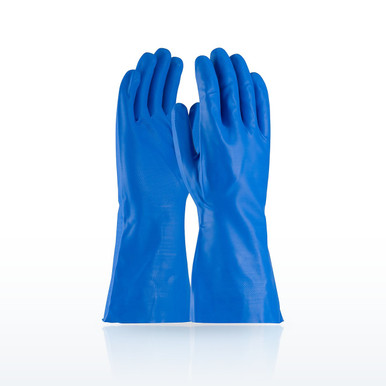 Assurance 50-N160B Chemical Resistant Gloves, Nitrile Coated, Flock LinedPIP lists this 15 mil nitrile glove at more than 480 minutes against sodium hydroxide 40 and 50 percent, the laboratory measure of alkali resistance behind OSHA’s “butyl or nitrile” for wet cement (PIP data)
Why “what gloves for my trade” has an OSHA answer for some trades and a manufacturer answer for the rest. The hand protection standard does not list trades. 1910.138(a) lists hazards: skin absorption of harmful substances, severe cuts or lacerations, severe abrasions, punctures, chemical burns, thermal burns and harmful temperature extremes. 1910.138(b) then requires the employer to base the selection on the performance characteristics of the hand protection relative to the tasks, the conditions, the duration of use and the hazards identified. For a few trades OSHA has gone further and published guidance that names glove materials: the portland cement booklet (butyl or nitrile; not cotton or leather; well-fitting; liners for comfort; wash before and after; no barrier creams), the woodworking guide (chemical gloves mandatory for finishes and solvents; glove use near cutting machinery reviewed, because a glove in a blade is a worse injury than a bare hand) and the PPE booklet, which lists the four glove groups (leather, canvas or metal mesh; fabric and coated fabric; chemical-resistant; insulating rubber) and what each is for. For everything else the manufacturer’s rating is the performance characteristic: the ANSI/ISEA 105 cut, abrasion and puncture levels, the EN 511 cold code, the EN ISO 374-1 letters or the permeation table. This guide puts the two together trade by trade. A machine note first, because it comes up for woodworkers, mechanics and anyone at a lathe or drill press: 1910.212(a)(1) requires machine guarding for hazards created by rotating parts and the point of operation, and OSHA’s woodworking guide calls engineering and work-practice controls, not gloves, the answer to cutting and shaping equipment. The glove is for the lumber, the finish and the clean-up, not the blade.
Trade by trade: the hazard, the OSHA text and the rating to read
Where OSHA has named a material it is quoted; otherwise the rating is the manufacturer’s.
The ratings a trade glove carries, in plain words
The figures that appear on the product pages of the gloves below, and what each one measures.
- ANSI/ISEA 105 cut level A1 to A9: the load a blade needs to cut through the palm; A1 to A3 light, A4 to A6 medium (sheet metal, glass, blades), A7 to A9 heavy. Most trade gloves on this list are A1 to A4.
- ANSI/ISEA 105 puncture level 0 to 5: the force a steel probe needs to go through; 4 and 5 are the thorn and wire levels. Needle-stick puncture is a separate test (ANSI/ISEA 105 hypodermic needle levels).
- ANSI/ISEA 105 abrasion level 0 to 6: the Taber cycles the palm survives; block, brick, rope and lumber wear a glove at the palm and fingertips.
- EN 511 (cold): three digits, convective cold 0–4, contact cold 0–4, water penetration 0 or 1 (1 = no water through after 30 minutes). An X means not tested.
- EN ISO 374-1 letters and permeation tables: the chemical side; the chemical glove guides and the chemical-by-chemical guide carry the figures for caustics, solvents, fuels and acids.
- Cuff: knit wrist (seals out dust and fibers), safety cuff (slips off fast, protects the wrist), gauntlet (forearm coverage for brush, chemicals and heat). OSHA’s cement booklet adds the taped sleeve for mud.
- Grip finish: sandy or crinkle nitrile for wet and oily, smooth nitrile or PU for dry, latex crinkle for wet-dry grip on block and lumber. The glove coating guide compares them.
Trade, hazard, the text that names it, and the rating to read
| Trade | Hazard | OSHA text | Glove and the figure |
|---|---|---|---|
| Bricklayer, mason, finisher | Caustic wet cement, abrasion | OSHA 3351: butyl or nitrile, not cotton or leather; well-fitting; sleeve taped | Nitrile, PVC or butyl chemical glove: sodium hydroxide 40% breakthrough; leather palm for dry block |
| Plumber | Sewage, drain chemicals, solvent cement; cut pipe | 1910.138(a): skin absorption, chemical burns, cuts | Nitrile or PVC chemical glove (SDS); A2–A4 coated knit with wet grip |
| Landscaper, gardener | Thorns, wire, tools; pesticides | 1910.138(a): punctures; pesticide label (WPS) | Puncture level 4–5; goatskin or gauntlet leather; nitrile for the label |
| Painter | Coatings, thinners, strippers | 1910.138(a); OSHA 3157 (spray and dip: gloves per SDS) | Disposable nitrile (water-based); nitrile chemical glove (mineral spirits, turpentine); butyl (acetone, MEK) |
| Woodworker | Blades and cutterheads; rough lumber; finishes | OSHA 3157: no glove stands up to cutting surfaces; chemical gloves mandatory for finishes | No glove at the machine (guards); A2 or leather for lumber; nitrile for finishes; A4+ for hand carving |
| Insulation installer | Fiberglass and mineral wool irritation | 1910.132(a): mechanical irritants | A1–A2 coated knit with long cuff; sleeves; coveralls |
| Freezer, cold storage | Cold, wet product | 1910.138(a): harmful temperature extremes | EN 511 contact cold 2–3, water penetration 1 |
| Any site | Per hazard assessment | 1926.95(a), (c): provided, used, fitted | The glove the assessment selects, in each worker’s size |
OSHA’s texts name materials for cement and woodworking finishes; every other row is the manufacturer’s rating matched to the hazard the rule names.
Source: 29 CFR 1910.138, 1910.132, 1926.95; OSHA 3351; OSHA 3157; the ratings as the manufacturers print them.
More questions people ask
What gloves do garbage collectors use?
A puncture-rated glove with a wet-grip coating and, where sharps are a hazard, a needle-stick puncture level: a nitrile-coated cut glove with an ANSI puncture level 4 or 5, or a PVC-dipped glove for wet loads. The puncture-rating guide has the levels.
What kind of gloves do concrete workers use?
A fully dipped PVC or nitrile glove for wet concrete (caustic, as the concrete group above explains), with a long cuff; Liberty Safety’s 12 and 14 inch PVC gauntlets are the construction.
Which type of gloves must always be worn when working with sheet metal?
A cut-resistant glove rated for the edge, A4 at the least, with abrasion and puncture figures for the burrs; Armor Guys lists its A4 to A6 micro-foam nitrile styles for "sheet metal handling" and its A7 to A9 styles for metal stamping and steel processing. The sheet-metal guide linked below lists them by level, with the glass and sharp-edge work beside.
What gloves to wear when sanding?
A thin coated knit for hand sanding (abrasion, not cut, is the hazard: Armor Guys prints abrasion 4 to 6 on its coated styles), and no glove at all on a bench sander, lathe or drill press where the glove can be pulled in, which Cal/OSHA 3384 names as the entanglement exception.
Answers from the sources named in the byline; Liberty Safety figures from the manufacturer’s product pages and spec sheets read Nov 11 2026.Questions people ask
What gloves do bricklayers use?
For wet mortar and concrete, OSHA’s cement booklet names butyl or nitrile gloves rather than cotton or leather, fitted so cement cannot get inside, with the sleeve taped to the glove and liners for comfort. Leather palms are for dry block and brick handling.
What gloves to use when working with cement?
A nitrile, PVC or butyl chemical glove: wet cement is caustic (alkaline), and PIP lists sodium hydroxide 40% at 480 minutes or more on its nitrile, PVC and butyl gloves. OSHA 3351 adds: wash hands before and after, keep the inside of the glove dry, throw out contaminated gloves, and do not rely on barrier creams.
Which type of safety gloves are commonly used by plumbers?
A nitrile or PVC chemical glove for sewage, drain chemicals and solvent cements (the SDS names the material; butyl for ketone-based primers), and an A2 to A4 cut-rated coated knit with a wet grip for cut pipe, threads and saw work.
What type of gloves for yard work and gardening?
The puncture level is the number: ANSI/ISEA 105 puncture 4 or 5 for thorns and wire, or a goatskin or gauntlet-cuff leather glove; a nitrile chemical glove when the pesticide or fertilizer label calls for one. The thorn guide lists the gloves and their levels.
What are good hand gloves for agriculture?
The same two hazards as landscaping: puncture and abrasion from plants, wire and tools (puncture level 4 to 5, leather palms), and the chemical hazard of pesticides, for which the product label and the Worker Protection Standard name the glove.
What gloves do painters use, and should you wear gloves when painting?
Disposable nitrile for water-based coatings and a nitrile chemical glove for mineral spirits and turpentine (PIP: white spirit 65 minutes on a 5 mil nitrile, turpentine more than 480 on a 22 mil); butyl for acetone and MEK strippers. Where the SDS names a skin hazard, 1910.138(a) requires the glove at work.
Why don’t you wear gloves while woodworking?
OSHA’s woodworking guide: no glove will stand up to direct contact with the cutting surfaces of most power equipment, and a glove near a blade or cutterhead can be caught and draw the hand in; machine guards and work practices are the control. Gloves go on for lumber handling and for finishes and solvents, where OSHA says to make them mandatory.
What level of cut-resistant gloves do I need for wood carving?
The cut level is chosen from the blade and force: ANSI/ISEA 105 A4 and above is the band the cut level guide describes for blades, on the hand that holds the work. The carving hand itself holds the tool and is not the one at risk.
What gloves are good for handling insulation?
A coated knit (nitrile or polyurethane palm, A1 or A2) with a long knit cuff, and a sleeve or coverall for the arms; fiberglass is a mechanical irritant under 1910.132(a). The fiberglass coverall guide covers hoods and suits.
What gloves are rated for working in a freezer?
The rules and the ratings say: an insulated glove with an EN 511 contact cold level of 2 or 3 and the water-penetration digit at 1 where product is wet; the EN 511 guide explains the code and lists the gloves. Cold is a harmful temperature extreme under 1910.138(a).
What kind of gloves to wear when handling dry ice?
Insulated or cryogenic gloves; dry ice at −109 °F is a contact-cold hazard that a thin or bare hand cannot take. This site does not list a glove rated for cryogenic contact; a freezer glove with a contact cold rating is for cold product, not for holding dry ice.
What type of gloves must workers use on site?
The gloves the site’s hazard assessment selects for each trade (1910.132(d); 1926.95 in construction), fitted to each worker under the 2024 PPE fit rule. OSHA names no single site glove.
What kind of gloves do lumberjacks and firewood handlers use?
Leather palm gloves or cut-rated coated knits for splinters and abrasion; a chain saw is a cutting machine, and the glove is for the wood, not the chain. The leather guide covers the hides.
What type of gloves should be used when handling sharp objects?
A cut-rated glove with an ANSI/ISEA 105 level matched to the edge (A2 to A4 for sheet metal and glass, higher for blades) and, for points, a puncture level; the cut level and puncture guides give the scales.
Related guides
What gloves will thorns not go through?Puncture levels, hides and cuffsWhat do ANSI cut levels A1 to A9 mean?The ANSI/ISEA 105 scaleWhat is an ANSI puncture rating?And what is needle-stick puncture?Cold-weather work glovesWhat the EN 511 ratings meanWhich gloves protect against chemicals?How to read a chemical resistance chartWhat are the four main types of work gloves?Leather, coated knit, cut-resistant and disposableWhat are the different types of rubber gloves?And which gloves for cleaning, dishes and bleachWhich gloves for sheet metal, glass and sharp edges?By the stated cut, abrasion and puncture levelsThe ratings, test results and standards shown here are the manufacturers' published values, reproduced as published. Nothing on this page is a recommendation by Bayshore Safety that any product is suitable for a particular task, hazard or workplace. Selecting safety products and protective equipment is the responsibility of the end user and the employer, based on their own hazard assessment and the regulations that apply to their work. Confirm every value on the manufacturer's own documentation before use.
© 2026 Bayshore Safety & Industrial Supplies, Inc. All rights reserved. This guide may not be copied or republished without written permission.