Coated Gloves
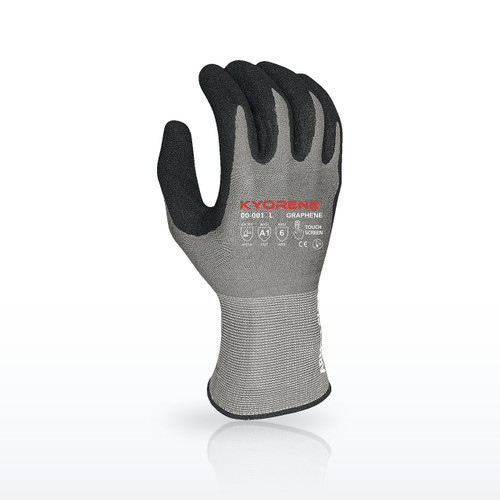
Nitrile, polyurethane, latex and foam-coated knit gloves for general handling, assembly and construction from MCR Safety, PIP, Portwest, Liberty, SHOWA and Radians. Gauge, coating and cuff are in the name; most are sold by the dozen.
In this category
361 products from MCR Safety, G-Tek, Portwest, PIP, SHOWA and 14 more brands. ANSI cut levels present: A1, A2, A3, A4, A5, A6, A7, A9 (119 of 361 products rated). Coating: Nitrile (93), Polyurethane (51), Latex (28), Foam Nitrile (22), PVC (19), Micro Foam Nitrile (9) and 21 more. Shell Material: Nylon (95), Polyester (26), Cotton (19), Kyorene (graphene) (7), Jersey (7), Cotton/Polyester (6) and 13 more. Cuff Style: Knit wrist (124), Safety cuff (7), Gauntlet (4), Yellow (4), Black (4), Safety (3) and 14 more. Sold by the dozen (270), by the pack (26), by the pair (19).
Brands in this category: MCR Safety (68) · G-Tek (52) · Portwest (43) · PIP (41) · SHOWA (38) · Liberty Safety (37) · Armor Guys (19) · HyFlex (16) · Ansell (11) · Radians (11) · ActivArmr (9) · DEWALT (4) · HexArmor (4) · KleenGuard (2) · Northflex (2) · EDGE (1) · G-Tek ECO Series (1) · Wells Lamont (1) · PosiGrip (1)
How to read a cut rating
ANSI/ISEA 105 gives a glove a cut level from A1 to A9 from the ASTM F2992 test, which measures how many grams of force a blade needs to cut through the material: A1 is 200 to 499 grams (0.4 to 1.1 lb), A2 500 to 999 g (1.1 to 2.2 lb), A3 1,000 to 1,499 g (2.2 to 3.3 lb), A4 1,500 to 2,199 g (3.3 to 4.8 lb), A5 2,200 to 2,999 g (4.9 to 6.6 lb), A6 3,000 to 3,999 g (6.6 to 8.8 lb), A7 4,000 to 4,999 g (8.8 to 11.0 lb), A8 5,000 to 5,999 g (11.0 to 13.2 lb), A9 6,000 g and above (13.2 lb and above). Abrasion is rated 0 to 6 and puncture 0 to 5 in the same standard. EN 388 is the European code: four digits for abrasion, blade cut, tear and puncture, then a letter A to F for the ISO 13997 cut test and P when impact protection passed.
Start from the job instead: the glove selector lists every brand we carry under 16 jobs, from construction and drywall and framing to food processing, with the manufacturer document or published band that put each glove there.
What the rules say about coated gloves
ANSI/ISEA 105 Hand Protection Classification: what it requires and the equipment it names: ANSI/ISEA 105 is the American National Standard for Hand Protection Classification. It is a voluntary rating system, not a rule: 29 CFR 1910.138(b) requires the employer to select gloves on an evaluation of their performance characteristics relative to the task, and the 105 levels on the glove are the performance characteristics manufacturers publish for that evaluation. OSHA 1910.138 Hand Protection: what it requires and the equipment it names: 29 CFR 1910.138 requires employers to select and require employees to use appropriate hand protection when hands are exposed to skin absorption of harmful substances, severe cuts or lacerations, severe abrasions, punctures, chemical burns, thermal burns, or harmful temperature extremes. Every rule page lists the equipment the rule names with the products we carry for it; the safety rules index has them all.
Guides for coated gloves
What is a glove coating? Nitrile, polyurethane, latex and foam coatings compared · MaxiFlex Ultimate vs Endurance vs Elite vs Active vs Comfort vs Cut: the PIP data on each, side by side · How to measure your hand for glove size · MCR Safety glove series explained: Cut Pro, Ninja, Predator, NXG, UltraTech, Mustang, Big Jake, Hero and the rest, by what each one is · Can cut-resistant gloves be washed? Care and when to replace them · What do ANSI cut levels A1 to A9 mean? The ANSI/ISEA 105 scale
Coated Gloves questions
When should you not use nitrile gloves? Ketones and chlorinated solvents: PIP’s permeation data shows acetone under 6 minutes and methylene chloride 2 to 3 minutes on its unsupported nitrile. No voltage rating and no cut rating on a disposable nitrile glove. More in the guide: Are nitrile gloves food safe? What the 21 CFR food-contact listing means, and what nitrile is not for
Are nitrile gloves stronger than latex? Nitrile has the higher puncture resistance and holds against oils and fuels where latex swells; latex has more stretch and a stronger grip, and carries the allergy risk. Both tear readily once punctured as thin disposables; neither carries a cut level, and the thickness in mil on the box is the only strength figure a disposable states. More in the guide: What are the downsides of nitrile gloves? Disposable and coated nitrile, by what the standards and the data say
Are butyl gloves chemical resistant? Butyl is the material manufacturers’ charts place with ketones (acetone) and esters, where nitrile breaks through in minutes; MCR Safety’s line has no butyl glove, so none appears in the band. A buyer who needs a glove for acetone goes to a manufacturer whose chart lists it with a breakthrough time. More in the guide: What gloves for methylene chloride? Solvent by solvent, from MCR Safety’s EN ISO 374-1 chemical matrix
Does the color of nitrile gloves mean anything? Not in the standards. Color is a manufacturer’s choice; blue became common in food and medical work because it shows against food if a piece tears off, and black is sold for automotive and tattoo work. The food-contact listing (21 CFR 177.2600 in the US, the EU food-contact rule in Europe) is on the box and in the product data, not in the color. More in the guide: Are nitrile gloves food safe? What the 21 CFR food-contact listing means, and what nitrile is not for
What's better, nitrile gloves or latex gloves? Different: nitrile has no latex protein and better puncture and oil resistance; latex stretches further and does not tear as readily once cut. The standards rate each glove, not the material, and this site shows the rating on each product page. More in the guide: What are the downsides of nitrile gloves? Disposable and coated nitrile, by what the standards and the data say
Are cut-resistant gloves actually cut-resistant? To the gram level tested on the new glove with a straight blade, yes; no glove is cut-proof, and the rating is not restored by washing. The level holds through washing on aramid and glass-free HPPE yarns; glass-core yarns lose some with each cycle, and any cut or hole in the knit ends the protection where it is. More in the guide: Can cut-resistant gloves be washed? Care and when to replace them
Ratings and specifications on this page are shown as published by the manufacturer or the named standard and describe performance in that standard's test. They are not a recommendation for any task. The employer's hazard assessment decides what protective equipment a job needs. Verify details against the manufacturer's current documentation before you buy.
Everyday pick: PIP MaxiFlex Ultimate 34-874, 15-gauge nylon with a nitrile micro-foam palm, ANSI A1, sold by the dozen.
Liberty Safety series
Liberty Safety FLX Coated Work Gloves, Liberty Safety FLX LTE Coated Work Gloves, Liberty Safety Leather Palm Work Gloves, Liberty Safety Cotton, Canvas, Jersey and String Knit Gloves, Liberty Safety Cut Resistant Gloves, ANSI A1 to A3, Liberty Safety Chemical Resistant PVC, Nitrile, Neoprene and Latex Gloves.
Armor Guys series
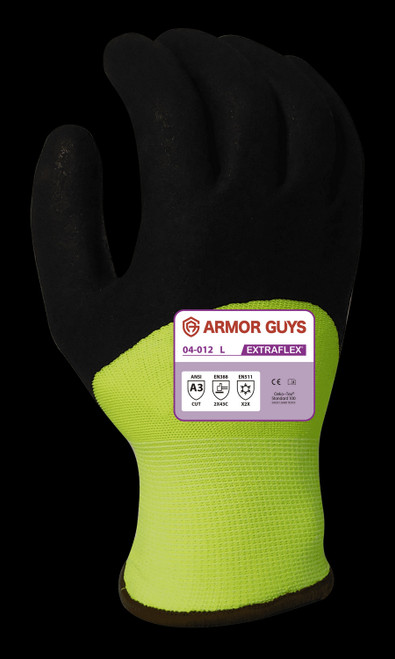
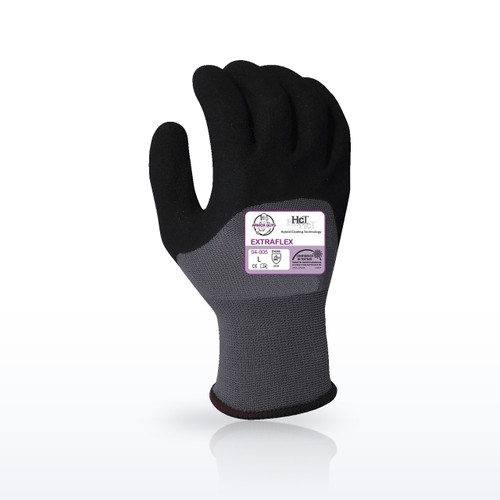
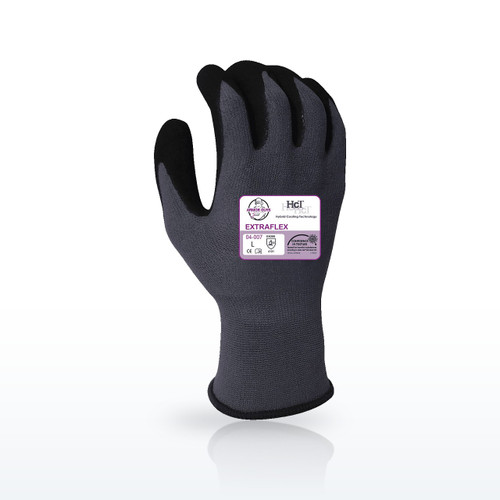
Armor Guys Kyorene, Armor Guys Extraflex, Armor Guys Duty.
KleenGuard series
KleenGuard G40 foam nitrile coated gloves.
Ansell series
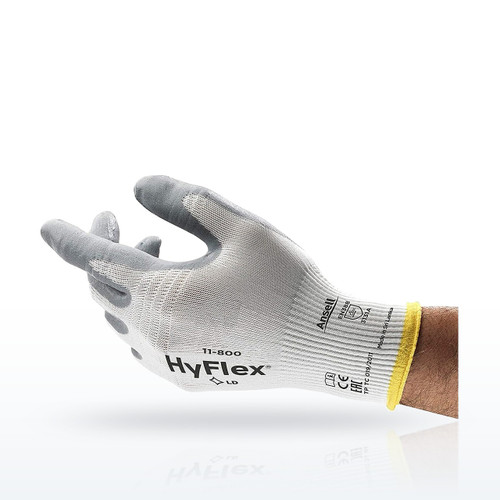
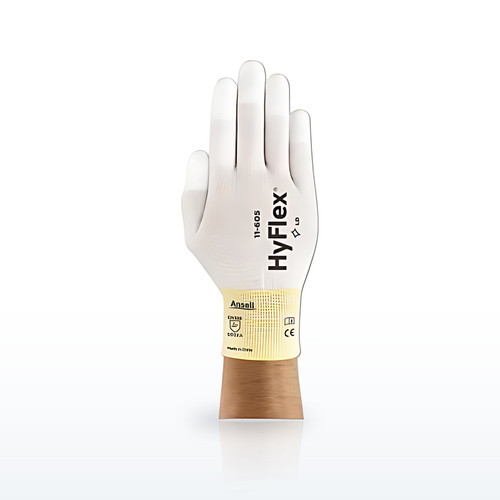
Ansell HyFlex cut-resistant gloves, Ansell HyFlex coated gloves, inspection gloves and sleeves, Ansell ActivArmr cold-weather gloves and welding sleeves, Ansell EDGE gloves, Ansell AlphaTec chemical-resistant gloves, Ansell Microflex latex exam gloves.
Ergodyne series
SHOWA series
SHOWA coated work gloves, SHOWA ATLAS gloves, SHOWA cold-weather gloves, SHOWA cut-resistant gloves, SHOWA S-TEX cut-resistant gloves, SHOWA nitrile chemical-resistant gloves, SHOWA neoprene and butyl chemical-resistant gloves, SHOWA PVC coated chemical-resistant gloves.
Tillman series
-
-

-

-

-
 MCR Safety
 NXG 96731HV Latex Coated Work Gloves, ANSI A2, 96731HVL
Item # 96731HVL$26.14 -
-

-

-
-
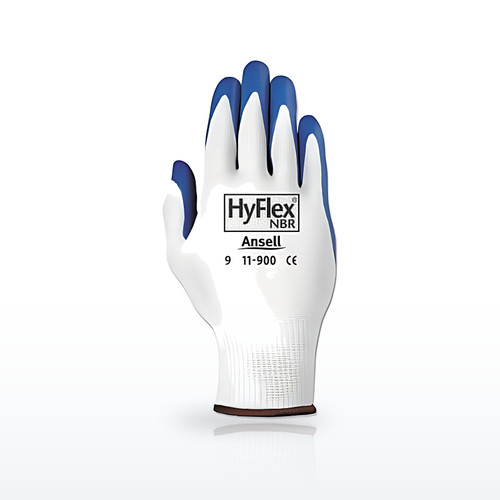
 HyFlex®
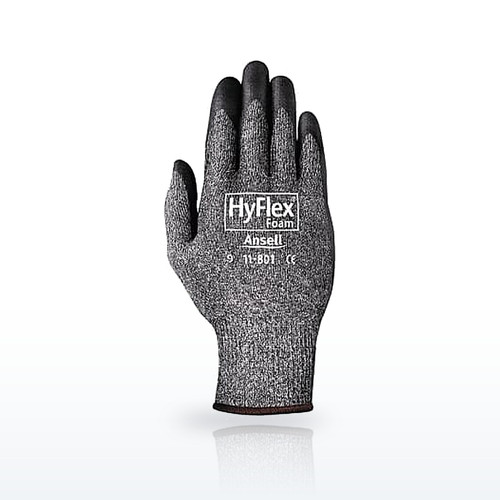
HyFlex 103385 Nitrile Foam Palm Coated Gloves, Size 10, Black/Dark Grey
Item # 103385$64.20 -
-

-

-

-
-

-

-

-

-

-
-
-

-