

Strap
Cross-arm straps, scaffold choker straps and cable chokers from Safewaze and Miller, 3 to 6 feet, fixed and adjustable, for beams, tubular structures and columns. Length and D-ring style are in the name.
In this category
20 products from Safewaze, Miller, FallTech, Guardian Fall Protection. ANSI User Capacity: 130 to 310 lb max. (4), 131 to 310 lb max. (1). D-Rings: Plated alloy steel (4). Webbing: Polyester (3), Kevlar (2). Sold individually (4).
Brands in this category: Safewaze (8) · Miller (6) · FallTech (5) · Guardian Fall Protection (1)
How to read a fall protection rating
ANSI/ISEA Z359 covers harnesses, lanyards, self-retracting devices and anchorage connectors. A Z359.11 harness is rated for a user weight (clothing and tools included) of 130 to 310 lb; OSHA 1926.502 sets maximum arresting force at 1,800 lb with a full-body harness and a free fall of no more than 6 ft. Energy-absorbing lanyards and SRLs list the maximum arrest force and arrest distance from the standard's test; the product label carries the standard, capacity and date of manufacture.
What the rules say about strap
OSHA 1926.451 Scaffolds, General Requirements: what it requires and the equipment it names: 29 CFR 1926.451(g) requires each employee on a scaffold more than 10 feet above a lower level to be protected from falling: by a personal fall arrest system on boatswains' chairs, catenary, float, needle beam and ladder jack scaffolds; by both a personal fall arrest system and a guardrail on single-point and two-point adjustable suspension scaffolds and rope-supported self-contained adjustable scaffolds; by a guardrail or personal fall arrest system on all other scaffolds (including supported frame scaffolds and scissor lifts); and by a competent person's determination of what is feasible for erectors and dismantlers. OSHA 1926.502 Fall Protection Systems Criteria and Practices: what it requires and the equipment it names: 29 CFR 1926.502 sets the criteria for every system 1926.501 allows. Guardrails: top rail 42 inches plus or minus 3 that withstands 200 pounds, midrail 150 pounds. Personal fall arrest: connectors of forged or formed steel, D-rings and snaphooks of 5,000 pounds tensile proof tested to 3,600, locking snaphooks, lanyards and vertical lifelines of 5,000 pounds, SRLs limiting free fall to 2 feet rated 3,000 pounds, anchorages of 5,000 pounds per employee or engineered to a safety factor of two, arresting force limited to 1,800 pounds, free fall limited to 6 feet, deceleration distance 3.5 feet, dorsal attachment, inspection before each use, and no body belts since 1998. OSHA 1926.1423 Fall Protection on Cranes and Derricks: what it requires and the equipment it names: 29 CFR 1926.1423 requires fall protection for employees on crane and derrick equipment: for non-assembly work, on any walking or working surface with an unprotected side or edge more than 6 feet above a lower level, when moving point to point on non-lattice booms, on lattice booms that are not horizontal, on horizontal lattice booms where the fall is 15 feet or more, and while at a work station anywhere on the equipment except the cab, deck or draw-works; for assembly and disassembly, above 15 feet. Every rule page lists the equipment the rule names with the products we carry for it; the safety rules index has them all.
Guides for strap
What is an anchor point, and what must it hold? The 5,000-pound rule · Fall protection on scaffolds: when it is required and what kind · Temporary, permanent and engineered anchors: the types of fall protection anchors, and how strong an anchor must be for restraint · What is a horizontal lifeline, and what does 1926.502(d)(8) require? Temporary cable, rope and retractable systems, by users and span · What is a controlled access zone? The control line rules in 1926.502(g), who may enter, and where a CAZ is allowed · Competent person vs qualified person vs authorized person: the OSHA definitions, and what each one does in fall protection
Ratings and specifications on this page are shown as published by the manufacturer or the named standard and describe performance in that standard's test. They are not a recommendation for any task. The employer's hazard assessment decides what protective equipment a job needs. Verify details against the manufacturer's current documentation before you buy.
MSA series
MSA Anchorage Connector, MSA Cable Sling, MSA Suretyman.
Protecta series
-
-
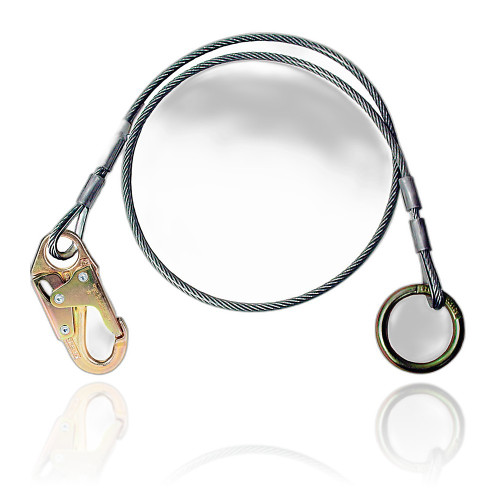 MSA
MSA 10095264 Anchor Strap, Extension, 6 ft Cable, 36C snaphook & O-Ring, 400 lb
Item # 10095264$85.49 -

-

-
 MSA
MSA 10002820 Anchor Strap, Anchorage Connector Large hook with strap, 400 lb
Item # 10002820$69.49 -
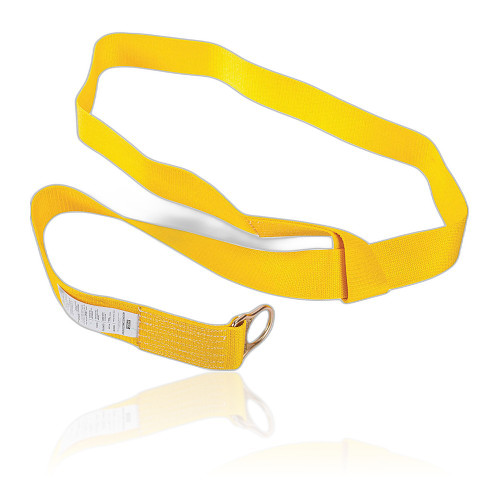 MSA
MSA 10002658 Anchor Strap, 8 ft Anch Strn Fx Lp D Ltd, Nylon, Yel, 400 lb
Item # 10002658$65.99 -

-
 FallTech
 7244 Strap and Sling Anchors, WeldTech, Cinch-loop Choker, Kevlar Web
Item # 7244$142.00 -
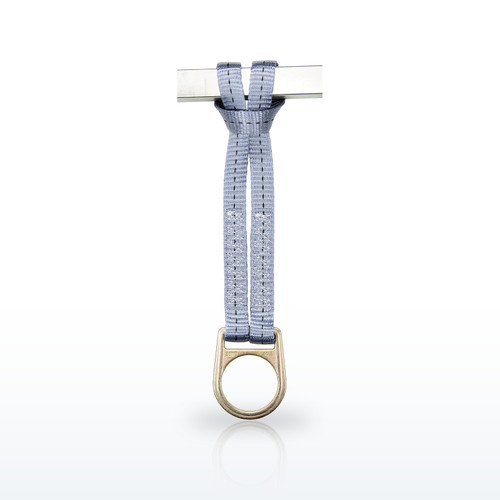
-
 FallTech
 7372 Strap and Sling Anchors, Pass-through Choker, Heavy-duty Wear Pad
$36.80 and up -
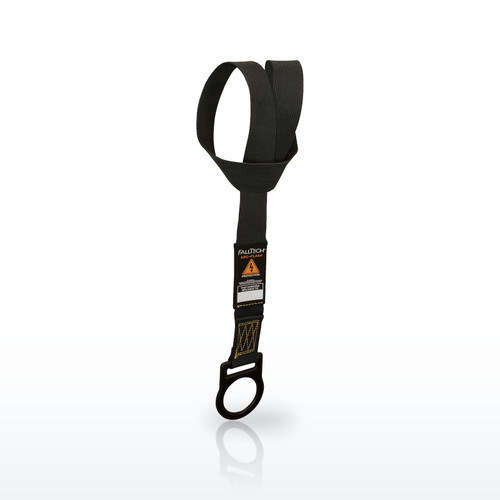
-
 FallTech
 7236 Strap and Sling Anchors, Cinch-loop Web for Choke-on Installation
$32.40 and up -
