
Is a safety harness PPE? Where OSHA places it, who pays for it, and why a belt is not a harness
Yes. A full-body harness is personal protective equipment: it is worn on the body and protects the person wearing it, and OSHA treats it that way in both rulebooks. In general industry, 1910.132(g) names 1910.140, the personal fall protection systems section, as one of the sections the PPE hazard assessment and training paragraphs apply to, which puts harnesses, lanyards and SRLs inside Subpart I, Personal Protective Equipment. In construction, Subpart E, 1926.95, sets the general PPE duties (provide, maintain, fit, pay) and 1926 Subpart M sets the fall protection specifics; the payment rule in 1926.95(d) covers any protective equipment used to meet Part 1926, so the employer pays for the harness. What a harness is not is a fall protection system on its own: OSHA defines the personal fall arrest system as the anchorage, connectors and body harness together, and the harness is only the body support. A body belt is PPE too, but since January 1, 1998 it has not been acceptable as part of a fall arrest system; it may be used for positioning, and in general industry for travel restraint.
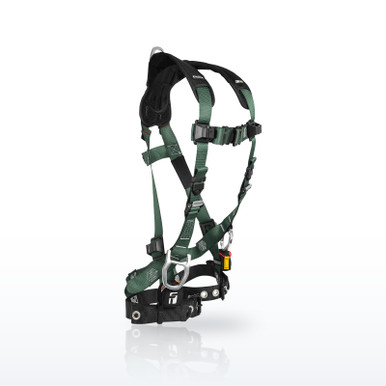 FallTech 19103D Harnesses, FT-1910 3D Standard Non-Belted, Tongue Buckle LegsA full-body harness with back and side D-rings: PPE under Subpart I and Subpart E, and the body support of a fall arrest system (FallTech data)
Why the question comes up. OSHA’s PPE sections list eyes, face, head, extremities, protective clothing, respirators and shields, and never say the word harness. Fall protection has its own subparts, so safety programs often file harnesses under “fall protection” and PPE under “gloves and glasses” as if they were different things. They are not. The general industry PPE rule reaches into the fall protection section by name, the construction payment rule covers all of Part 1926, and the training rules in both parts apply to the person wearing the equipment. The practical consequences are the ones that follow for any PPE: the employer assesses the hazard, selects the equipment, pays for it, fits it, trains the worker and makes sure it is used. The one thing that is different about a harness is that it only works as part of a system, so the hazard assessment has to cover the anchor and the connector as well as the thing being worn.
Where each rulebook puts the harness
The paragraphs that make a harness PPE, and the ones that make it part of a system.
What follows from a harness being PPE
| Duty | General industry | Construction |
|---|---|---|
| Hazard assessment and selection | 1910.132(d), applied to fall protection by (g) | 1926.95(a) and (c); the 1926.501 duty paragraphs decide when |
| Pay for it | 1910.132(h) | 1926.95(d) |
| Fit | 1910.132(d)(1)(iii) “properly fits” | 1926.95(c)(2) “properly fits each affected employee” |
| Train the wearer | 1910.132(f) and 1910.30 | 1926.503 (and 1926.21 generally) |
| Inspect and remove defective gear | 1910.140(c)(17)–(18) | 1926.502(d)(19) and (d)(21) |
| Employee-owned harness | 1910.132(b): employer still answers for adequacy | 1926.95(b): the same |
| Use it only for fall protection | 1910.140(c)(16): not for hoisting equipment or materials | 1926.502(d)(23): not attached to guardrail systems or to hoists |
Source: 29 CFR 1910.132, 1910.140, 1910.30, 1926.95, 1926.502 and 1926.503 (e-CFR text as of Nov 5 2026).
What is a fall protection device, and what is the difference between a safety belt and a harness?
The terms as the rules and the manufacturer use them:
- “Fall protection device” is buyer wording, not an OSHA term. OSHA’s words are the system names (guardrail system, safety net system, personal fall arrest system, positioning device system, travel restraint system, ladder safety system, warning line system, controlled access zone, safety monitoring system, cover) and the component names (anchorage, anchorage connector, body harness, body belt, connector, lanyard, lifeline, deceleration device, self-retracting lifeline/lanyard, rope grab). FallTech’s glossary gives the plain reading: fall protection is “a system or equipment that prevents or mitigates the effect of a fall.”
- A body belt, which the trade also calls a safety belt, is “a strap with means both for securing about the waist and for attaching to other components such as a lanyard” (1910.140(b)). It loads the waist alone. A body harness distributes the forces “over at least the thighs, pelvis, waist, chest, and shoulders.” That is the whole reason for the 1998 change: a fall arrested at the waist can injure the spine and organs and leaves the person hanging bent over.
- The limits that go with each: a fall arrest system with a harness may put at most 1,800 lb on the person; the old belt figure in the rule, 900 lb, survives only as text (1926.502(d)(16)(i)–(ii)). A positioning device system, belt or harness, is rigged so the free fall cannot exceed 2 feet (1926.502(e)(1)). A travel restraint line must hold 5,000 lb (1910.140(c)(14)).
- FallTech’s glossary states the same rule in its own words: effective January 1, 1998, per Federal OSHA, body belts are not acceptable as part of a personal fall arrest system, and the use of a body belt in a positioning device system is acceptable. Its body belts are listed with “Work Positioning” or “Restraint” in the Application field on this site, never fall arrest.
- Active and passive: FallTech describes guardrails, barriers and covers as passive systems that protect an area once installed and need little or nothing from the worker, and harness-based systems as active systems that depend on the worker wearing the equipment, connecting to a suitable anchorage, inspecting it and staying tied off. The harness is the PPE in an active system; a guardrail is not PPE at all.
More questions people ask
Does OSHA allow body belts, and what systems can a body belt be used for?
Yes, outside fall arrest. The rule is in 1926.502(d): effective January 1, 1998, body belts are not acceptable as part of a personal fall arrest system, with the note that the use of a body belt in a positioning device system is acceptable and regulated under paragraph (e). In general industry 1910.140 adds travel restraint and ladder safety systems to the belt’s allowed uses. So a body belt (the trade’s “safety belt”) may hold a worker in position on a pole, rebar wall or form where free fall is limited to 2 feet, and in general industry may keep a worker from reaching an edge; the moment a system has to catch a fall, a full body harness is required. FallTech’s body belts on this site carry Work Positioning or Restraint in the Application field, never fall arrest.
Answers from the sources named above and in the byline.Questions people ask
Is a safety harness a PPE?
Yes. In general industry 1910.132(g) applies the PPE hazard assessment and training paragraphs to 1910.140, personal fall protection systems; in construction 1926.95 sets the PPE duties and payment rule for all of Part 1926, which includes Subpart M fall protection. A harness is PPE and also the body support of a fall arrest, restraint or positioning system.
Does a harness fall under PPE for the payment rule?
Yes. 1910.132(h) and 1926.95(d) require the employer to provide, at no cost to the employee, the protective equipment used to comply with the part. The exceptions (ordinary safety-toe boots, prescription safety glasses worn off the job, everyday and weather clothing) do not include harnesses.
What is a fall protection device?
Not an OSHA term. The rule names systems (guardrail, net, personal fall arrest, positioning, travel restraint, ladder safety, warning line, controlled access zone, safety monitoring, cover) and components (anchorage, connector, harness, belt, lanyard, lifeline, deceleration device, SRL, rope grab). FallTech’s glossary defines fall protection as a system or equipment that prevents or mitigates the effect of a fall.
What is the difference between a safety belt and a harness?
A body belt secures about the waist only and attaches to a lanyard; a body harness distributes fall arrest forces over the thighs, pelvis, waist, chest and shoulders. Since January 1, 1998 a belt is not acceptable in a fall arrest system; it is still allowed in positioning (both rulebooks) and travel restraint and ladder safety systems (general industry).
Why is a full body harness used instead of a belt for fall arrest?
Because the rule requires it and because of where the force goes. A harness spreads the arresting force (limited to 1,800 lb) across the body and leaves the person upright for rescue; a belt concentrates the force at the waist. OSHA removed the belt from fall arrest on January 1, 1998 (1926.502(d)).
Does OSHA require a hazard assessment for fall protection PPE?
In general industry, yes: 1910.132(d) is applied to 1910.140 by 1910.132(g), so the employer assesses the workplace, selects the equipment, tells the employee what was selected and certifies the assessment in writing. In construction the duty paragraphs of 1926.501 do the selecting by situation.
Can I use my own harness at work?
The rules allow employee-owned PPE, but the employer remains responsible for its adequacy, maintenance and sanitation (1910.132(b), 1926.95(b)) and may not require the employee to provide or pay for it (1926.95(d)(6)).
Is a harness alone a fall arrest system?
No. A personal fall arrest system is the anchorage, connectors and body harness together, and may include a lanyard, deceleration device or lifeline (1926.500(b)). The harness is the B in the trade’s ABCs: anchorage, body support, connector.
Does the PPE training rule cover harnesses?
Yes. 1910.132(f) applies to 1910.140 through (g): when the PPE is necessary, what PPE, how to put it on, adjust and wear it, its limitations, and its care and disposal, with a demonstration of understanding. Construction uses 1926.503, the fall protection training section.
What does the December 2024 fit rule change for harnesses?
1926.95(c)(2) now requires construction PPE to be “selected to ensure that it properly fits each affected employee,” which is the construction counterpart of the general industry fit wording. Harness sizing charts are on each product page; the donning guide below covers the fit checks.
Does OSHA allow body belts?
For positioning (1926.502(d) note and (e)) and, in general industry, for travel restraint and ladder safety systems (1910.140): yes. For fall arrest: not since January 1, 1998.
What systems can body belts be used for in fall protection?
Positioning device systems (free fall limited to 2 ft), and in general industry travel restraint and ladder safety systems. Never a personal fall arrest system.
What is a 2 point safety belt, and how many types of safety belts are there?
The trade sorts body belts by their D-rings: a single-D belt for restraint and a 2-point (two side D-ring) belt for positioning with a lanyard around a pole or structure. Both are body belts under 1910.140(b): a strap secured about the waist with a means of attaching a lanyard.
What is the standard length of a safety harness belt?
Harnesses do not have a belt length; they are sized by torso and leg adjustment (Safewaze XS to 3XL, FallTech UniFit and XS to 4XL). A body belt is sized by waist, and its manufacturer’s chart gives the range for each size.
Is a safety belt the same as a safety harness?
No. A body belt secures about the waist only; a body harness distributes fall arrest forces over the thighs, pelvis, waist, chest and shoulders (1926.500(b)). Since 1998 only the harness is allowed for fall arrest.
Related guides
Who pays for PPE?The OSHA employer payment ruleThe 1910.132 hazard assessmentWhat the PPE rule asks the employer to do firstPPE trainingWhat 1910.132(f) requiresOSHA safety harness requirementsWhat 1926.502(d) saysWhat is a personal fall arrest system?The ABCsWhat are the types of safety harnesses?By the D-rings the manufacturer listsThe ratings, test results and standards shown here are the manufacturers' published values, reproduced as published. Nothing on this page is a recommendation by Bayshore Safety that any product is suitable for a particular task, hazard or workplace. Selecting safety products and protective equipment is the responsibility of the end user and the employer, based on their own hazard assessment and the regulations that apply to their work. Confirm every value on the manufacturer's own documentation before use.