
What is the 2 2 2 rule for helmets, and how often should a hard hat be replaced? The 5-year rule, the 10-year helmet, what Z89.1 and OSHA say, each manufacturer’s stated service life, replacement after an impact, and cleaning
There is no 2 2 2 rule in ANSI/ISEA Z89.1, in OSHA’s head protection rules or in any helmet manufacturer’s instructions we hold; the phrase comes from sports and motorcycle helmet advice and means different things depending on who repeats it. The rules that do exist for an industrial hard hat are these: replace it the day it takes an impact, even with no visible damage; replace the suspension about every 12 months and the shell within about 5 years of first use on most manufacturers’ guidance (Studson states 3 to 5 years of field use and up to 10 years of shelf life); and inspect it before every shift. A 10-year-old helmet has outlived every manufacturer’s stated service life we know of.
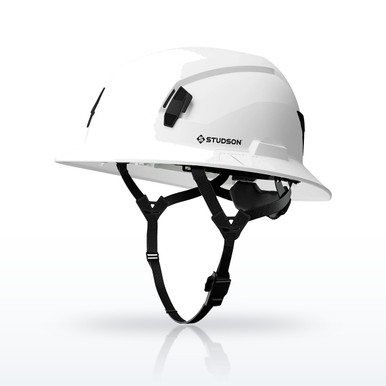 Studson SHK-1 Full Brim Non-Vented Type II Hard Hat, Class E, 15 ColorsStudson states a 3-year warranty, 3 to 5 years of field use and up to 10 years of shelf life for the SHK-1
Why a rule nobody wrote gets asked about 364 times. Helmet advice travels between sports, and the numbers travel with it: a bicycle shop’s fit check, a motorcycle forum’s replacement interval and an eye doctor’s screen-break rule all end up asked about hard hats as if they were OSHA requirements. None of them are. What an industrial helmet actually has is a standard (Z89.1) that requires the manufacturer to publish inspection and replacement instructions, an OSHA rule (1910.132(e)) that forbids using damaged equipment, an advisory OSHA bulletin that says to retire a helmet after any impact, and a service-life figure printed by each manufacturer. This page sorts the number rules people ask about from the rules that apply, then gives the replacement schedule, what each manufacturer states, the special cases (chainsaw, climbing and welding helmets) and how to clean a hat so it lasts its stated life.
The number rules, one by one
Each card says where the phrase comes from and what, if anything, applies to a hard hat under Z89.1 and OSHA.
Replacement in plain words
- The 2 2 2 rule, the 2-4-1 check and the 20/20/20 rule are sports-helmet and eye-strain phrases; none is in Z89.1 or OSHA’s rules.
- After any impact: replace the hat that day, even if it looks fine. OSHA’s bulletin, 1910.132(e) and every manufacturer agree.
- Suspension about every 12 months; shell within about 5 years of first use on most manufacturers’ guidance; Studson states 3 to 5 years of field use.
- No hard hat prints an expiry date. The molded date is the manufacture date; the service life usually counts from the day it was issued.
- A 10- or 20-year-old helmet is past every stated service life; Studson’s 10 years is a shelf life for a helmet never issued.
- Inspect every shift: shell, suspension or pads, chin strap, label. Squeeze test monthly.
- Clean with mild soap and water, air dry out of the sun; SHK-1 pads hand wash cold. No solvents, no heat, no truck dashboard.
Questions people ask
What is the 2 2 2 rule for helmets?
A sports-helmet phrase, used for fit checks or replacement intervals depending on who repeats it. It is not in ANSI/ISEA Z89.1, OSHA’s rules or any hard hat manufacturer’s instructions; the industrial rules are replace after impact, suspension yearly, shell within about five years.
What is the 222 rule for helmets?
The same phrase written without spaces; no such rule exists for industrial head protection. See the replacement schedule above.
What is the 5 year helmet rule?
Most hard hat manufacturers (MSA and 3M among those we quote) state the shell is replaced within five years of first use and the suspension every 12 months. OSHA and Z89.1 do not set the number; Z89.1 requires you to follow the manufacturer’s instruction.
Is a 10 year old helmet still good?
No. Five years of field use is the common ceiling and Studson states 3 to 5; the only 10-year figure any manufacturer gives is a shelf life for a helmet never put into service.
Is a 20 year old helmet still good?
No. It is past every manufacturer’s service life, and plastic shells and impact liners age in storage as well as in use.
Do hard hats expire after 5 years?
They do not carry an expiry date, but most manufacturers instruct replacement within five years of first use, sooner in sun, heat or chemicals, and immediately after an impact.
How often should hard hats be replaced?
Suspension about every 12 months; shell within about five years of first use (Studson: 3 to 5 years); the whole hat the day it takes an impact, fails the squeeze test, or loses its label.
When must a hard hat be replaced after an impact?
Immediately, even with no visible damage: OSHA’s 2024 bulletin, 1910.132(e) and the manufacturers’ instructions all say so, because the shell and liner absorb energy by deforming.
What is the 2-4-1 rule for checking if a helmet fits correctly?
A bicycle-helmet fit check: two fingers above the eyebrows, straps in a V under the ears, one finger under the chin strap. A fair description of a snug chin strap, but not a Z89.1 requirement.
What is the 20/20/20 rule OSHA?
An eye-strain guideline (every 20 minutes, look 20 feet away for 20 seconds), not an OSHA rule and nothing to do with helmets.
How long do hard hats last before expiry?
Until the manufacturer’s service life runs out (about five years of use on most guidance), until an impact, or until inspection finds damage, whichever comes first.
What is the expiry date for JSP hard hats?
JSP, like every manufacturer, prints a manufacture date and publishes a service-life instruction rather than an expiry date; the instruction sheet with the helmet is the source, and we do not quote a figure we have not read.
How long is an MSA hard hat good for?
MSA’s V-Gard instructions, as quoted in our expiry guide: replace the suspension every 12 months and the helmet every 5 years, and after any impact.
How long is a Studson helmet good for?
Studson states 3 to 5 years of field use, up to 10 years of shelf life from the manufacture date, and a 3-year warranty; any impact retires it.
How often should you replace your chainsaw helmet?
The hard hat shell on its manufacturer’s schedule (commonly five years, immediately after impact), the earmuff cushions about twice a year, and the mesh visor when it is dented or loose.
How do you clean a hard hat?
Mild soap and warm water, rinse, air dry out of the sun; no solvents, abrasives or heat. Suspensions and pads come out and are washed the same way; Studson’s pads are hand-washed cold.
Where can I find replacement helmet liners and pads?
From the helmet’s manufacturer, made for that model: the SHK-1 Ionic+ pad set and fleece liner are on this page, and the live suspension guide lists suspensions by hard hat model.
What is the MSA replacement schedule?
Suspension every 12 months and helmet every 5 years from the date placed in service, with daily inspection and replacement after any impact, as MSA’s helmet FAQ states.
Related guides
Do hard hats expire?Service life, the date stamp, and when to replace oneHard hat inspectionWhat to check and how oftenHow to assemble a hard hat suspensionPin-lock and ratchetDoes OSHA allow stickers on hard hats?What the manufacturer statesStudson SHK-1 questions answeredFull brim or standard, Class C or E, HighBar, dual cert, weight and service lifeIs it a legal requirement to wear a hard hat?Who decides, who pays and what OSHA citesWhat are hard hats made of?HDPE, polycarbonate, fiberglass and ABSMSA V-Gard questions answeredService life, CSA, Fas-Trac III, Skullgard and what fitsThe ratings, test results and standards shown here are the manufacturers' published values, reproduced as published. Nothing on this page is a recommendation by Bayshore Safety that any product is suitable for a particular task, hazard or workplace. Selecting safety products and protective equipment is the responsibility of the end user and the employer, based on their own hazard assessment and the regulations that apply to their work. Confirm every value on the manufacturer's own documentation before use.