PROTECTA®
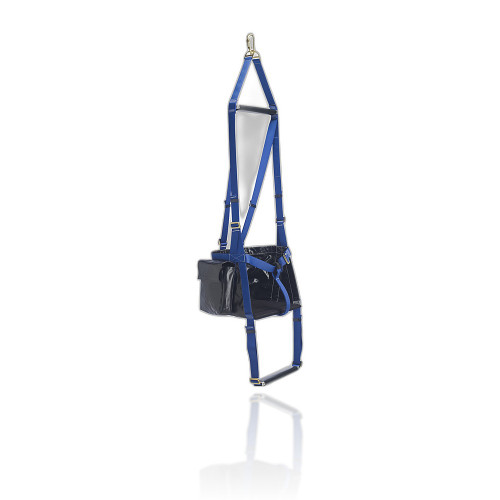
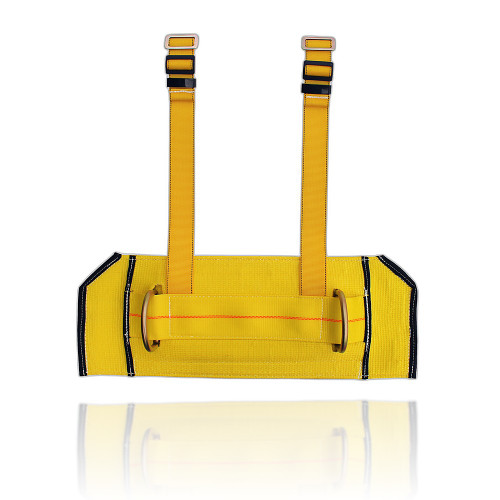
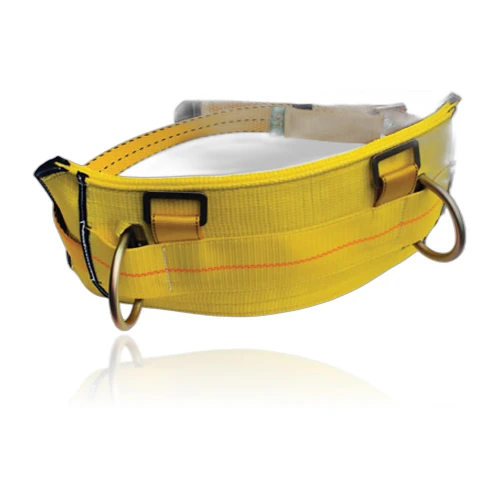
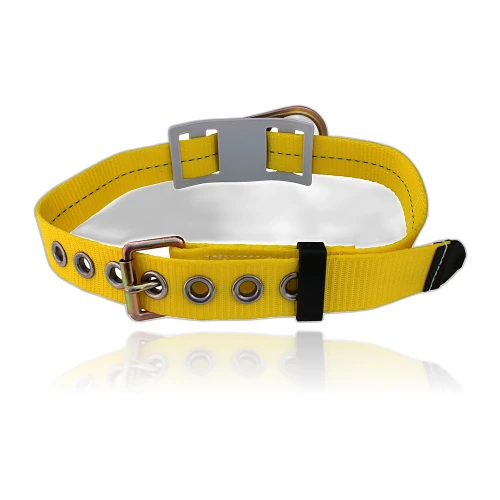
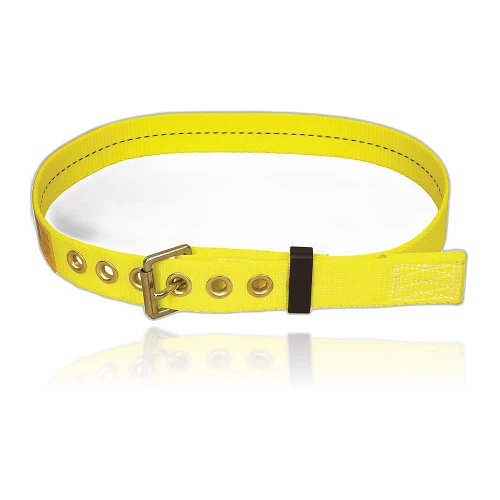
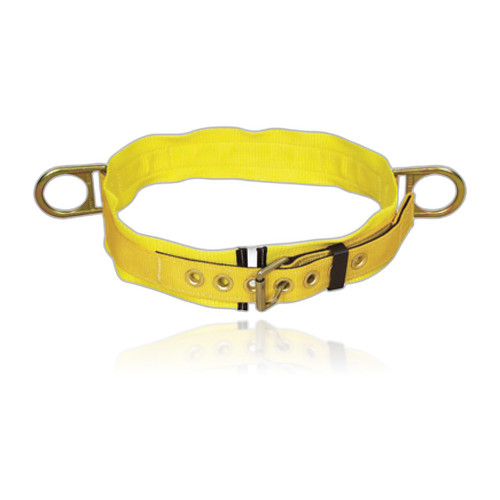
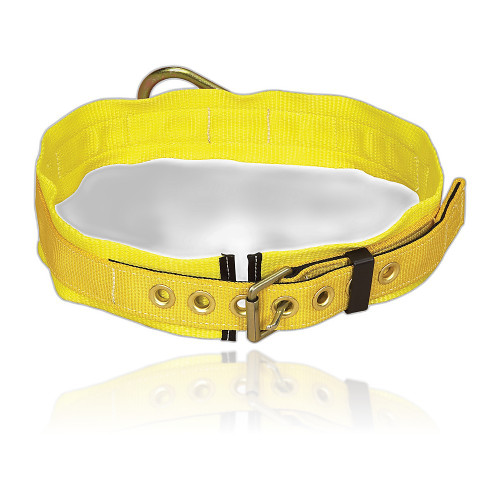
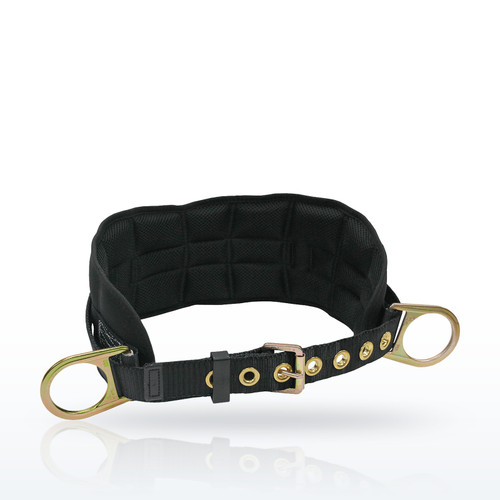
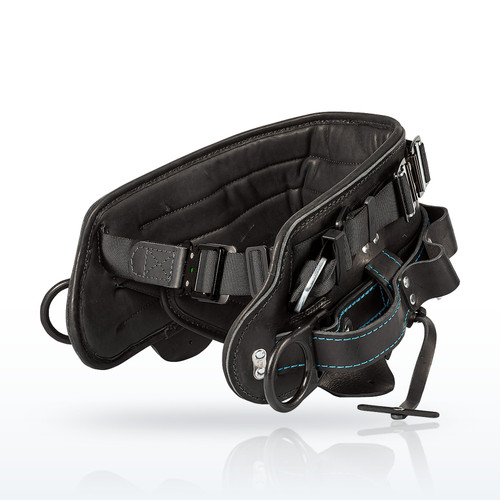
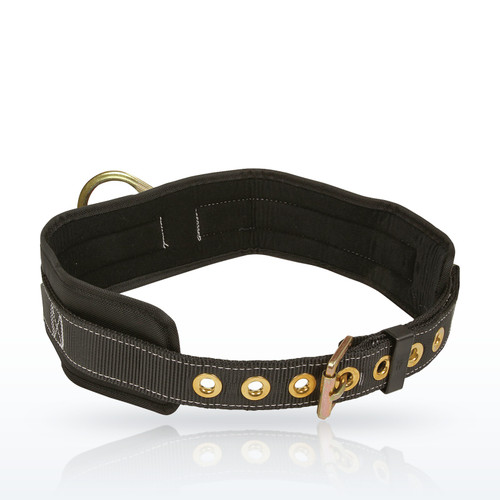
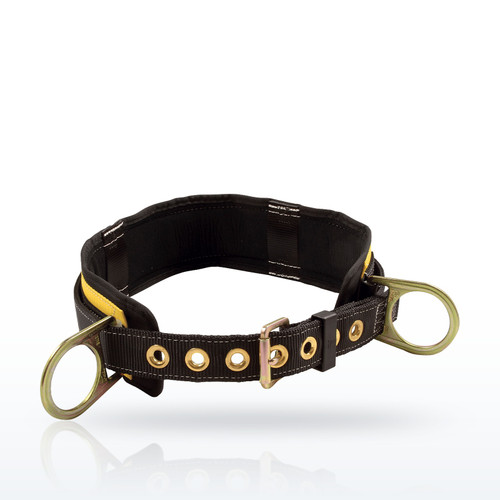
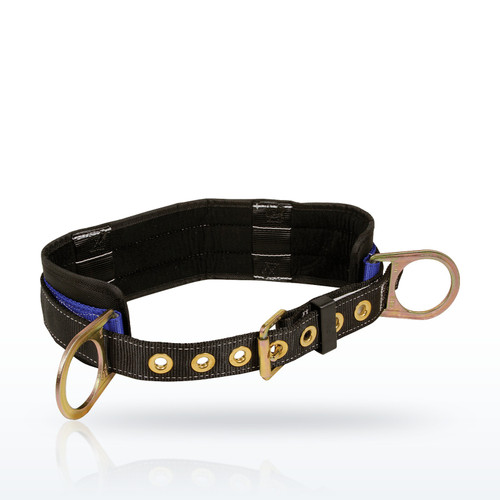
3M Protecta 1161206 P200 Positioning Belt, Comfort Construction, Parachute
Item # 1161206
$138.00

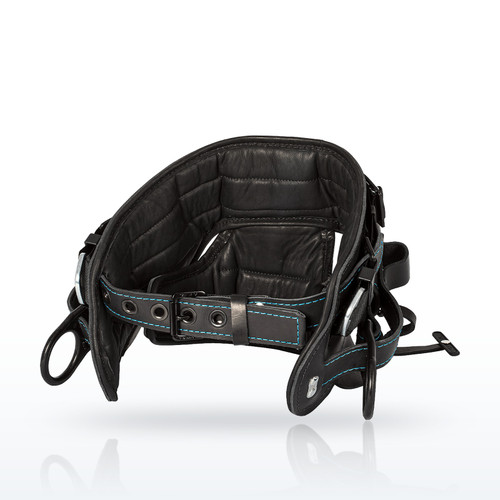
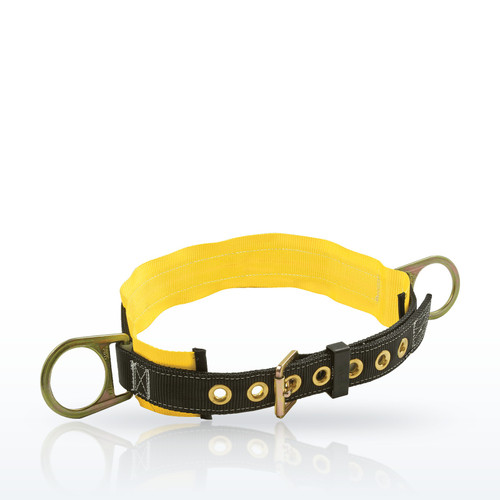
Single and double D-ring body belts for positioning and restraint, plus DBI-SALA ladder truck restraint belts. Webbing width and pad are in the name; not for fall arrest.
32 products from FallTech, Miller, DBI-SALA, MSA. ANSI User Capacity: 130 to 310 lb max. (5). D-Rings: Plated alloy steel (5), Overmolded alloy steel (2). Webbing: Polyester (5). Sold individually (7).
Brands in this category: FallTech (7) · Miller (6) · DBI-SALA (1) · MSA (1)
ANSI/ISEA Z359 covers harnesses, lanyards, self-retracting devices and anchorage connectors. A Z359.11 harness is rated for a user weight (clothing and tools included) of 130 to 310 lb; OSHA 1926.502 sets maximum arresting force at 1,800 lb with a full-body harness and a free fall of no more than 6 ft. Energy-absorbing lanyards and SRLs list the maximum arrest force and arrest distance from the standard's test; the product label carries the standard, capacity and date of manufacture.
OSHA 1910.140 Personal Fall Protection Systems: what it requires and the equipment it names: 29 CFR 1910.140 is the equipment rule behind 1910.28: when 1910.28 requires a personal fall arrest, travel restraint or positioning system, 1910.140 says what the system must be. Connectors must be forged or formed steel with a 5,000 pound tensile capacity and a 3,600 pound proof test, snaphooks and carabiners must lock automatically, lanyards and vertical lifelines must break at 5,000 pounds or more, and anchorages must hold 5,000 pounds per attached employee or be engineered to a safety factor of two. OSHA 1926.502 Fall Protection Systems Criteria and Practices: what it requires and the equipment it names: 29 CFR 1926.502 sets the criteria for every system 1926.501 allows. Guardrails: top rail 42 inches plus or minus 3 that withstands 200 pounds, midrail 150 pounds. Personal fall arrest: connectors of forged or formed steel, D-rings and snaphooks of 5,000 pounds tensile proof tested to 3,600, locking snaphooks, lanyards and vertical lifelines of 5,000 pounds, SRLs limiting free fall to 2 feet rated 3,000 pounds, anchorages of 5,000 pounds per employee or engineered to a safety factor of two, arresting force limited to 1,800 pounds, free fall limited to 6 feet, deceleration distance 3.5 feet, dorsal attachment, inspection before each use, and no body belts since 1998. Every rule page lists the equipment the rule names with the products we carry for it; the safety rules index has them all.
Is a safety harness PPE? Where OSHA places it, who pays for it, and why a belt is not a harness
What are the three main types of fall protection authorized by OSHA? Guardrail systems, safety net systems and personal fall arrest systems. Those are the three conventional systems 1926.501(b)(1) names for an unprotected side or edge, and the three a fall protection plan must show are infeasible before anything else is used (1926.502(k)(5)). The general industry rule adds personal fall protection systems as a group: arrest, travel restraint and positioning (1910.28(b)(1)(i)(C)). More in the guide: What are the four types of fall protection? Guardrails, safety nets, personal fall arrest and restraint, and the five-level hierarchy manufacturers teach
What is OSHA's 3 most cited violation? Fall Protection, general requirements, 29 CFR 1926.501, first on OSHA’s most-frequently-cited list for the preliminary fiscal year 2026 (October 1, 2025 to August 31, 2026), as it has been every year since 2011; its FY2025 count was reported at 5,914 citations. Scaffolding (1926.451), ladders (1926.1053) and fall protection training (1926.503) are also in the top ten. More in the guide: What are an employer’s fall protection responsibilities? The duties in 1926.501, 1926.502 and 1926.503, and the standard OSHA cites most
How often do fall protection harnesses need to be inspected? Twice over: by the user before each use (1926.502(d)(21)) or before initial use during each work shift (1910.140(c)(18)), and by a competent person other than the user at the interval the manufacturer sets, which ANSI/ASSP Z359.2 and the major manufacturers put at no more than one year, recorded. More in the guide: How often must a harness be inspected, and what to look for
What is a 5 point safety harness? In fall protection the “points” are adjustment points, not D-rings: a full-body harness adjusts at the two shoulders, the two legs and the chest strap, five in all, and the D-ring count is given separately (1D, 3D, 4D, 5D, 6D). A five-point harness in a race car or a child seat is a different product and is not fall protection. FallTech lists both figures on each harness page: the attachment points in the D-ring field and the buckles in the leg and chest fields. More in the guide: What are the D-rings on a harness for? Dorsal, side, front, sternal and shoulder
How to use fall protection equipment? As the system criteria and the manufacturer’s instructions direct: a full body harness with the attachment at the center of the back near shoulder level (1926.502(d)(17)), connected by a lanyard or SRL to an anchorage that holds 5,000 lb or is engineered (d)(15), rigged so free fall stays at 6 feet or less and the worker cannot hit a lower level (d)(16), inspected before each use (d)(21), and taken out of service after a fall (d)(19). Training under 1926.503 covers the procedures for the systems in use on that site. More in the guide: OSHA fall protection requirements explained: 1926 Subpart M, section by section
How do you wear a full-body harness? Snug everywhere and loose nowhere: shoulder straps flat over the shoulders, chest strap across the sternum at armpit level, leg straps tight enough that a flat hand slides under with effort, dorsal D-ring between the shoulder blades, no twisted webbing, strap ends in their keepers, pockets emptied of anything that would sit under a strap. The lanyard or SRL connects only to the dorsal ring for fall arrest. More in the guide: How to put on a safety harness and check the fit
Ratings and specifications on this page are shown as published by the manufacturer or the named standard and describe performance in that standard's test. They are not a recommendation for any task. The employer's hazard assessment decides what protective equipment a job needs. Verify details against the manufacturer's current documentation before you buy.