
ANSI/ISEA Z308.1 Minimum Requirements for Workplace First Aid Kits: what it requires and the equipment it names
ANSI/ISEA Z308.1 is the workplace first aid kit standard that OSHA's 1910.151 Appendix A points to as the example of adequate first aid supplies. It sets the minimum fill for a Class A kit (common injuries) and a Class B kit (larger or higher-risk workplaces), and rates the container as Type I to IV by portability and water resistance. We sell nationwide; ships in 1–2 business days; most orders arrive in 3–7 business days.
The plain answer
ANSI/ISEA Z308.1 is the American National Standard for Minimum Requirements for Workplace First Aid Kits and Supplies. OSHA does not incorporate it as a rule; 29 CFR 1910.151(b) requires adequate first aid supplies to be readily available, and non-mandatory Appendix A says the contents listed in Z308.1 are adequate for small worksites, so a Z308.1 kit is the way most employers show they meet the paragraph.
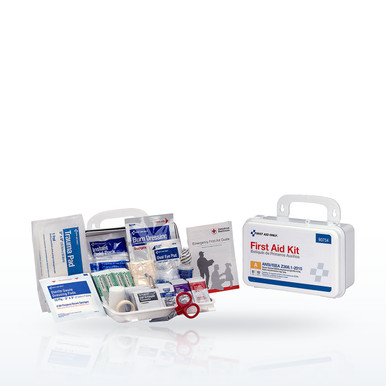
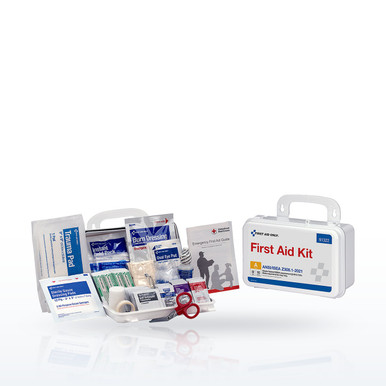
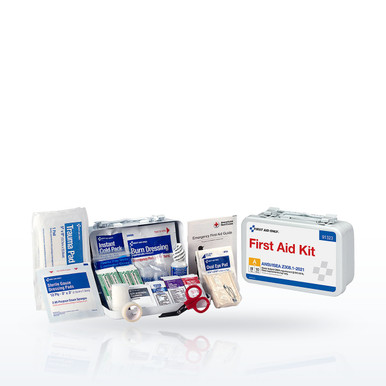
As the manufacturers' catalogs state it (PIP's first aid catalog lists the 2021 classes and piece counts), the 2021 edition defines two classes by contents: a Class A kit for the most common workplace injuries (16 adhesive bandages, adhesive tape, 10 antibiotic treatments, 10 antiseptics, a breathing barrier, a burn dressing, 10 burn treatments, a cold pack, 2 eye coverings, 1 ounce of eye and skin wash, a first aid guide, 6 hand sanitizers, 2 pairs of exam gloves, a roller bandage, scissors, 2 sterile pads, 2 trauma pads, a triangular bandage, a tourniquet and a foil blanket) and a Class B kit with larger quantities (50 adhesive bandages, 25 antibiotic, 50 antiseptic, 25 burn treatments, 4 ounces of eye wash, 4 pairs of gloves, two roller bandages, a splint, 4 sterile pads, 4 trauma pads, 2 triangular bandages and the tourniquet and blanket) for larger, more complex or higher-risk work environments. Containers are Type I (stationary indoor), Type II (portable indoor), Type III (portable, mountable, water resistant) and Type IV (portable, mountable, waterproof for outdoor and mobile use).
The equipment it names is first aid kits and cabinets of Class A and Class B in Type I to IV containers, the listed supplies as refills, and supplementary items the standard lists for the employer's assessment (such as additional tourniquets, splints and bleeding control kits).
What the rule says
Each entry is condensed from the paragraph cited; the paragraph itself is the rule and the link opens it.
29 CFR 1910.151(b): In the absence of a nearby infirmary, clinic or hospital, trained first aiders and adequate first aid supplies readily available.
29 CFR 1910.151 Appendix A: An example of the minimal contents of a generic first aid kit is described in ANSI Z308.1; the contents are adequate for small worksites; larger or multiple operations may need additional kits, equipment and quantities; employers with unique or changing needs enhance their kits, using the OSHA 300 and 301 logs and advice from the local fire and rescue department or emergency room.
29 CFR 1926.50(d): Construction: first aid supplies easily accessible, in a weatherproof container with individually sealed packages for each type of item, checked before each job and at least weekly, expended items replaced (the Type III and IV containers of the standard are built for this).
Source: 29 CFR, Occupational Safety and Health Standards, as published by OSHA (ecfr.gov), read Nov 9 2026.
What the standard sets out, as the manufacturers publish it
Class A kits (Z308.1-2021 minimum fill as PIP's catalog lists it): 16 adhesive bandages 1 by 3 inch; 1 adhesive tape 2.5 yards; 10 antibiotic application 1/57 oz; 10 antiseptic 1/57 oz; 1 breathing barrier; 1 burn dressing 4 by 4 inch gel soaked; 10 burn treatment 1/32 oz; 1 cold pack 4 by 5 inch; 2 eye coverings with means of attachment; 1 eye and skin wash 1 fl oz; 1 first aid guide; 6 hand sanitizer 1/32 oz; 2 pairs medical exam gloves; 1 roller bandage 2 inch by 4 yards; 1 scissors; 2 sterile pads 3 by 3 inch; 2 trauma pads 5 by 9 inch; 1 triangular bandage 40 by 40 by 56 inch; 1 foil blanket 52 by 84 inch; 1 tourniquet (the blanket and tourniquet were added in 2021).
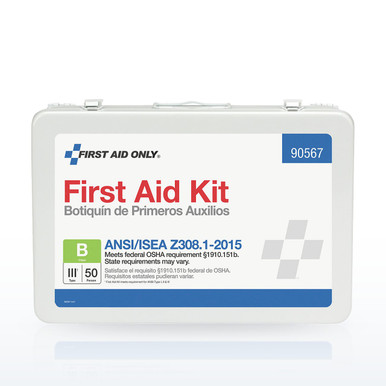
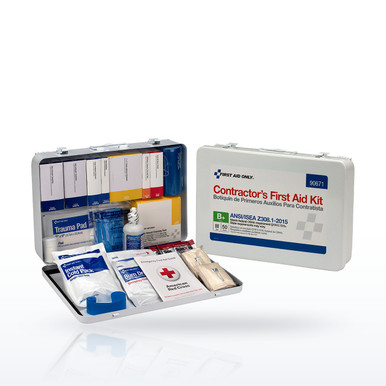
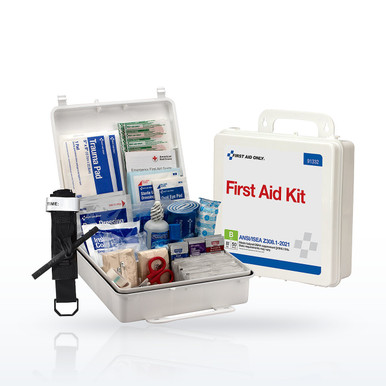
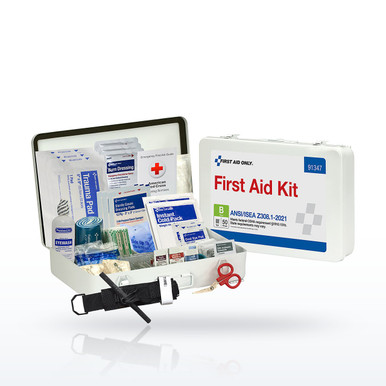
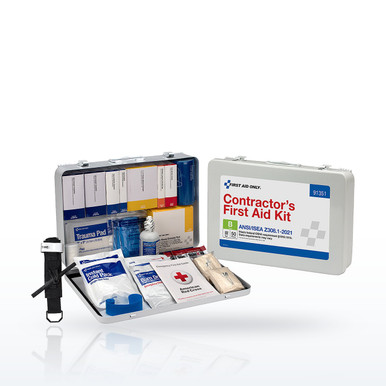
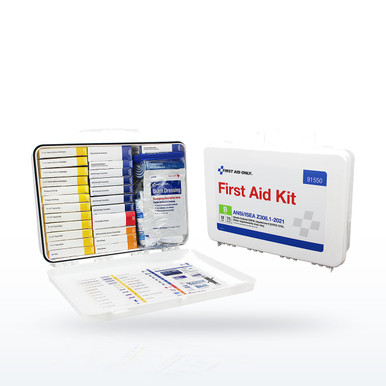
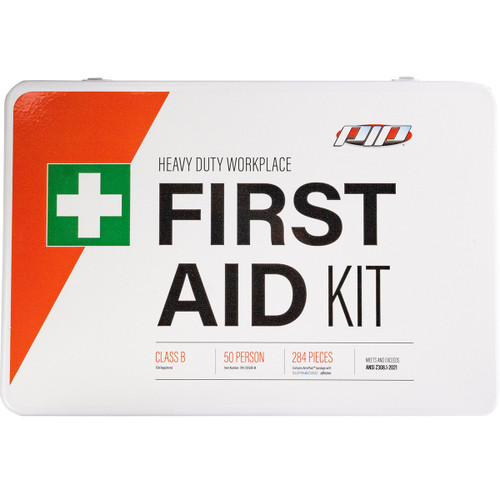
Class B kits: 50 adhesive bandages; 2 adhesive tape; 25 antibiotic application; 50 antiseptic; 1 breathing barrier; 2 burn dressings; 25 burn treatment; 2 cold packs; 2 eye coverings; 1 eye and skin wash 4 fl oz; 1 first aid guide; 10 hand sanitizer; 4 pairs exam gloves; 2 roller bandages 2 inch and 1 roller bandage 4 inch; 1 scissors; 1 splint 4 by 24 inch; 4 sterile pads; 4 trauma pads; 2 triangular bandages; 1 foil blanket; 1 tourniquet. Class B is described for larger, more complex and higher-risk environments.
Container types: Type I, stationary indoor (cabinets, not meant to be carried); Type II, portable indoor; Type III, portable, mountable, with a water-resistant seal for indoor and sheltered outdoor use; Type IV, portable, mountable, waterproof and tested for impact and corrosion, for outdoor and mobile use such as vehicles and jobsites. Kits are labeled with the class, type and the edition.
Supplementary items the standard lists for the employer's own assessment, which manufacturers sell as add-ons: additional tourniquets, bleeding control kits, splints, cold packs, eye wash, analgesics and burn care, with the OSHA 300 log the suggested guide to what a site needs more of.
Source: PIP, "First Aid Products" (May 2024, pages 2–4: ANSI Z308.1-2021 classes and kit piece counts); First Aid Only catalog statements on each product page; 29 CFR 1910.151 Appendix A (ecfr.gov); our guides ANSI Z308.1 Class A vs Class B first aid kits and Type I to IV first aid kits.
California (Cal/OSHA)
Each entry is condensed from the paragraph cited; the paragraph itself is the rule and the link opens it.
Title 8 §3400(c): Adequate first aid materials approved by the consulting physician, readily available on every job, kept sanitary and usable, inspected frequently and replenished; Cal/OSHA names no kit standard, and the Z308.1 fill is what manufacturers supply to meet it.
Source: California Code of Regulations, Title 8, as published by Cal/OSHA (dir.ca.gov), read Nov 9 2026.
Equipment the rule names
| Equipment or condition | What the rule requires | Paragraph |
|---|---|---|
| Class A kit | Minimum fill for common injuries: 16 bandages, 10 antiseptics, burn dressing, cold pack, eye wash 1 oz, 2 pairs gloves, 2 trauma pads, tourniquet, foil blanket and the rest of the list | Z308.1-2021 as the manufacturers state it; 1910.151 Appendix A |
| Class B kit | Larger fill for larger or higher-risk sites: 50 bandages, 50 antiseptics, 4 oz eye wash, 4 pairs gloves, splint, 4 trauma pads, 2 triangular bandages | Z308.1-2021 as the manufacturers state it |
| Type I container | Stationary indoor (cabinet) | Z308.1 as labeled |
| Type II container | Portable indoor | Z308.1 as labeled |
| Type III container | Portable, mountable, water resistant | Z308.1 as labeled |
| Type IV container | Portable, mountable, waterproof; vehicles and outdoor jobsites | Z308.1 as labeled; 1926.50(d) weatherproof |
| Refills | Individually sealed packages of the listed items | 1926.50(d); manufacturers' refill packs |
Source: 29 CFR, Occupational Safety and Health Standards, as published by OSHA (ecfr.gov), read Nov 9 2026.
What we carry for it
Each table lists products whose manufacturer data states the rating or the standard the rule names, every brand we carry that does, with the current price. Sizes and versions are chosen on the product page. The selector linked under each table holds every item of that type.
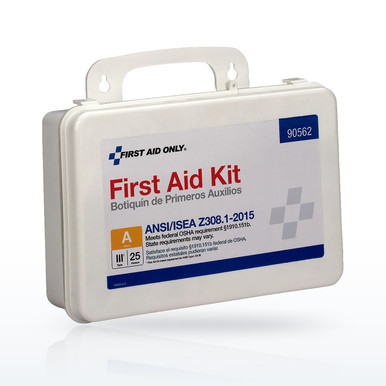
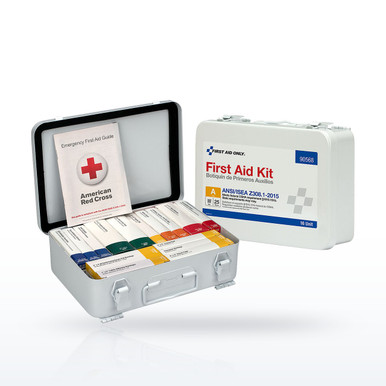
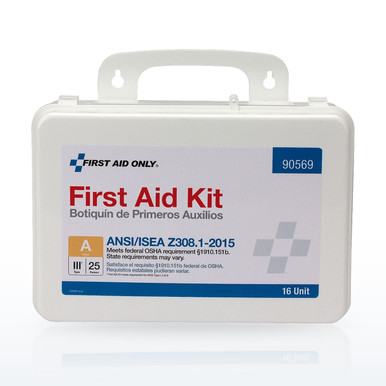
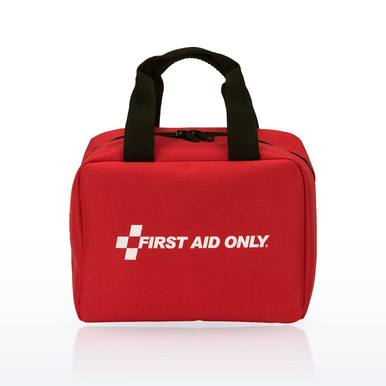
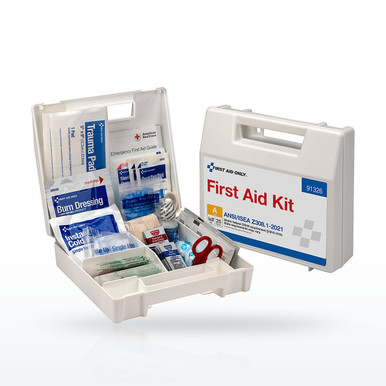
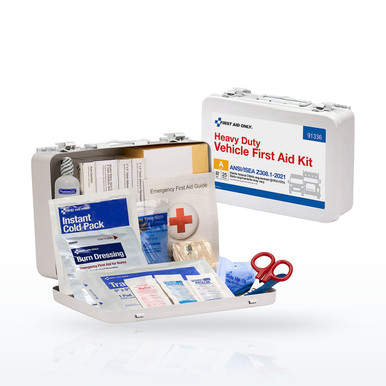
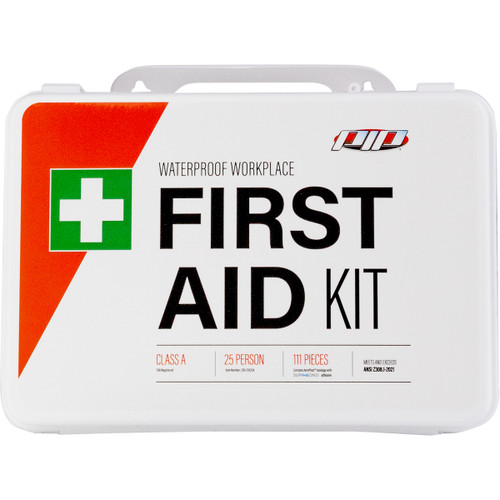
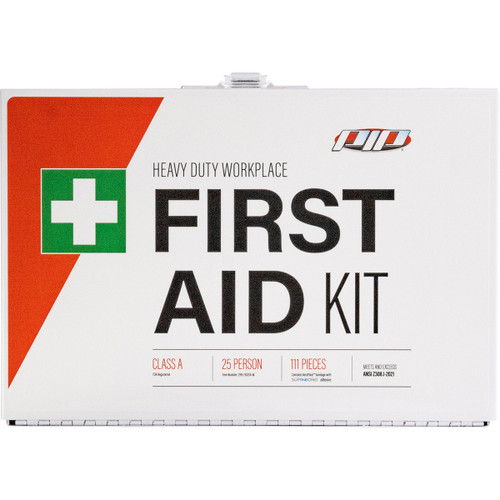
Class A first aid kits as stated by their manufacturers
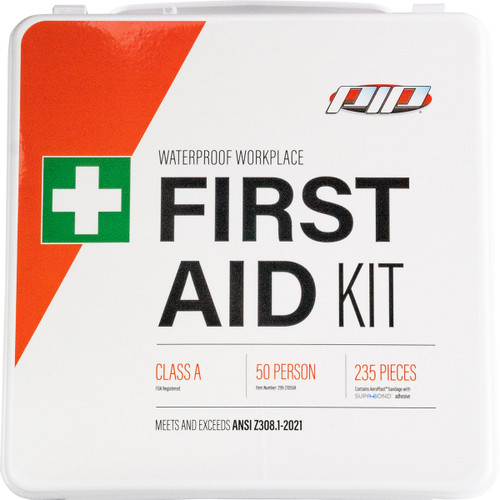
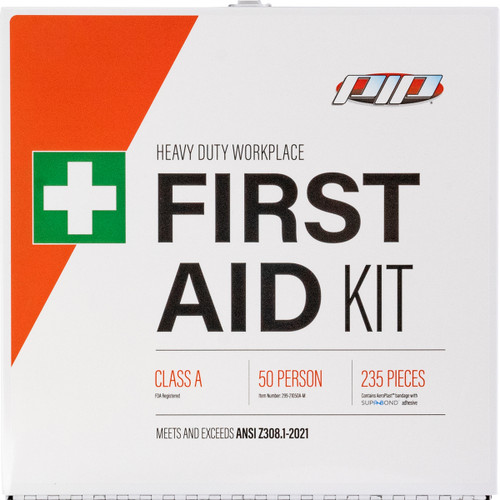
More: every kit by class, type and crew size.
Source: the manufacturers' product pages, specification sheets and catalogs as reproduced on each product page; the ratings and standards shown are the manufacturers' own statements, and the products listed are those whose published data names the rating or the standard, not a selection by Bayshore Safety.
Class B first aid kits
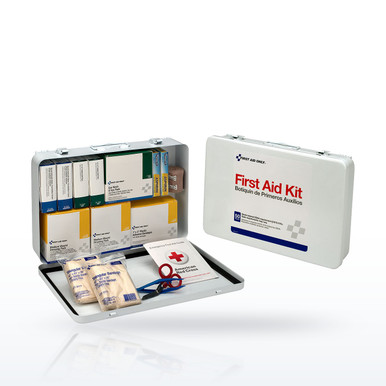
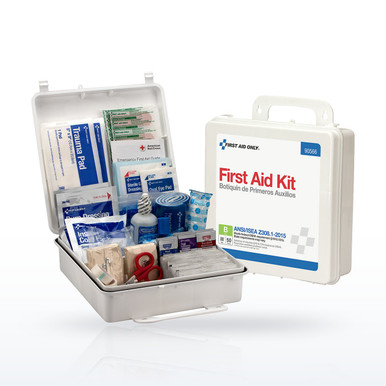
More: every Class B kit.
Source: the manufacturers' product pages, specification sheets and catalogs as reproduced on each product page; the ratings and standards shown are the manufacturers' own statements, and the products listed are those whose published data names the rating or the standard, not a selection by Bayshore Safety.
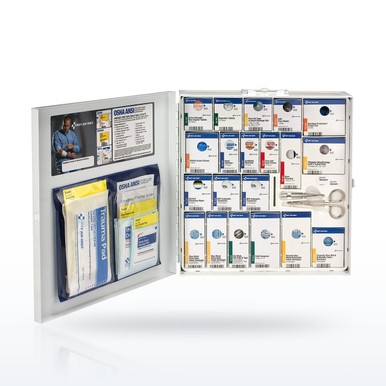
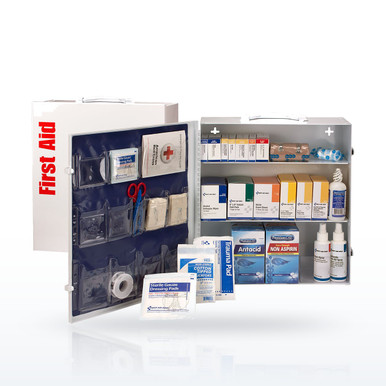
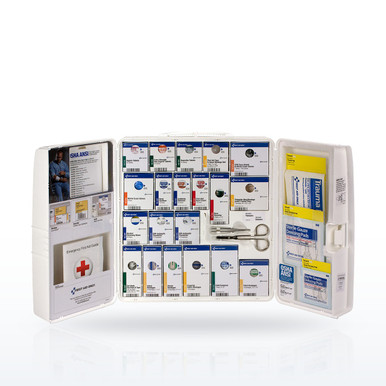
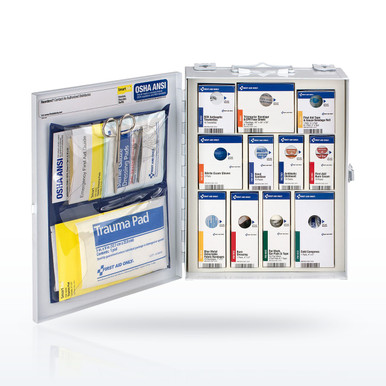
First aid cabinets (Type I) and stations
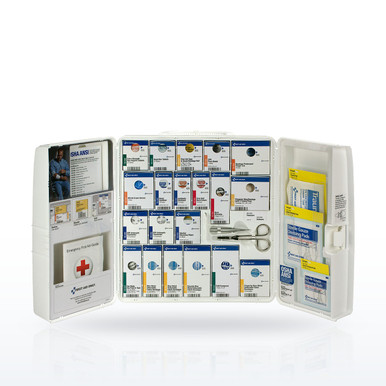
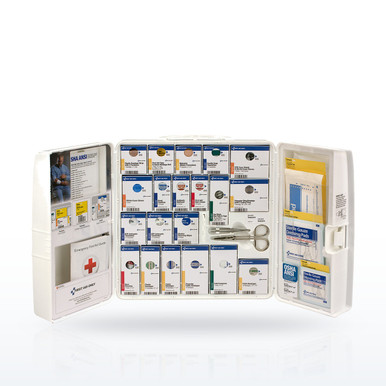
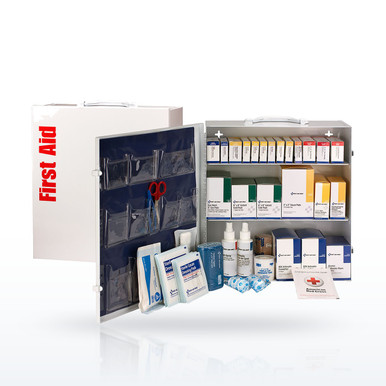
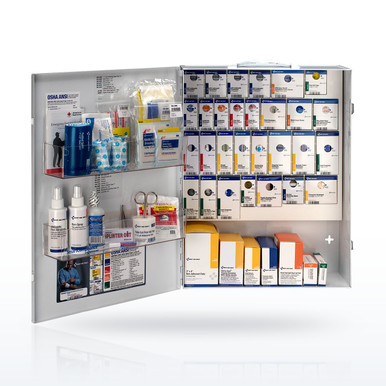

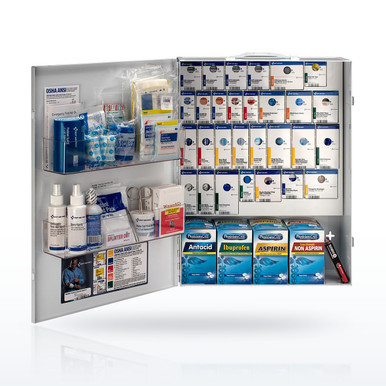
More: every cabinet and station.
Source: the manufacturers' product pages, specification sheets and catalogs as reproduced on each product page; the ratings and standards shown are the manufacturers' own statements, and the products listed are those whose published data names the rating or the standard, not a selection by Bayshore Safety.
Refills for the listed items
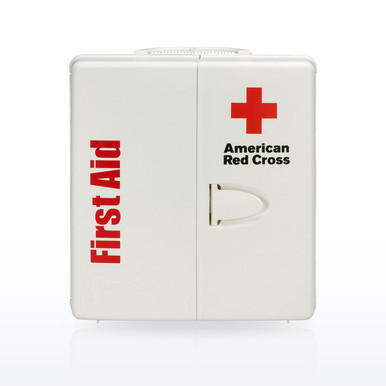
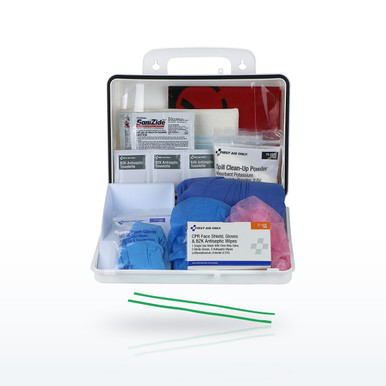
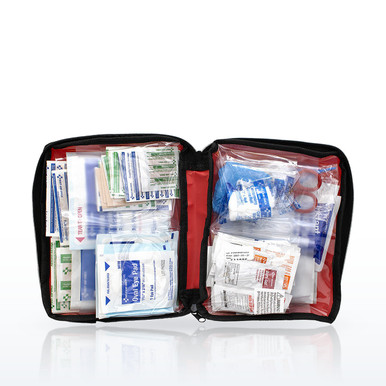

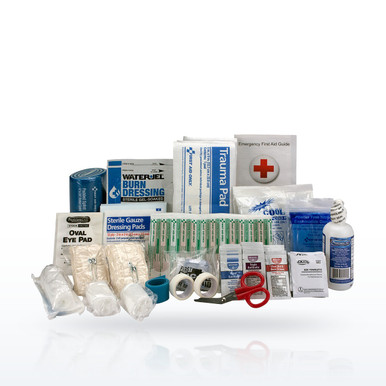
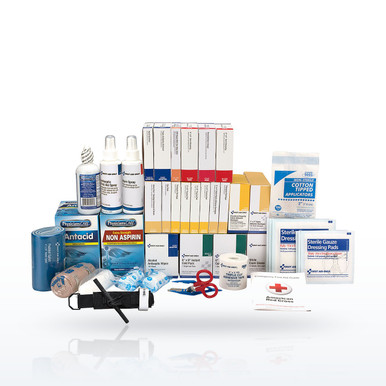
More: every refill pack.
Source: the manufacturers' product pages, specification sheets and catalogs as reproduced on each product page; the ratings and standards shown are the manufacturers' own statements, and the products listed are those whose published data names the rating or the standard, not a selection by Bayshore Safety.
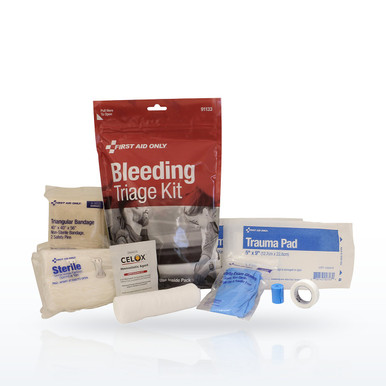
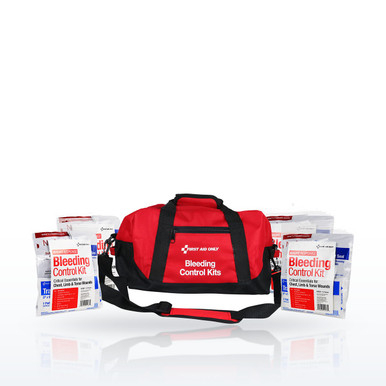
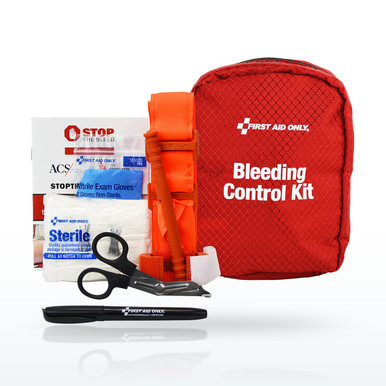
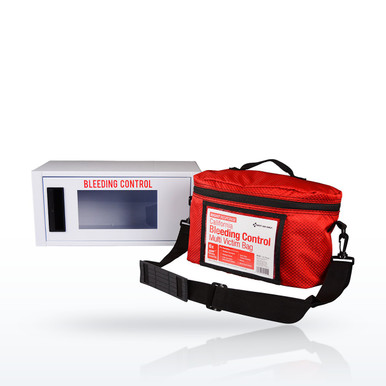
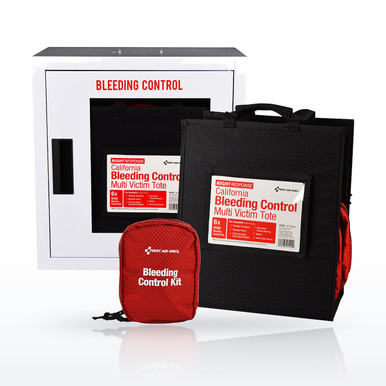
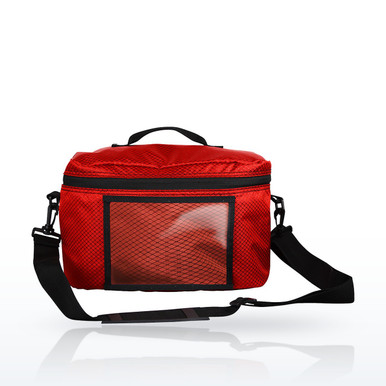
Tourniquets and bleeding control (the 2021 addition and supplementary items)
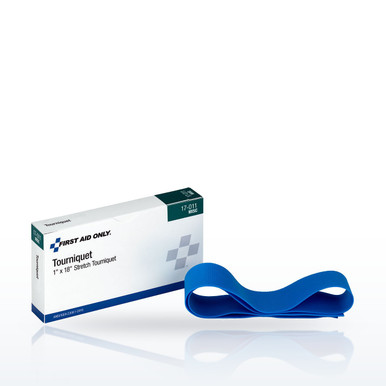
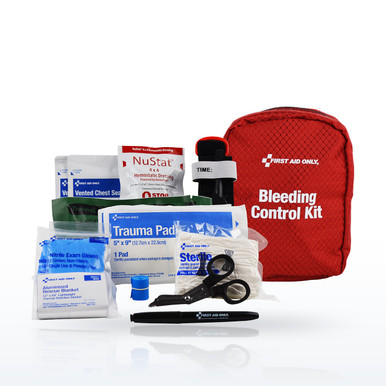
More: every tourniquet and bleeding control kit.
Source: the manufacturers' product pages, specification sheets and catalogs as reproduced on each product page; the ratings and standards shown are the manufacturers' own statements, and the products listed are those whose published data names the rating or the standard, not a selection by Bayshore Safety.
Guides that go further
ANSI Z308.1 Class A vs Class B first aid kits · What should be in a workplace first aid kit · Type I, II, III and IV first aid kits · OSHA first aid kit requirements · First aid kits for vehicles and crews · Bleeding control kits and tourniquets · OSHA 1910.151, the rule Appendix A belongs to.
ANSI/ISEA Z308.1 Minimum Requirements for Workplace First Aid Kits questions
What is a Class A first aid kit? The Z308.1 kit for the most common workplace injuries, with the minimum fill the standard lists: 16 adhesive bandages, tape, 10 antibiotic and 10 antiseptic applications, a breathing barrier, a burn dressing and 10 burn treatments, a cold pack, 2 eye coverings, 1 ounce of eye wash, a first aid guide, hand sanitizer, 2 pairs of gloves, a roller bandage, scissors, 2 sterile pads, 2 trauma pads, a triangular bandage, and since 2021 a tourniquet and a foil blanket.
Who needs a Class B first aid kit? The standard describes Class B for larger, more complex or higher-risk work environments, such as construction, manufacturing and warehousing with more workers or more serious hazards; it carries larger quantities (50 bandages, 50 antiseptics, 4 ounces of eye wash, 4 pairs of gloves) plus a splint and a 4 inch roller bandage. OSHA's Appendix A leaves the choice to the employer's assessment of the worksite.
What is the difference between a Class A and a Class B first aid kit? Quantity and a few items. Class B roughly triples the bandages, antiseptics and burn treatments, doubles the gloves, cold packs, trauma pads and triangular bandages, raises the eye wash from 1 to 4 ounces, and adds a splint and a 4 inch roller bandage; both include the tourniquet and foil blanket added in 2021.
What is a Class A Type 3 first aid kit? A kit with the Class A minimum fill in a Type III container: portable, mountable and sealed against water for indoor and sheltered outdoor use. Type I is a stationary cabinet, Type II a portable indoor box, and Type IV a waterproof, impact-tested case for vehicles and outdoor jobsites.
Does OSHA require an ANSI first aid kit? 1910.151(b) requires adequate first aid supplies and does not name a standard; Appendix A says a Z308.1 kit is adequate for small worksites and larger sites may need more. So a Z308.1 kit satisfies the paragraph for most workplaces, and the employer adds to it where the OSHA 300 log or the hazards show the need.
What changed in ANSI Z308.1-2021? As the manufacturers' catalogs state, the 2021 edition added a tourniquet and a foil blanket to both classes, revised the hand sanitizer and eye wash quantities, kept the Class A and B structure introduced in 2015 and the Type I to IV containers, and asked employers to assess whether supplementary items such as bleeding control kits are needed.
The ratings, test results and standards shown here are the manufacturers' published values, reproduced as published. Nothing on this page is a recommendation by Bayshore Safety that any product is suitable for a particular task, hazard or workplace. Selecting safety products and protective equipment is the responsibility of the end user and the employer, based on their own hazard assessment and the regulations that apply to their work. Confirm every value on the manufacturer's own documentation before use.