
OSHA 1910.29 Fall Protection Systems and Falling Object Protection, Criteria and Practices: what it requires and the equipment it names
29 CFR 1910.29 gives the dimensions and strengths for the systems 1910.28 allows: guardrails, hole covers, handrails and stair rails, cages and wells, ladder safety systems, designated-area warning lines, grab handles and toeboards. Personal fall protection systems are in 1910.140. We sell nationwide; ships in 1–2 business days; most orders arrive in 3–7 business days.
The plain answer
29 CFR 1910.29 sets the criteria for the passive and ladder-mounted systems used in general industry: a guardrail top rail 42 inches plus or minus 3 above the surface that withstands 200 pounds, a midrail halfway down that withstands 150 pounds, covers that support twice the intended load, handrails 30 to 38 inches high, warning lines of 200 pound breaking strength 34 to 39 inches high, toeboards 3.5 inches high, and ladder safety systems that let the climber use both hands and survive an 18 inch drop of a 500 pound weight.
It applies to every general industry employer that uses those systems to meet 1910.28, and it is the rule inspectors cite for guardrail height and strength. Construction has the matching figures in 1926.502(b), (i) and (j).
The equipment it names is guardrail systems and their components, safety net systems (by reference to 1926.502(c)), designated areas and warning lines, covers, handrails and stair rail systems, cages and wells, ladder safety systems (carrier, mountings, cable guides, sleeve and connector), personal fall protection systems (by reference to 1910.140), grab handles and toeboards.
What the rule says
Each entry is condensed from the paragraph cited; the paragraph itself is the rule and the link opens it.
29 CFR 1910.29(b)(1)-(2): Guardrail top rails are 42 inches plus or minus 3 above the walking-working surface (and may exceed 45 inches if the other criteria are met); midrails, screens, mesh, intermediate vertical members or solid panels fill the space when there is no 21 inch parapet, with midrails midway and intermediate members no more than 19 inches apart.
29 CFR 1910.29(b)(3)-(5): The guardrail system withstands 200 pounds applied within 2 inches of the top edge in any downward or outward direction without the top rail deflecting below 39 inches; midrails, screens and intermediate members withstand 150 pounds; surfaces are smooth, rails do not overhang terminal posts, and steel or plastic banding is not used as rails.
29 CFR 1910.29(b)(6)-(7): Top and midrails are at least 0.25 inch in diameter or thickness; manila or synthetic rope rails are inspected as necessary to confirm they still meet the strength criteria.
29 CFR 1910.29(b)(11)-(15): Guardrails around hoist areas, holes and ladderway openings have removable sections or gates that return to place; chains or gates at hoist areas; and guardrails with toeboards or screens where objects could fall.
29 CFR 1910.29(c): Safety net systems meet the construction criteria of 1926.502(c).
29 CFR 1910.29(d): Designated areas are bounded by a warning line of rope, wire, tape or chain with a 200 pound minimum breaking strength, 34 to 39 inches high, clearly visible from 25 feet, erected no closer than 6 feet to the edge (15 feet where mechanical equipment is used), with employees kept inside it.
29 CFR 1910.29(e): Covers support without failure at least twice the maximum intended load of employees, equipment and materials, are secured against accidental displacement, and are marked or color coded to warn of the hazard.
29 CFR 1910.29(f): Handrails are 30 to 38 inches from the stair tread leading edge; stair rail systems installed after January 17, 2017 are at least 42 inches; handrails and stair rails withstand 200 pounds; a hand clearance of at least 2.25 inches; finger clearance of 3 inches.
29 CFR 1910.29(g)-(h): Cages and wells on existing fixed ladders: cage bottom 7 to 8 feet above the surface, extending 42 inches above the landing, with no projections; wells completely encircle the ladder and have the same clearances.
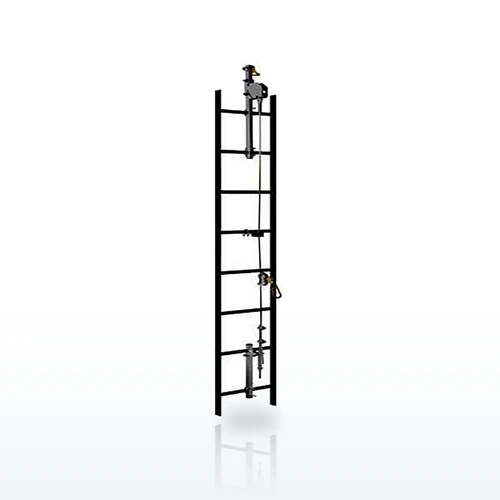
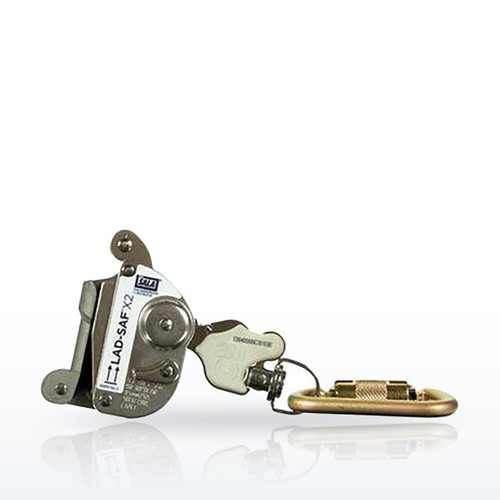
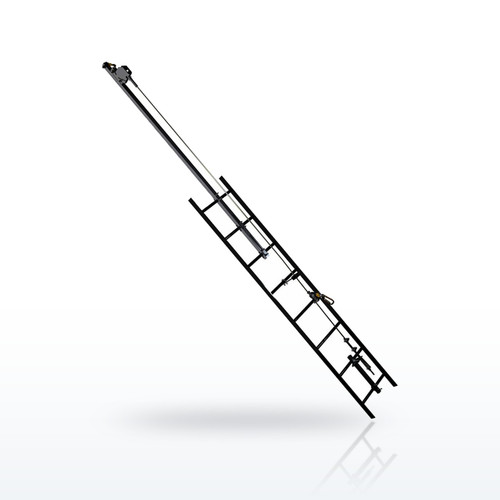
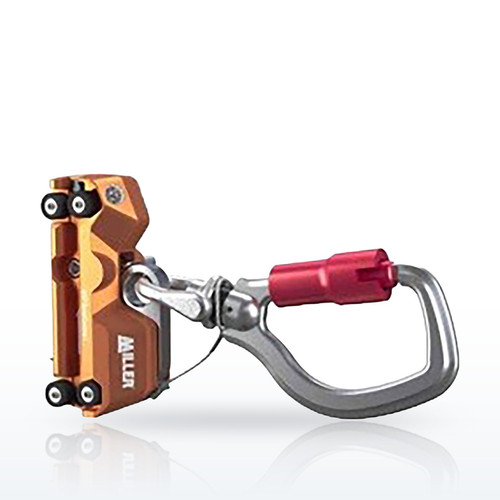
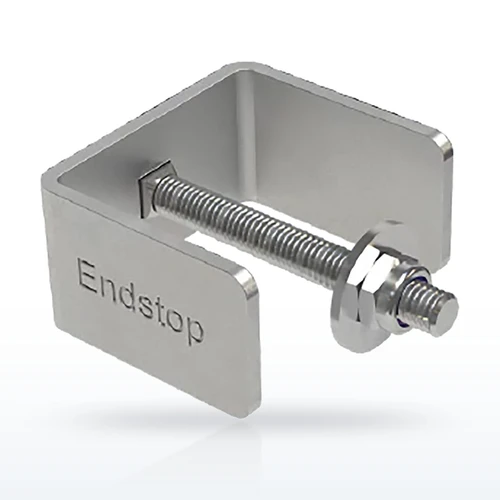
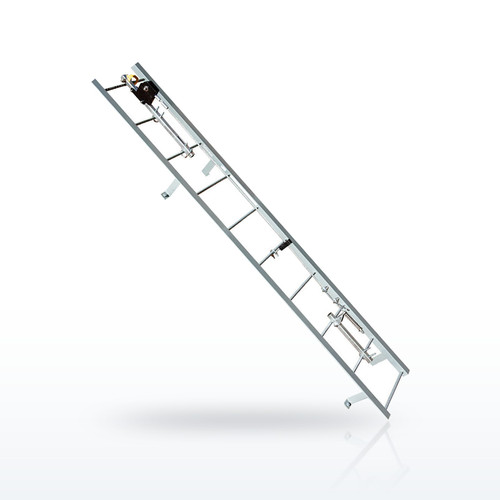
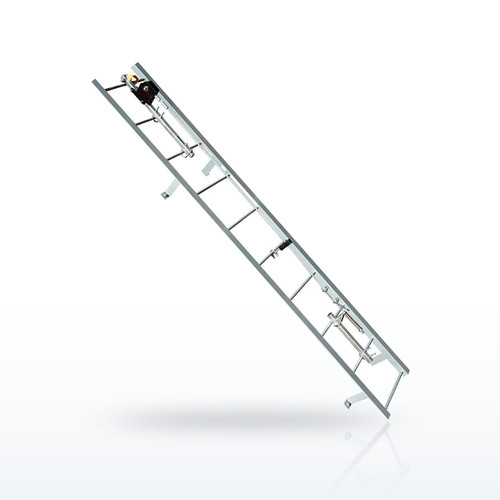
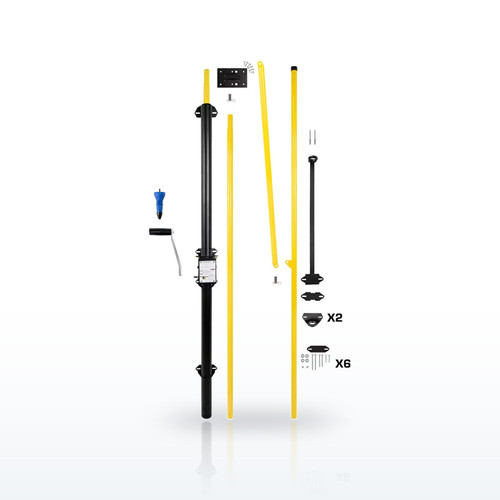
29 CFR 1910.29(i): Ladder safety systems let the employee climb with both hands without holding, pushing or pulling any part of the system; the connection from carrier to harness is no more than 9 inches; rigid carriers are mounted at each end with intermediate mountings; flexible carriers have cable guides every 25 to 40 feet; the system withstands an 18 inch drop of a 500 pound weight.
29 CFR 1910.29(j)-(k): Personal fall protection systems meet 1910.140; toeboards for falling object protection are at least 3.5 inches high, solid or with openings no more than 1 inch, no more than 0.25 inch above the surface, and withstand 50 pounds.
Source: 29 CFR, Occupational Safety and Health Standards, as published by OSHA (ecfr.gov), read Nov 9 2026.
California (Cal/OSHA)
Each entry is condensed from the paragraph cited; the paragraph itself is the rule and the link opens it.
Title 8 §3209(a)-(b): A standard guardrail has a top rail 42 to 45 inches high, a midrail about halfway, posts, and is designed for a live load of 20 pounds per linear foot at the top rail.
Title 8 §3277: Fixed ladder cages, wells and ladder safety systems: the ladder safety system is an approved assembly of carrier, attachment elements, safety sleeve and connection to the body harness, with the climber able to use both hands.
Source: California Code of Regulations, Title 8, as published by Cal/OSHA (dir.ca.gov), read Nov 9 2026.
Equipment the rule names
| Equipment or condition | What the rule requires | Paragraph |
|---|---|---|
| Guardrail top rail | 42 in ± 3 in; withstands 200 lb | 29 CFR 1910.29(b)(1), (b)(3) |
| Midrail, screen, mesh | Midway; withstands 150 lb; intermediate members 19 in apart or less | 29 CFR 1910.29(b)(2), (b)(4) |
| Hole cover | Twice the maximum intended load; secured; marked | 29 CFR 1910.29(e) |
| Warning line (designated area) | 200 lb breaking strength; 34 to 39 in high; 6 ft from the edge (15 ft with mechanical equipment) | 29 CFR 1910.29(d) |
| Handrail | 30 to 38 in above the tread nose; 200 lb | 29 CFR 1910.29(f)(1) |
| Ladder safety system | Hands-free climbing; 9 in maximum connection; cable guides every 25 to 40 ft; 500 lb 18 in drop test | 29 CFR 1910.29(i) |
| Toeboard | 3.5 in high; 50 lb; openings 1 in or less | 29 CFR 1910.29(k) |
| Safety net | Per 1926.502(c) | 29 CFR 1910.29(c) |
Source: 29 CFR, Occupational Safety and Health Standards, as published by OSHA (ecfr.gov), read Nov 9 2026.
What we carry for it
Each table lists products whose manufacturer data states the rating or the standard the rule names, every brand we carry that does, with the current price. Sizes and versions are chosen on the product page. The selector linked under each table holds every item of that type.
Ladder safety systems, carriers and climbing sleeves
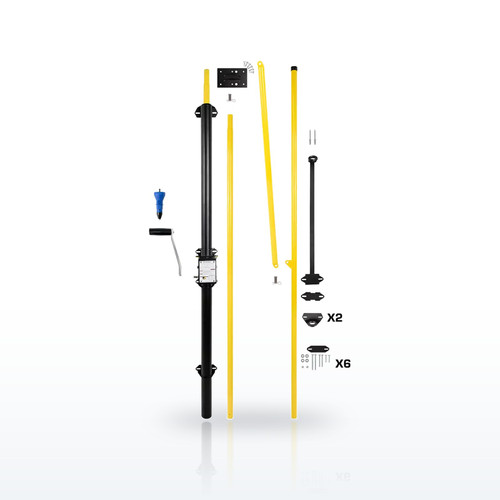
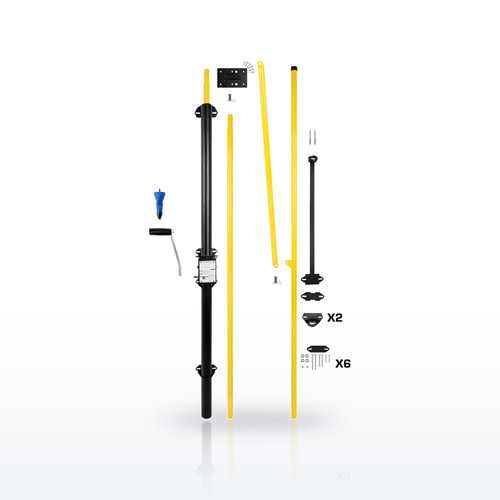
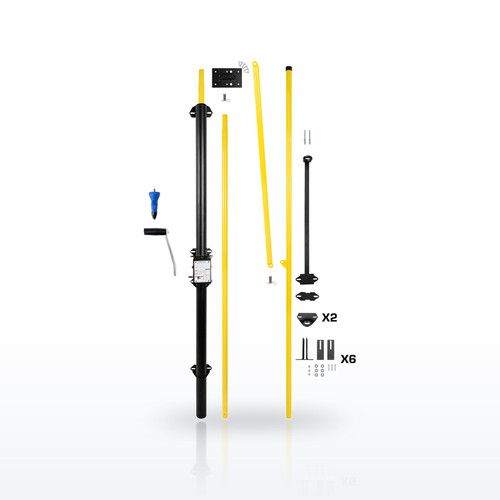
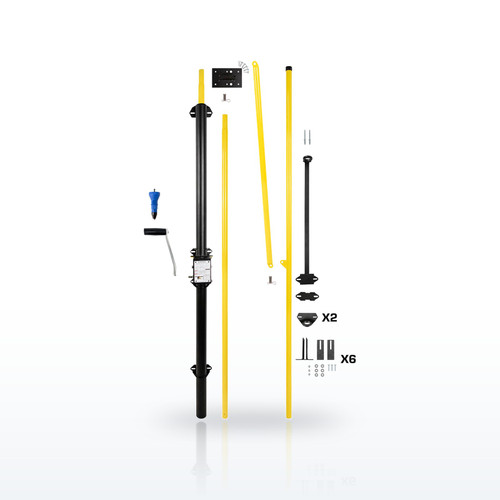
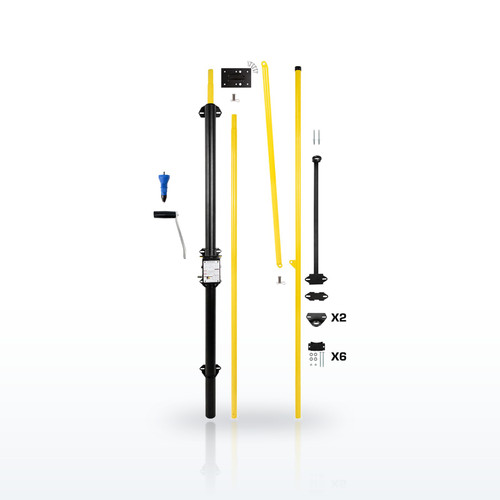
More: every ladder system component.
Source: the manufacturers' product pages and technical data sheets (Safewaze, FallTech, Miller, DBI-SALA) as reproduced on each product page; the standards shown are the manufacturers' own statements.
Harnesses used with a ladder safety system (sternal D-ring)
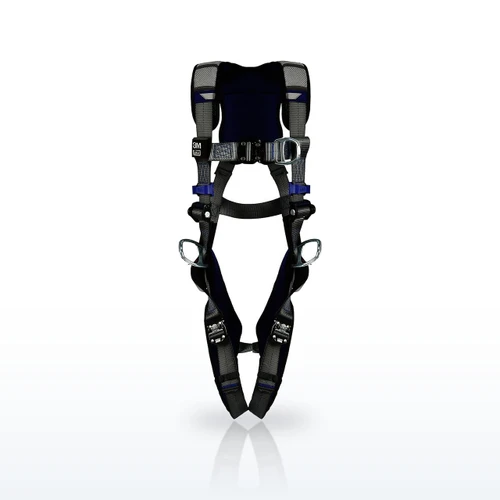

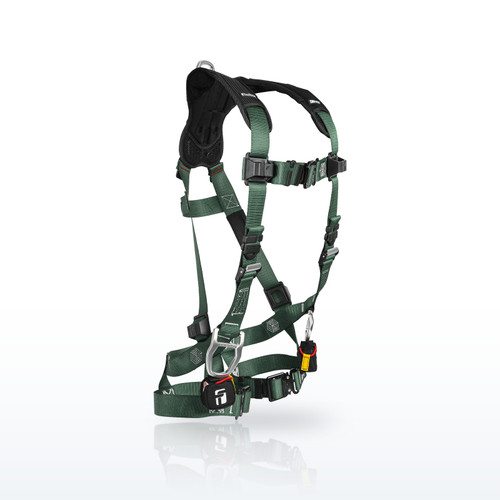
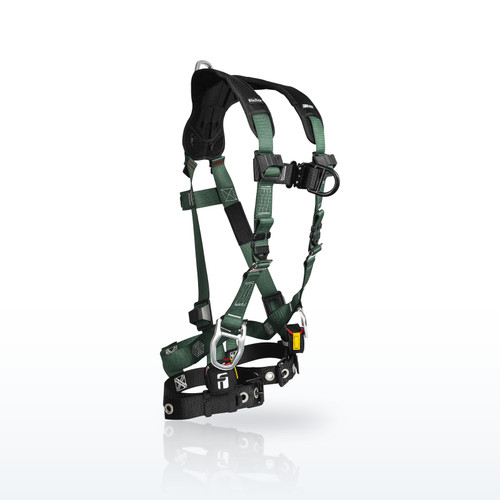
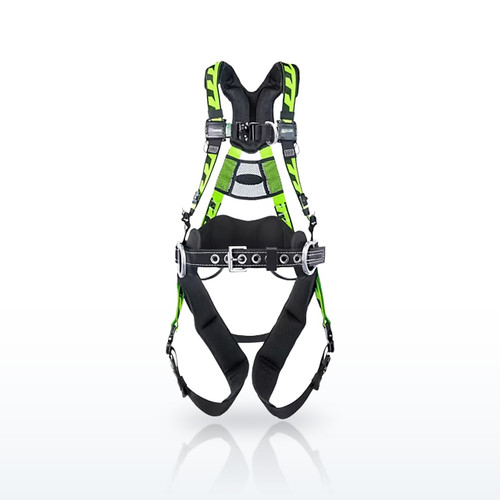
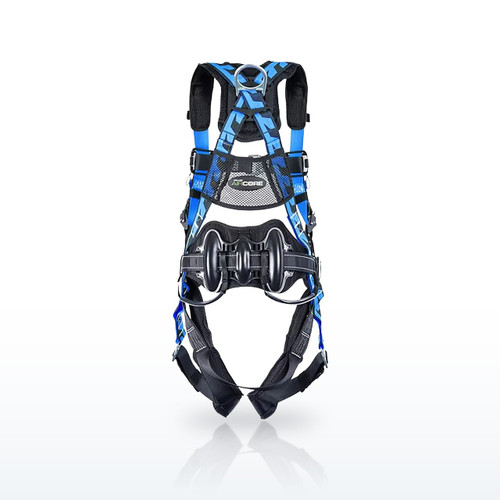
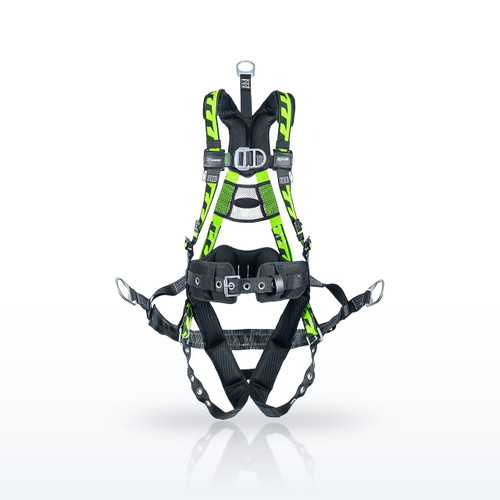
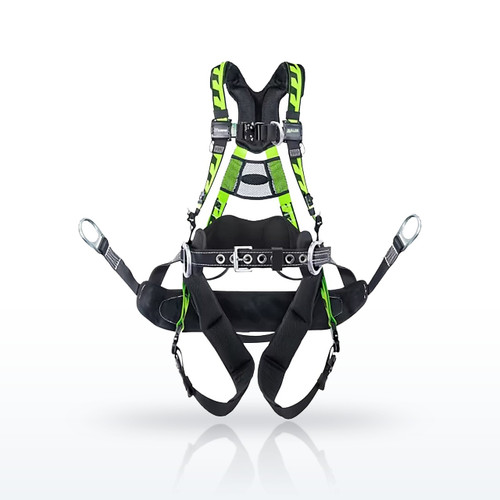
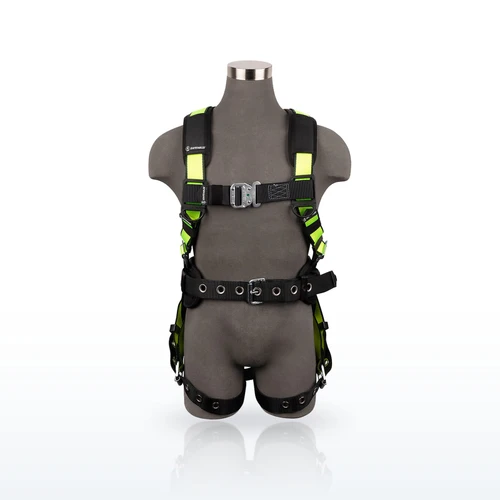
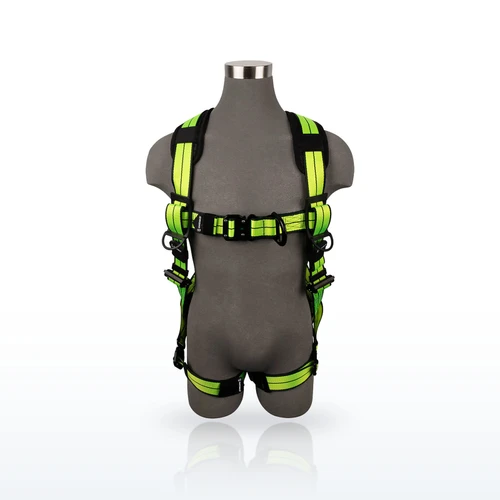
More: every harness by D-ring configuration.
Source: the manufacturers' product pages and technical data sheets (Safewaze, FallTech, Miller, DBI-SALA) as reproduced on each product page; the standards shown are the manufacturers' own statements.
Horizontal lifeline and warning-line components
| Part number | Item | Rating stated | Price | ||
|---|---|---|---|---|---|
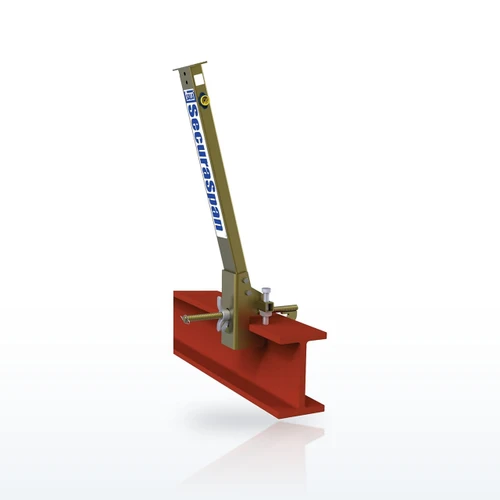 | 7012820229 | DBI-SALA 7012820229 Horizontal Lifelines, SecuraSpan I-Beam HLL Stanchion, Base | $642.60 | ||
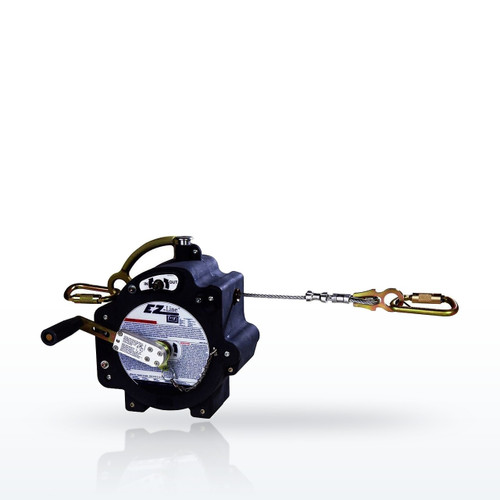 | 7100188820 | DBI-SALA 7100188820 EZ-Line Retractable Horizontal Lifeline System, 60 ft | $2,614.19 | ||
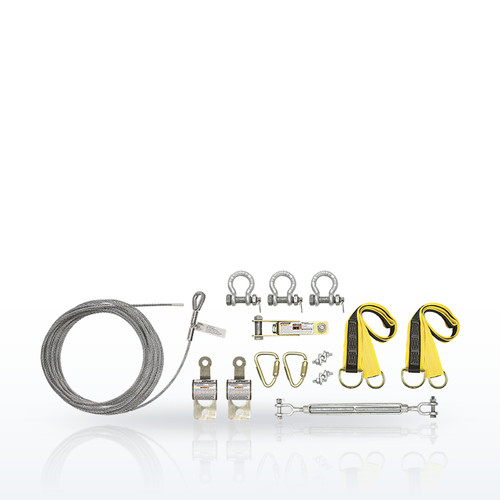 | 60260A | FallTech 60260A Horizontal Lifelines, SteelGrip, Web Pass-through Anchors | OSHA 1910.140; OSHA 1926.502 | $754.80 | Choose on the page |
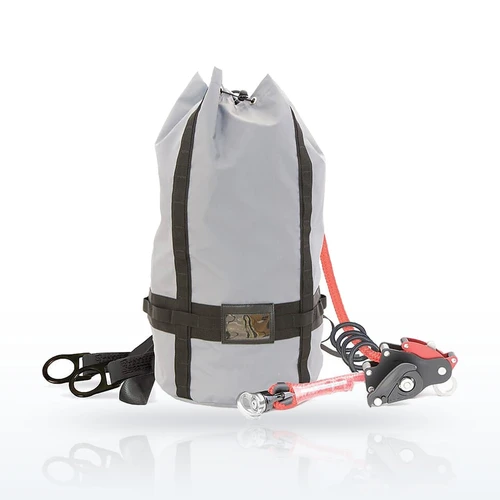 | 30800 | Guardian Fall Protection 30800 Guardian Quadro 4-Person Horizontal Lifeline | OSHA 1910.140; OSHA 1926.502 | $1,051.11 | |
 | 23820 | Miller Xenon 23820 Horizontal Lifeline Components, Identification Plate | $56.99 | ||
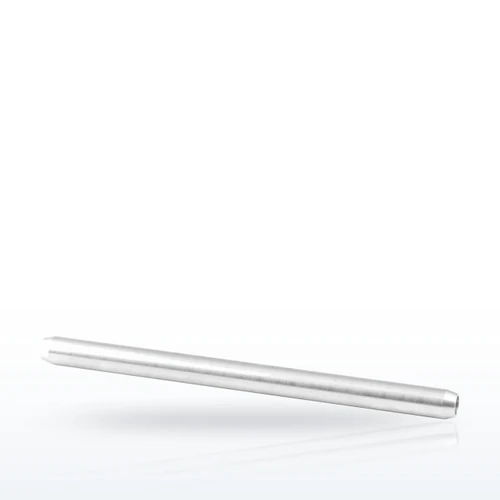 | FPH_22611 | Miller Xenon FPH_22611 Horizontal Lifeline Components, Protective Cable Sleeve | $183.00 | ||
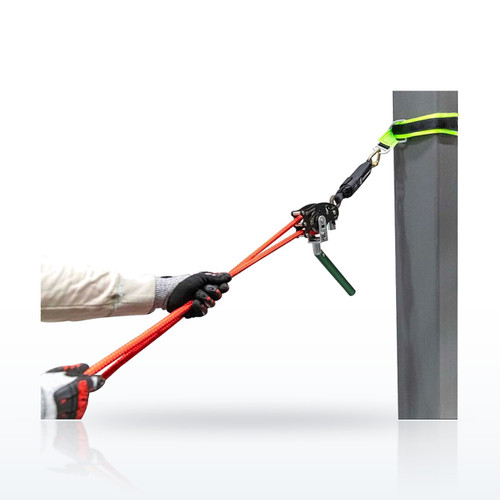 | 019-8015 | Safewaze 019-8015 Horizontal Lifeline Kits, 100 ft 4-Person Rope | OSHA 1926.502; OSHA 1910.140; OSHA 1910.66 | $695.00 | |
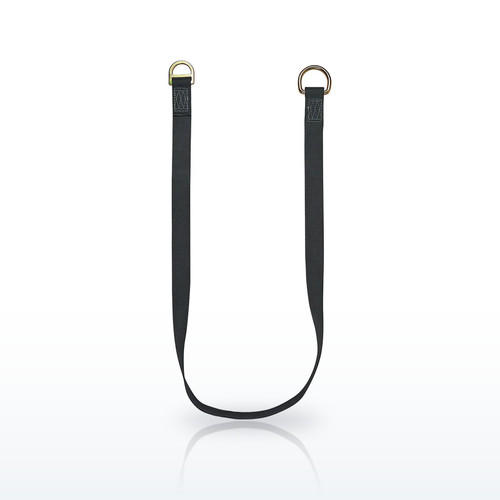 | FS88811-HW-10 | Safewaze FS88811-HW-10 Horizontal Lifeline Components, 10 ft Cross Arm Strap | ANSI Z359.18-2017 Type T; OSHA 1926.502; OSHA 1910.140; OSHA 1910.66 | $44.99 |
More: every horizontal lifeline kit and stanchion.
Source: the manufacturers' product pages and technical data sheets (Safewaze, FallTech, Miller, DBI-SALA) as reproduced on each product page; the standards shown are the manufacturers' own statements.
Guides that go further
Fixed ladder fall protection · What is the OSHA 4-foot rule · Fall protection on ladders · What is a horizontal lifeline, and what does 1926.502(d)(8) require · What is a controlled access zone · 1910.28, where fall protection is required.
OSHA 1910.29 Fall Protection Systems and Falling Object Protection, Criteria and Practices questions
What are the OSHA guardrail requirements? In general industry, 29 CFR 1910.29(b): a top rail 42 inches plus or minus 3 above the surface that withstands 200 pounds without deflecting below 39 inches, a midrail midway that withstands 150 pounds (or screens, mesh or intermediate members no more than 19 inches apart), members at least a quarter inch thick, no banding as rails, and toeboards where objects can fall. Construction's 1926.502(b) has the same 42 inch and 200 pound figures.
What is the required height for a handrail according to OSHA? 30 to 38 inches measured from the leading edge of the stair tread to the top of the handrail, under 1910.29(f)(1)(i); stair rail systems installed after January 17, 2017 must be at least 42 inches high, and both withstand 200 pounds.
How many steps require a handrail under OSHA? Flights with four or more risers, or rising more than 30 inches, whichever is less, under 1910.28(b)(11)(ii), with the handrail and stair rail criteria in 1910.29(f).
What are the requirements for a hole cover? 1910.29(e): the cover supports at least twice the maximum intended load of employees, equipment and materials that may be on it, is secured against accidental displacement, and is marked or color coded to warn of the hazard beneath it. Skylights count as holes under 1910.28(b)(3).
What is required of a ladder safety system? 1910.29(i): the climber uses both hands without having to hold, push or pull any part of the system; the connection between carrier and harness is 9 inches or less; rigid carriers are mounted at each end with intermediate mountings, flexible carriers have cable guides every 25 to 40 feet; mountings do not weaken the ladder; and the system survives an 18 inch drop of a 500 pound weight. The harness attachment for climbing is the front D-ring the manufacturer lists for that use.
What is a designated area? A distinct portion of a low-slope roof or other surface bounded by a warning line (rope, wire, tape or chain) with a 200 pound breaking strength, 34 to 39 inches high and visible from 25 feet, set at least 6 feet from the edge (15 feet with mechanical equipment), where employees stay while doing infrequent and temporary work without other fall protection, under 1910.29(d) and 1910.28(b)(13).
The ratings, test results and standards shown here are the manufacturers' published values, reproduced as published. Nothing on this page is a recommendation by Bayshore Safety that any product is suitable for a particular task, hazard or workplace. Selecting safety products and protective equipment is the responsibility of the end user and the employer, based on their own hazard assessment and the regulations that apply to their work. Confirm every value on the manufacturer's own documentation before use.