
ANSI/ASSP Z359.11 Full Body Harnesses: what it requires and the equipment it names
ANSI/ASSP Z359.11 is the full body harness standard in the Z359 Fall Protection Code, currently the 2021 edition. OSHA's rules require a body harness with the attachment at the back (1910.140(d)(2), 1926.502(d)(17)); Z359.11 adds the capacity range, the tests, the other attachment points and the labeling that manufacturers print inside every harness. We sell nationwide; ships in 1–2 business days; most orders arrive in 3–7 business days.
The plain answer
ANSI/ASSP Z359.11, Safety Requirements for Full Body Harnesses, is the consensus standard manufacturers test harnesses to. OSHA does not incorporate it; 29 CFR 1910.140 and 1926.502(d) require a full body harness for fall arrest, attached at the center of the back near shoulder level or above the head, and prohibit body belts, and the Z359.11 label shows the manufacturer went further.
As the manufacturers' technical data sheets state it, a Z359.11 harness is rated for users of 130 to 310 pounds including tools, is tested by dropping a 310 pound test torso and by static loading to 3,600 pounds, has a dorsal attachment element for fall arrest and may have a sternal attachment (ladder climbing systems and limited free fall), frontal attachment (rope access, rescue, positioning), shoulder attachments (rescue and retrieval, with a spreader bar) and hip attachments (positioning and restraint only), each tested for its use. The 2021 edition added requirements for the fit of leg straps and sub-pelvic support, label content and trauma relief consideration, and manufacturers list harness sizes against the standard's torso range.
The equipment it names is full body harnesses of every style: construction harnesses with tool belts, vest and crossover harnesses, climbing harnesses with a sternal D-ring, rescue and confined space harnesses with shoulder D-rings, positioning harnesses with hip D-rings, arc-rated harnesses with dielectric hardware, and the labels, lanyard keepers and impact indicators the standard requires or defines.
What the rule says
Each entry is condensed from the paragraph cited; the paragraph itself is the rule and the link opens it.
29 CFR 1910.140(d)(2)(iv): The attachment point of the body harness is in the center of the employee's back near shoulder level, or above the head; where free fall is limited to 2 feet or less, a front attachment may be used.
29 CFR 1926.502(d)(17): The attachment point of the body harness is in the center of the wearer's back near shoulder level or above the head; body belts are not acceptable for fall arrest.
29 CFR 1910.140(c)(18)-(19): Inspected before initial use during each shift; removed from service after arresting a fall until a competent person clears it.
29 CFR 1910.140(d)(1)(v): A system meeting Appendix D with a combined body and tool weight under 310 pounds is deemed to meet the arresting force criteria, the same capacity limit the harness standard uses.
Source: 29 CFR, Occupational Safety and Health Standards, as published by OSHA (ecfr.gov), read Nov 9 2026.
What the standard requires, as the manufacturers publish it
Capacity and testing: a user weight range of 130 to 310 pounds including clothing, tools and equipment, printed on the label; dynamic drop tests with a 310 pound rigid torso (raised from 282 pounds in the 2021 edition) at each attachment element for its intended use; a static strength test of 3,600 pounds on the harness and attachment elements; and buckle, adjuster and webbing tests for slippage, abrasion and corrosion, as FallTech, Safewaze, Miller and DBI-SALA state on their data sheets.
Attachment elements by use: dorsal (back) for fall arrest, with the standard allowing a dorsal extension of limited length; sternal (chest) for fall arrest with a ladder climbing system or where free fall is limited to 2 feet; frontal (waist front) for rope access, rescue and positioning; shoulder (both shoulders, used together with a spreader) for rescue and retrieval in confined spaces; hip or side D-rings for positioning and travel restraint only, never fall arrest; and suspension seat elements where fitted. Each is marked for its permitted use.
Labeling: the label states the standard and edition, manufacturer, model, size, date of manufacture, capacity, materials, the permitted use of each attachment element, warnings and inspection log, and (2021) the fall arrest indicator where fitted; manufacturers also print the size chart against torso and waist measurements.
Fit and design (2021 edition): leg straps and sub-pelvic strap positioned to carry the arrest load through the pelvis, chest strap height limits, provisions for trauma relief straps, and the requirement that any dielectric or arc-rated version meet the additional test (ASTM F887 for arc flash) the manufacturer claims.
Source: the manufacturers' product pages and technical data sheets (Safewaze, FallTech, Miller, DBI-SALA) as reproduced on each product page; the standards shown are the manufacturers' own statements; FallTech harness technical data sheets and guides (Fall Protection Weight Capacity; 5 Features You Need in Safety Harnesses, saved j57/raw/guides); Safewaze Harness Fitting and Sizing document; our guides Which standard must a full-body harness meet and What each D-ring is for.
California (Cal/OSHA)
Each entry is condensed from the paragraph cited; the paragraph itself is the rule and the link opens it.
Title 8 §1670(a)-(b): Approved personal fall arrest systems worn above 7 1/2 feet; body belts not permitted for fall arrest; §3206 approval includes certification to the applicable ANSI standard.
Source: California Code of Regulations, Title 8, as published by Cal/OSHA (dir.ca.gov), read Nov 9 2026.
Equipment the rule names
| Equipment or condition | What the rule requires | Paragraph |
|---|---|---|
| Full body harness | 130 to 310 lb capacity; 310 lb drop tests; 3,600 lb static test; label with the standard and edition | Z359.11 as labeled by the manufacturer |
| Dorsal D-ring | Fall arrest attachment; the point OSHA requires | Z359.11 as labeled; 29 CFR 1910.140(d)(2)(iv) |
| Sternal D-ring | Ladder climbing systems and fall arrest with free fall limited to 2 ft | Z359.11 as labeled |
| Frontal D-ring | Rope access, rescue, positioning | Z359.11 as labeled |
| Shoulder D-rings | Rescue and retrieval with a spreader bar (confined space) | Z359.11 as labeled |
| Hip (side) D-rings | Positioning and restraint only | Z359.11 as labeled |
| Arc-rated harness | Z359.11 plus ASTM F887 arc flash testing | Manufacturers' statements |
| Body belt | Not a harness; positioning and restraint only under OSHA | 29 CFR 1926.502(d)(17) |
Source: 29 CFR, Occupational Safety and Health Standards, as published by OSHA (ecfr.gov), read Nov 9 2026.
What we carry for it
Each table lists products whose manufacturer data states the rating or the standard the rule names, every brand we carry that does, with the current price. Sizes and versions are chosen on the product page. The selector linked under each table holds every item of that type.
Z359.11 harnesses, construction and general industry
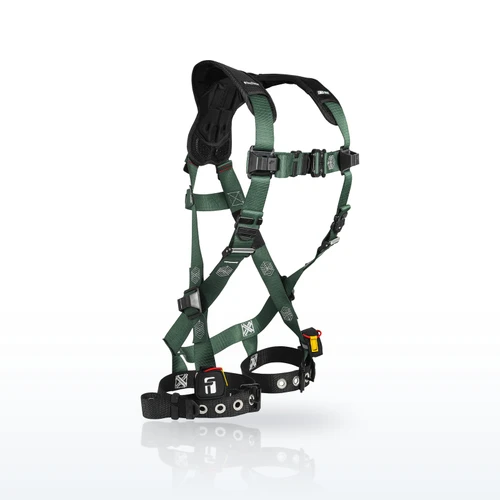
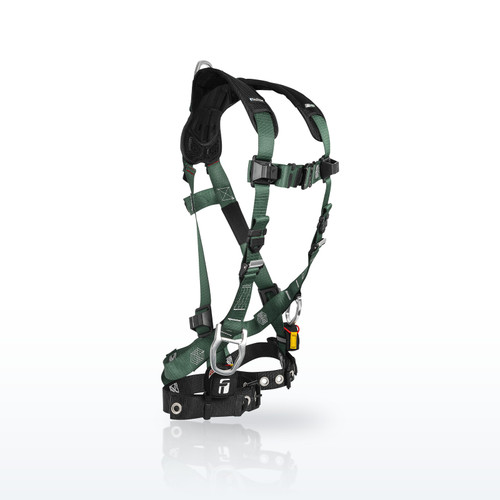
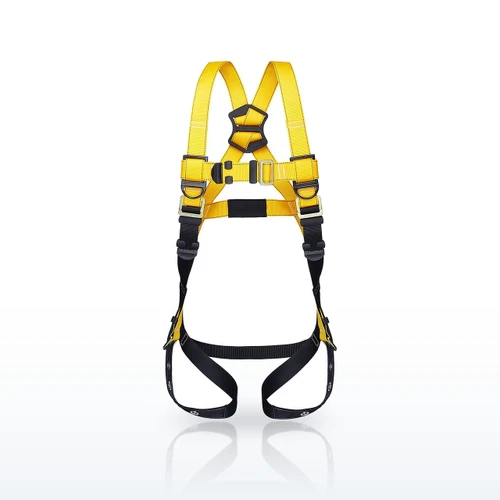
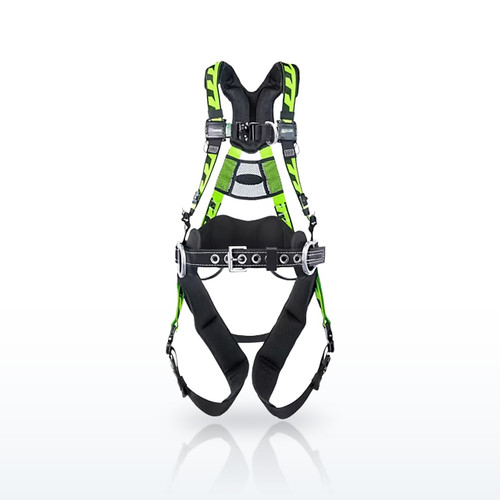
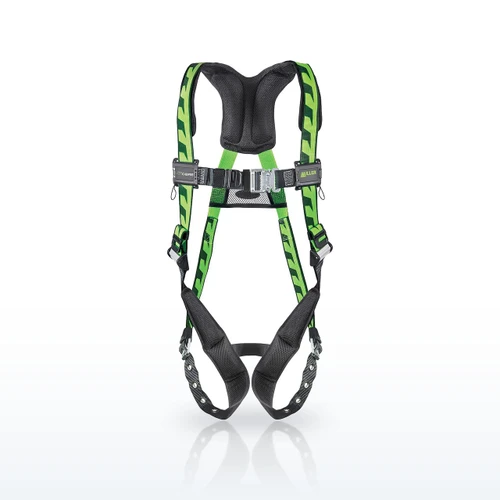
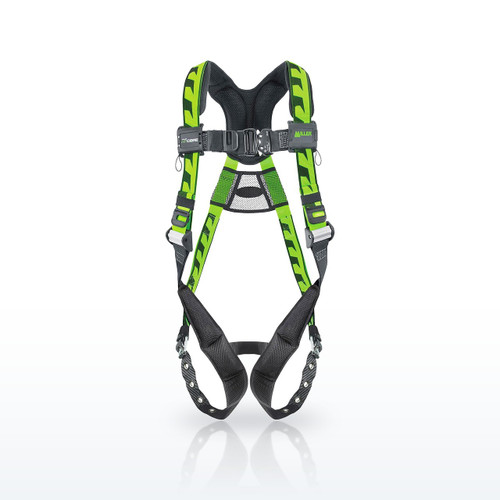
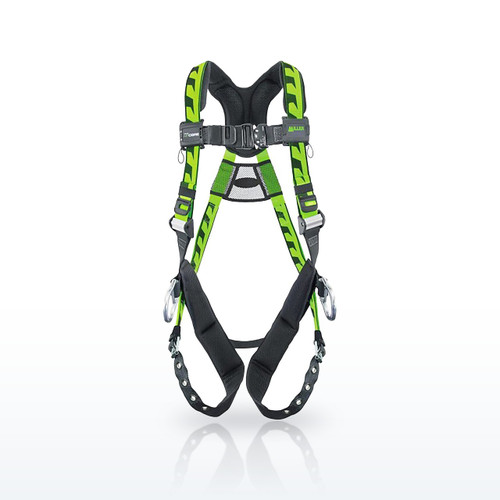
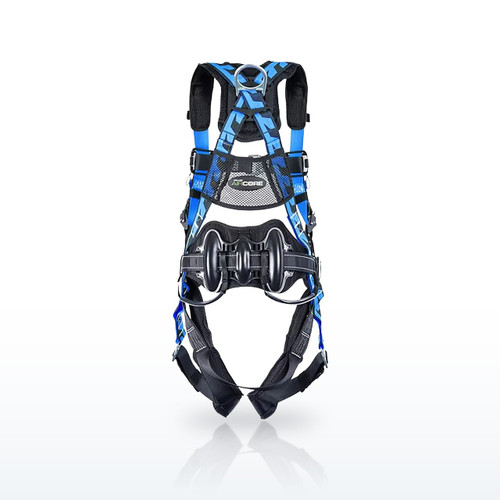
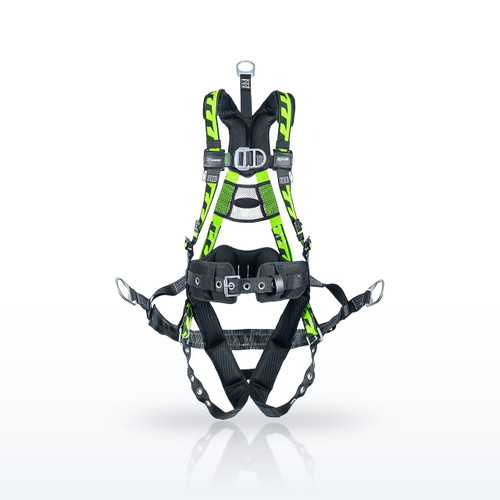
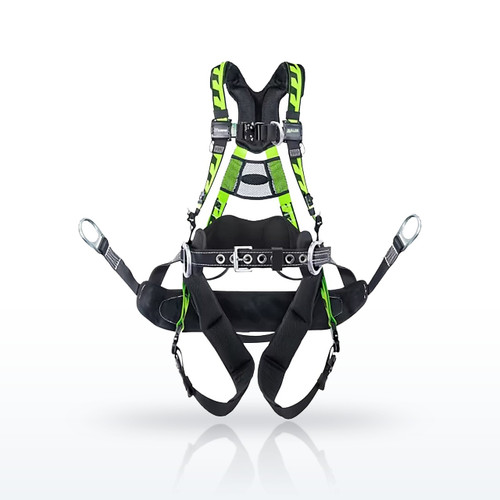
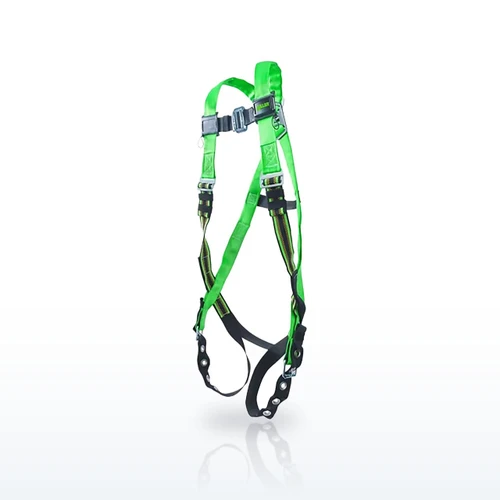
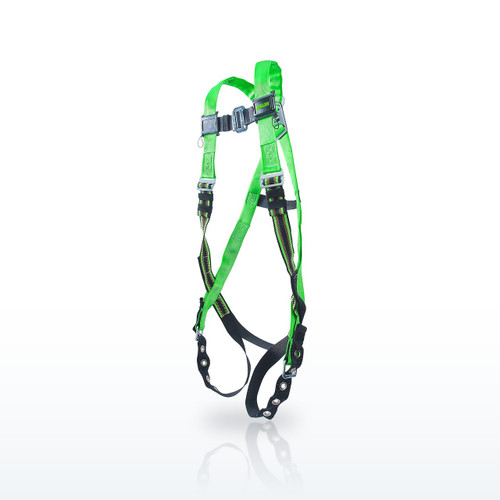
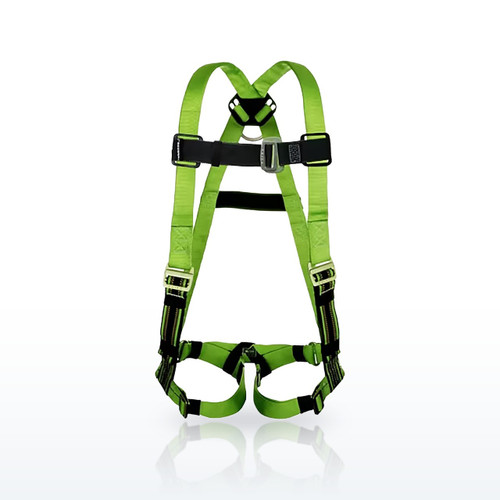
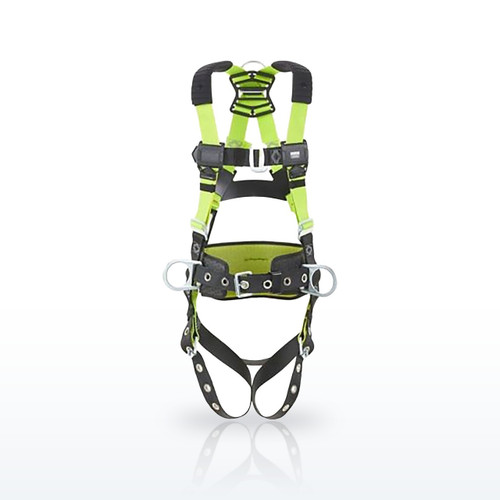
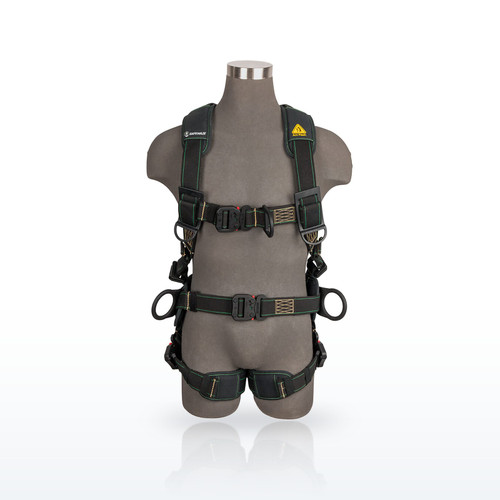
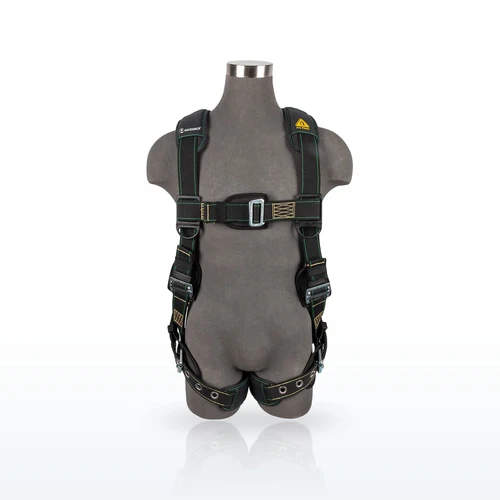
More: every Z359.11 harness by brand.
Source: the manufacturers' product pages and technical data sheets (Safewaze, FallTech, Miller, DBI-SALA) as reproduced on each product page; the standards shown are the manufacturers' own statements.
Harnesses with sternal or frontal D-rings (climbing, rescue, positioning)
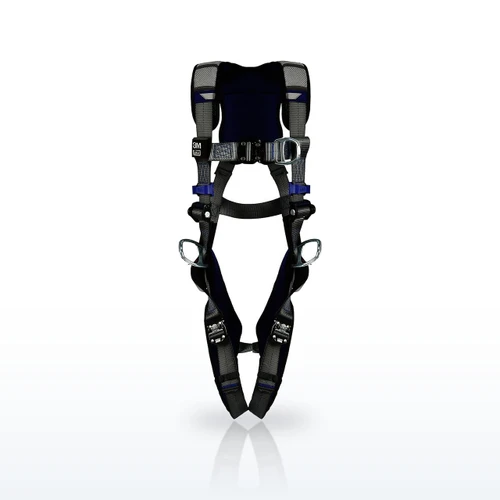

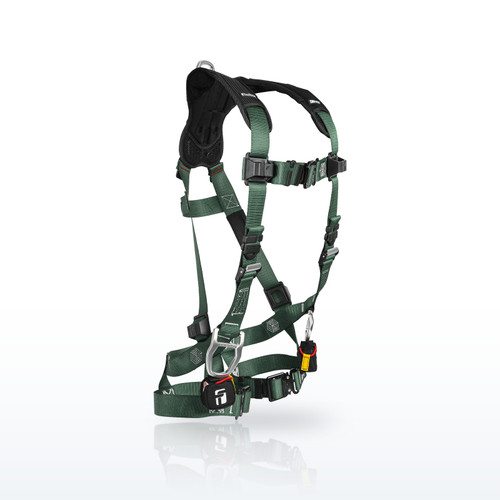
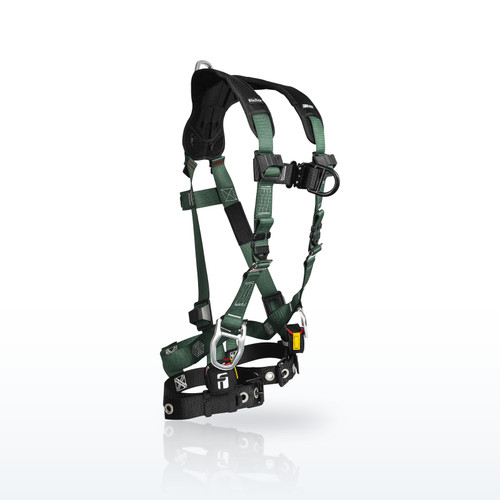
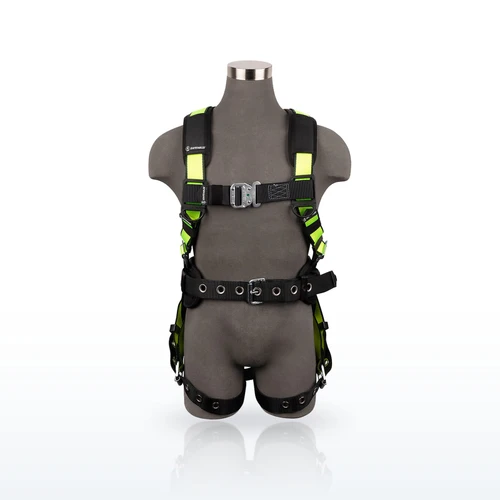
More: every harness by D-ring configuration.
Source: the manufacturers' product pages and technical data sheets (Safewaze, FallTech, Miller, DBI-SALA) as reproduced on each product page; the standards shown are the manufacturers' own statements.
Harnesses with shoulder D-rings for confined space retrieval
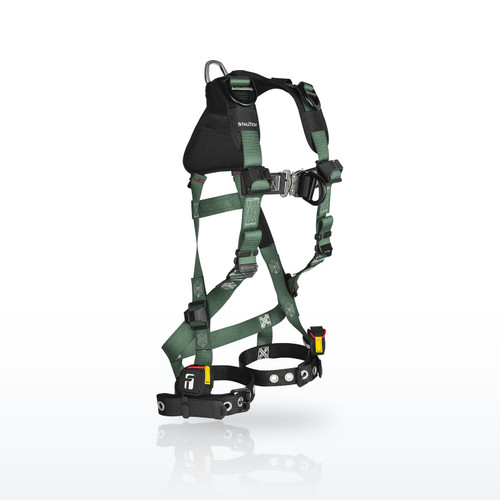
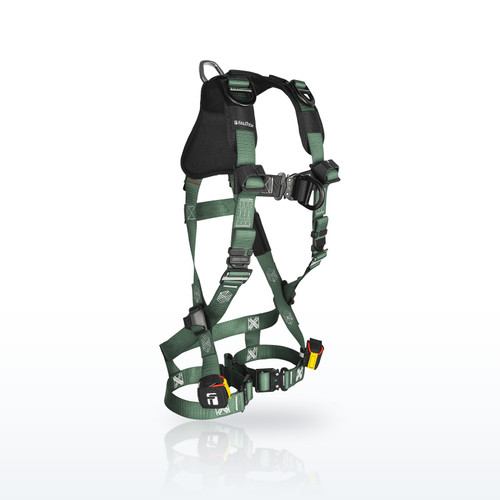
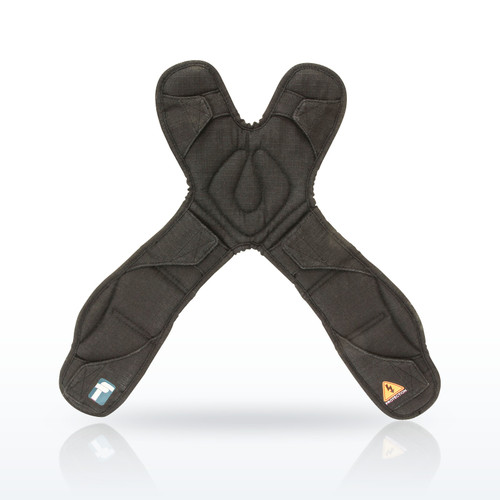
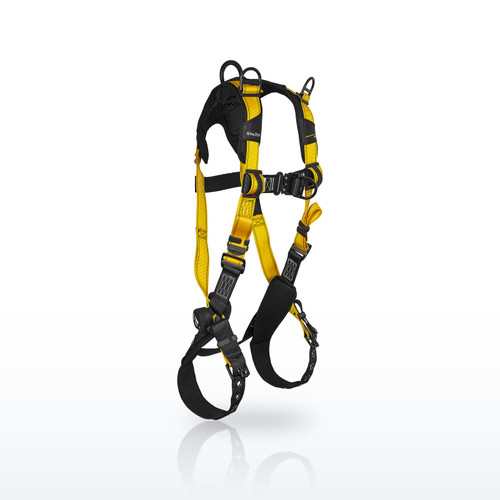
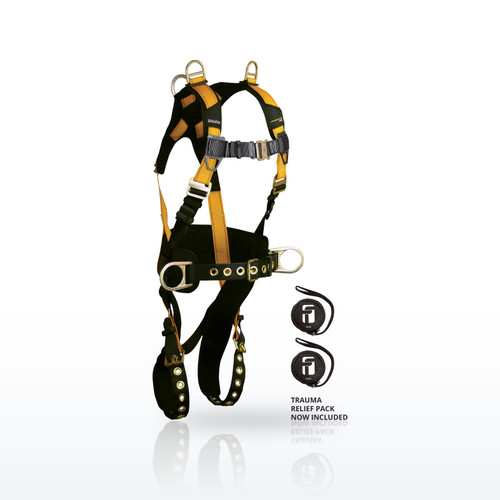
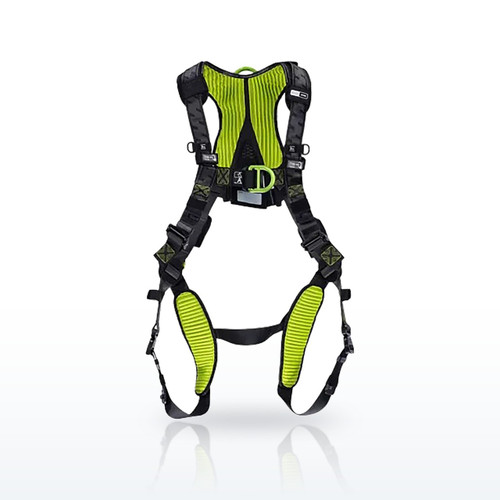
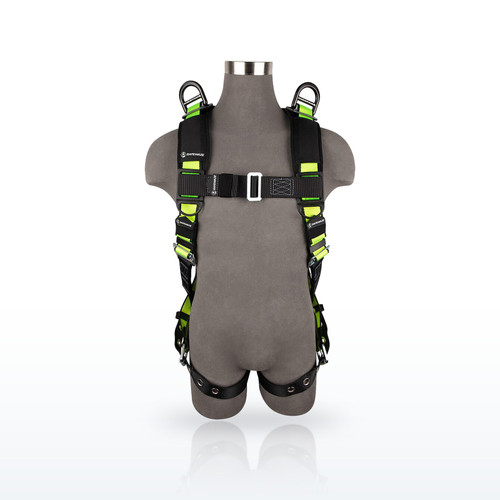
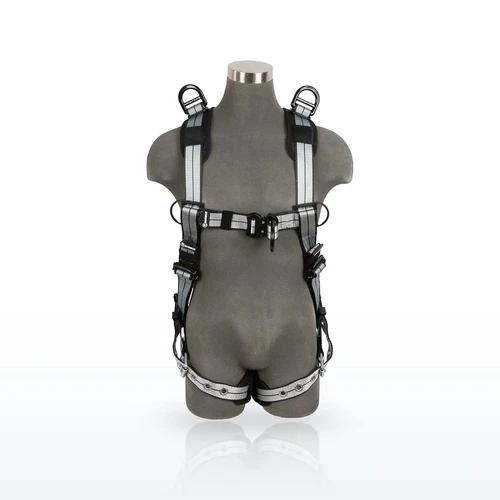
More: every retrieval harness.
Source: the manufacturers' product pages and technical data sheets (Safewaze, FallTech, Miller, DBI-SALA) as reproduced on each product page; the standards shown are the manufacturers' own statements.
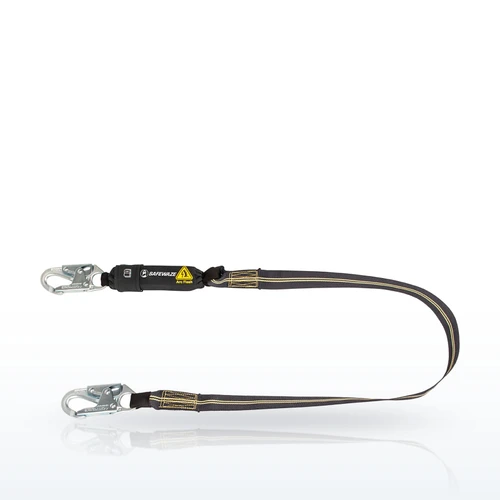
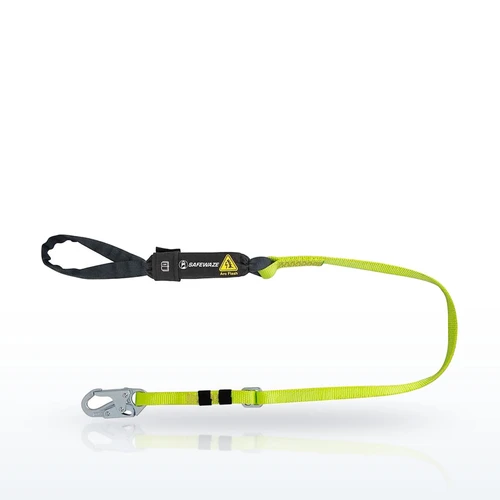
Arc-rated harnesses (Z359.11 with ASTM F887)
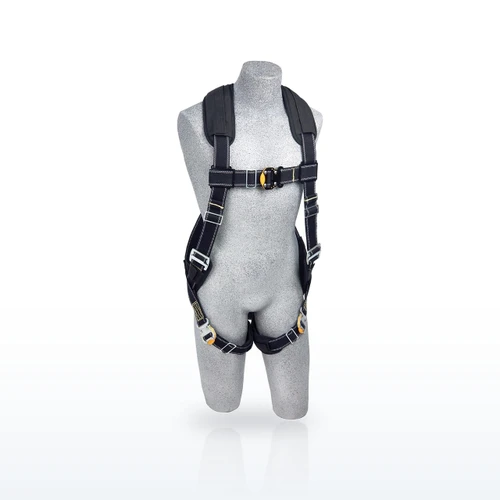
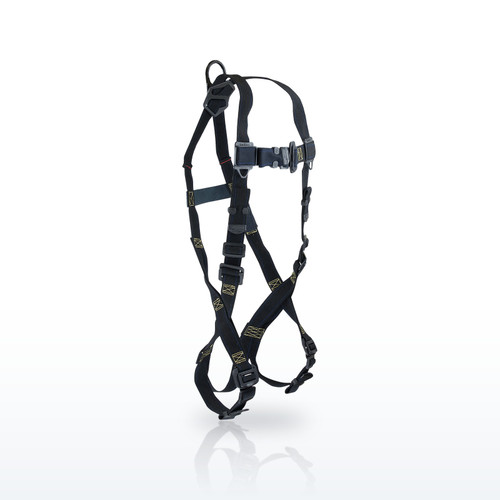
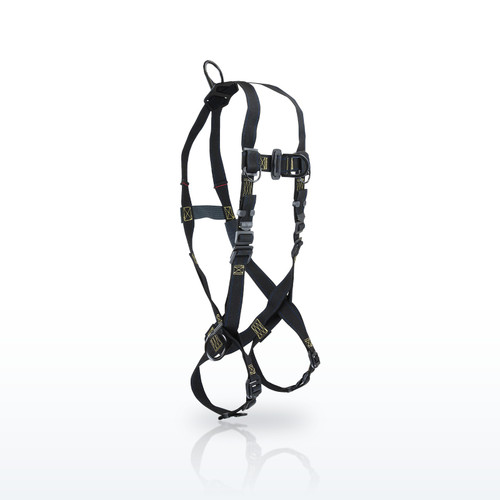
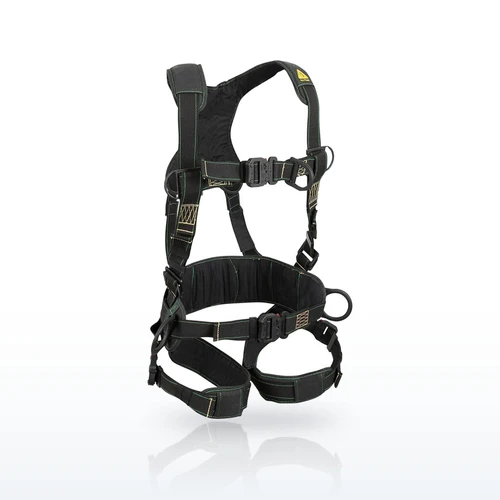
More: every arc-rated harness.
Source: the manufacturers' product pages, specification sheets and catalogs as reproduced on each product page; the ratings and standards shown are the manufacturers' own statements, and the products listed are those whose published data names the rating or the standard, not a selection by Bayshore Safety.
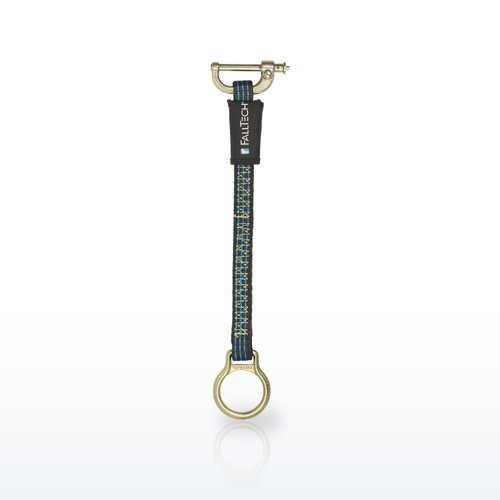
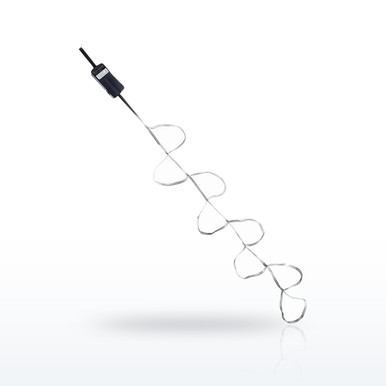
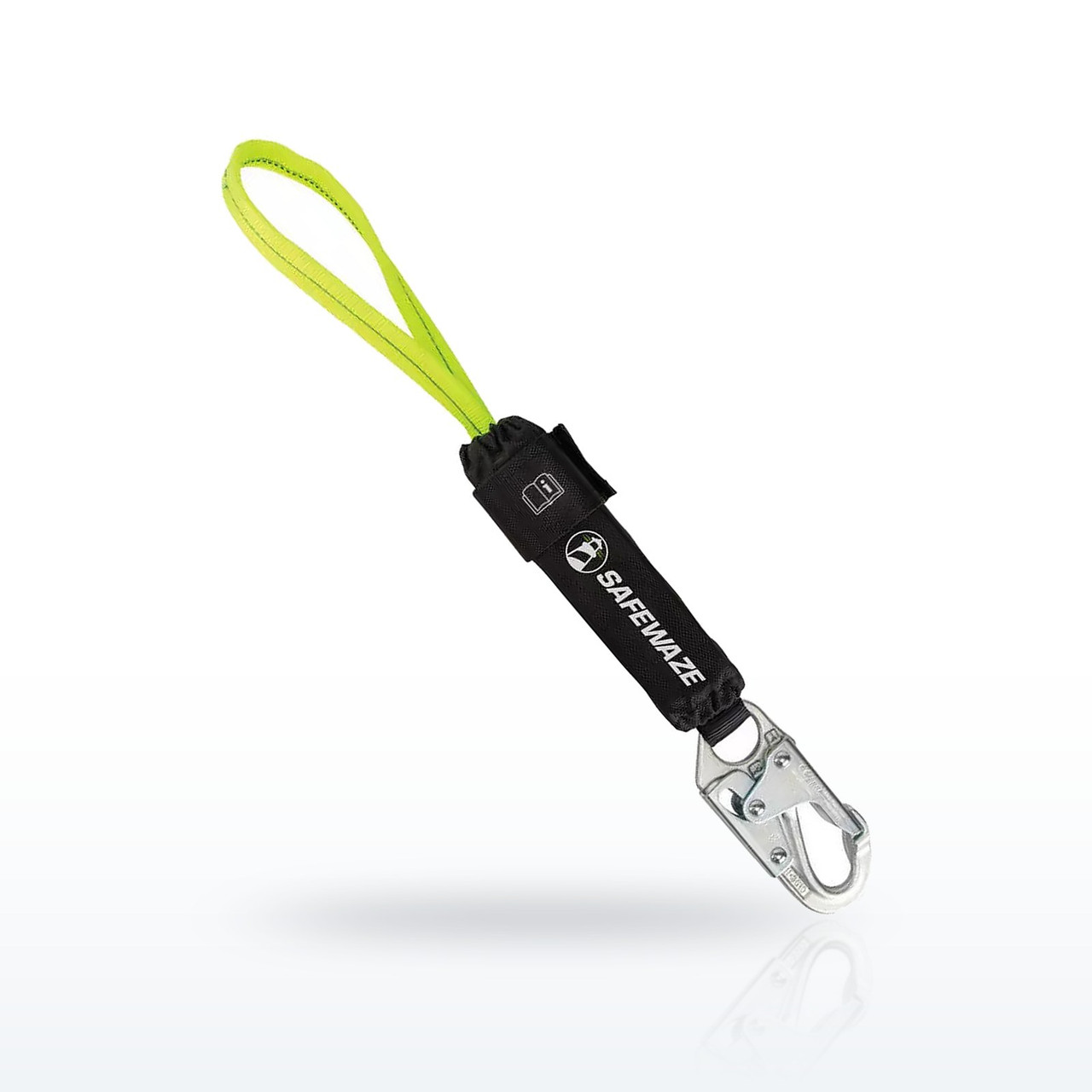
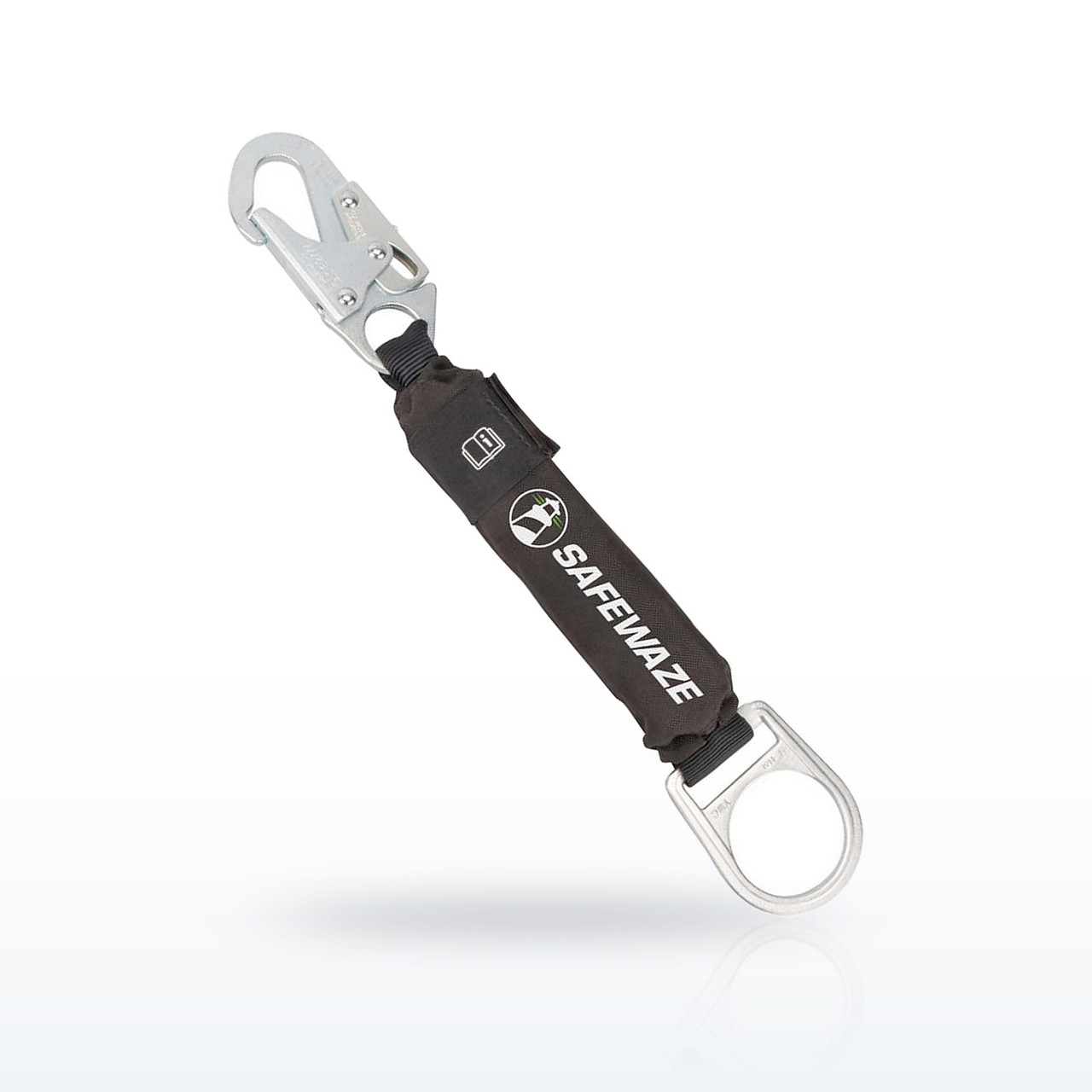
Harness accessories: trauma relief straps, lanyard keepers, D-ring extenders

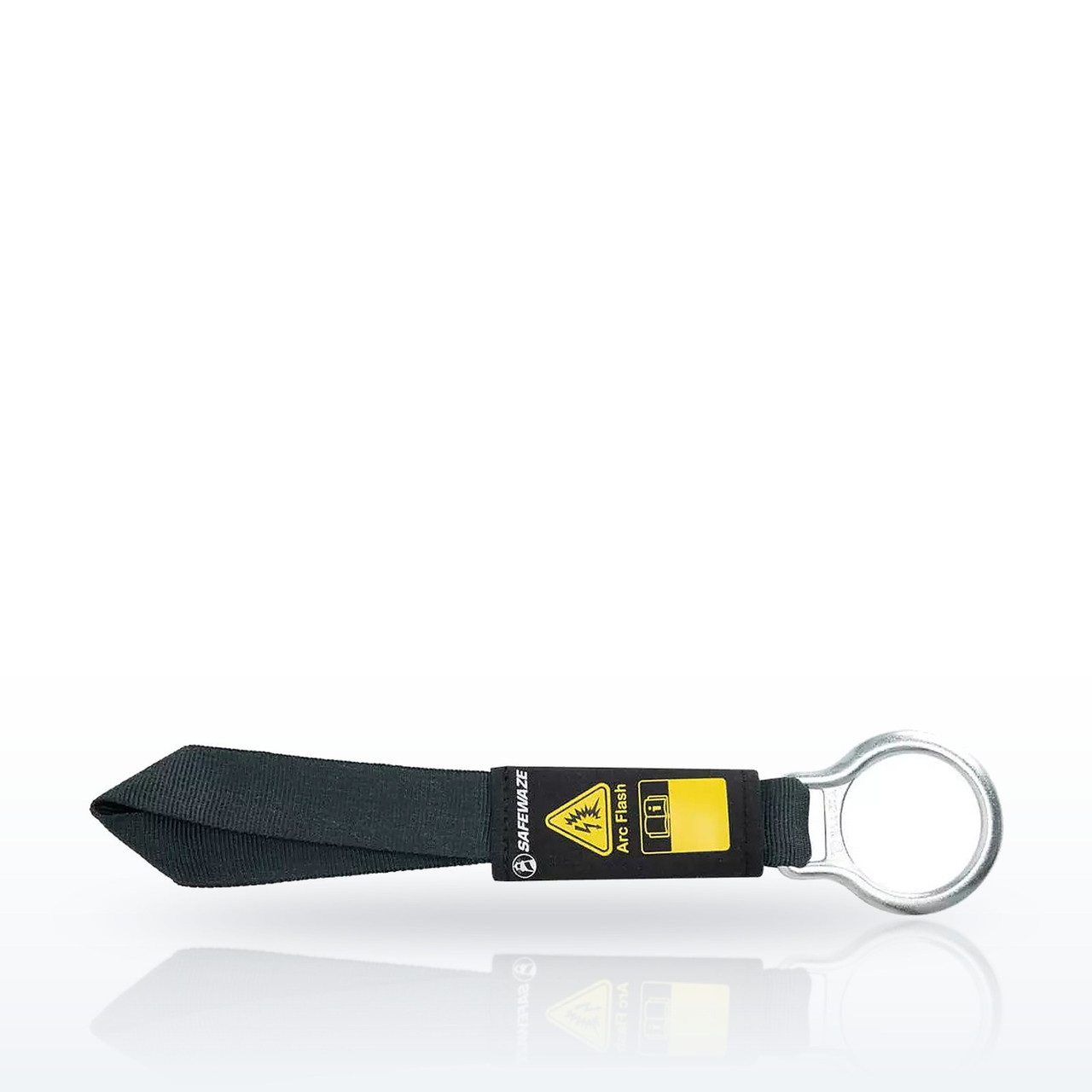
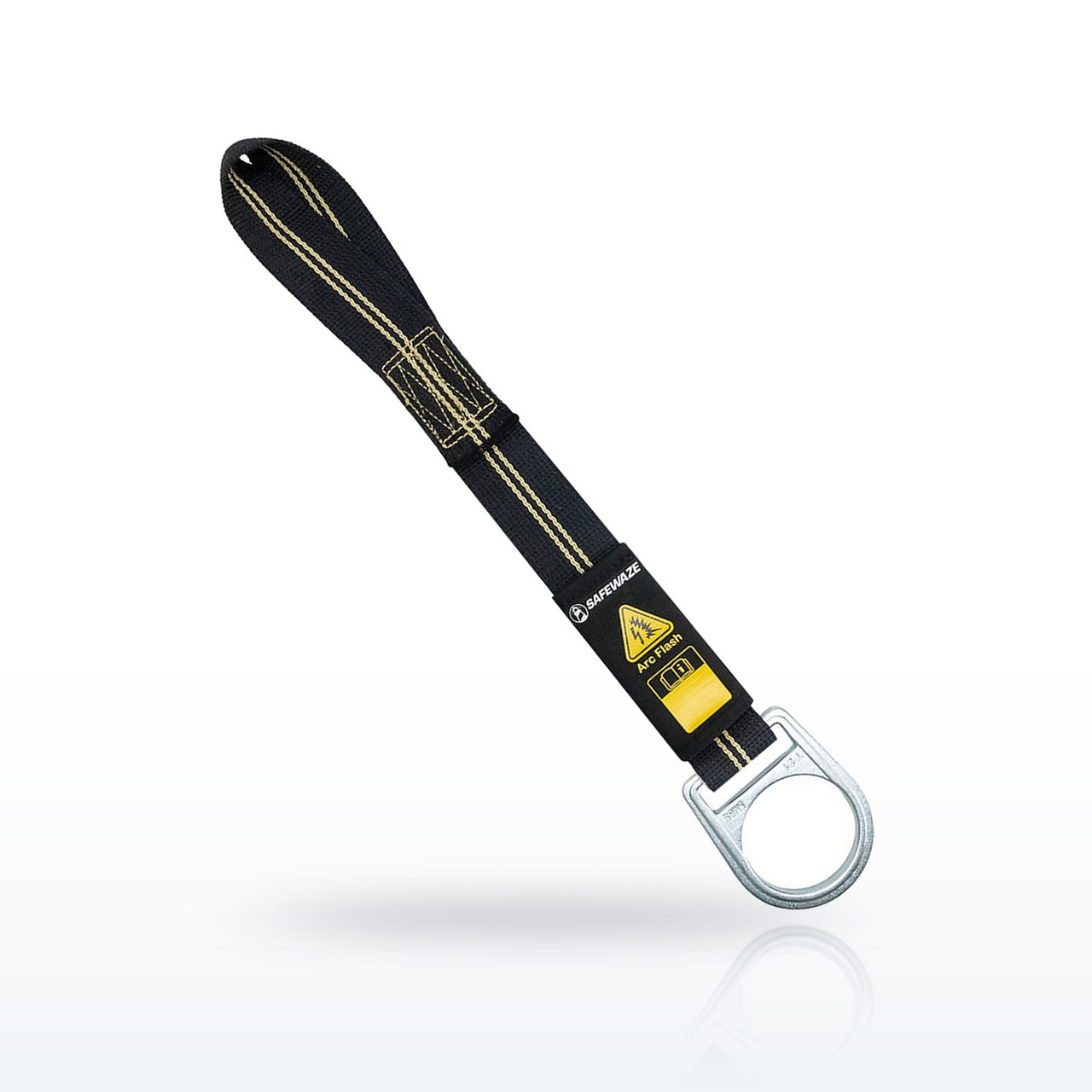
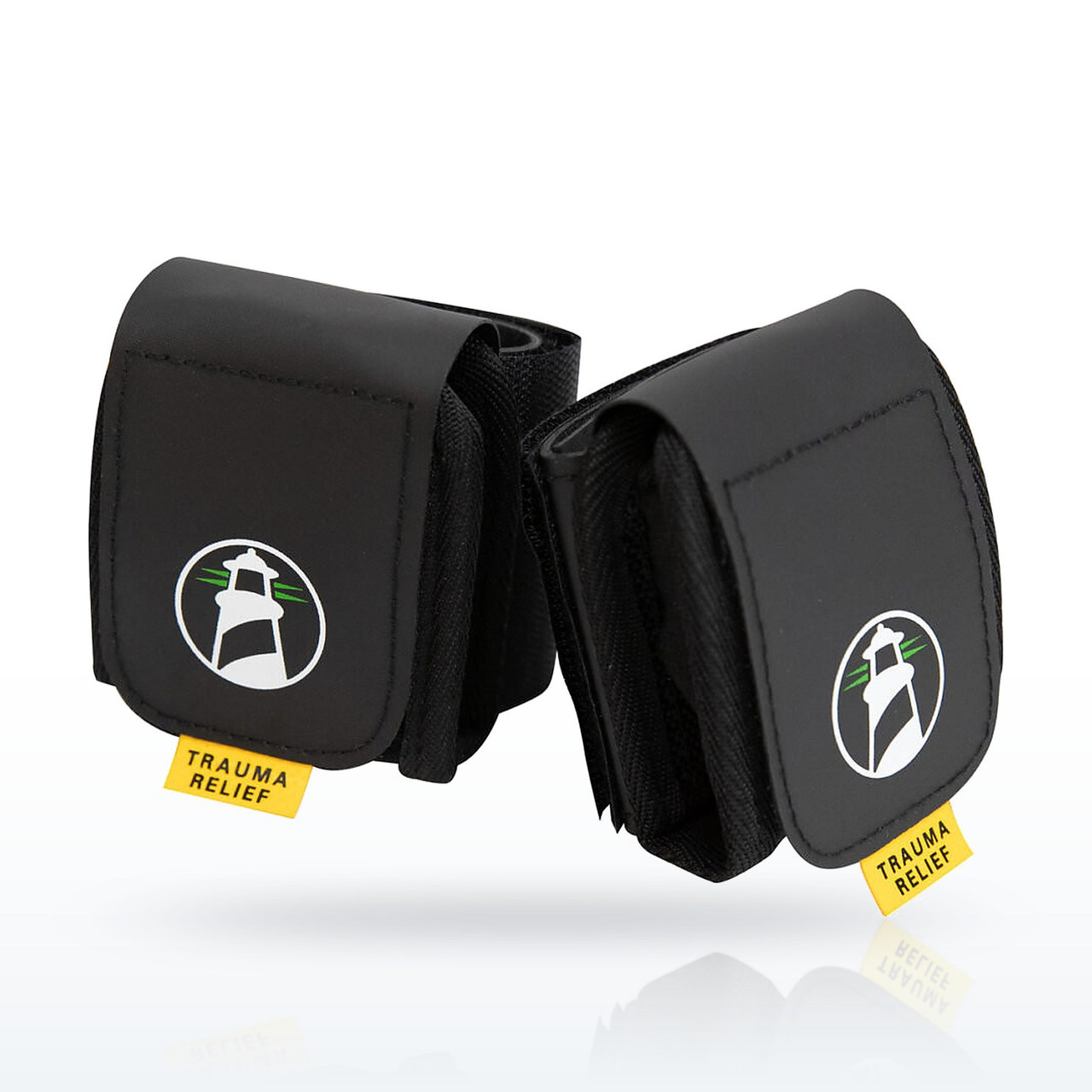
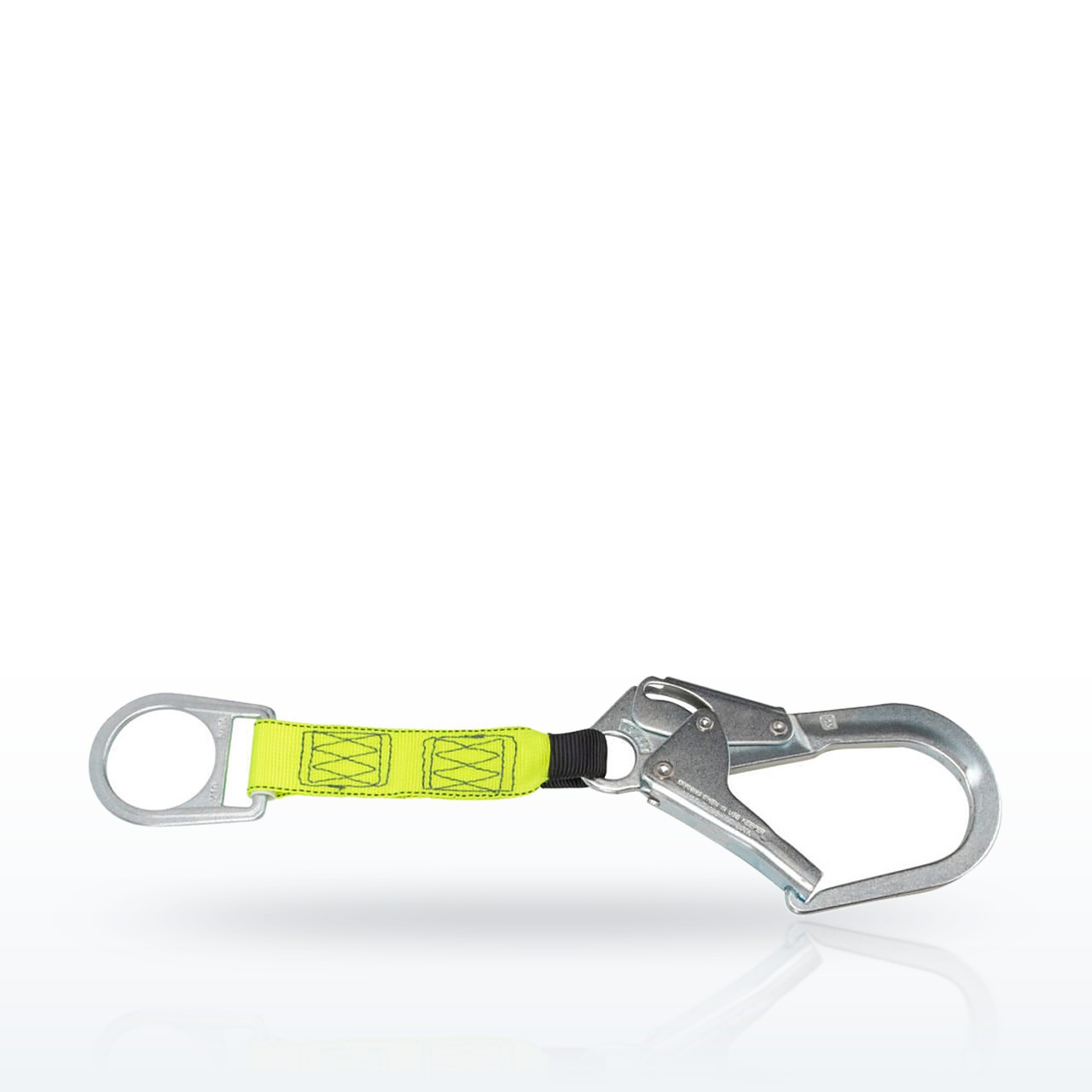
More: every harness accessory.
Source: the manufacturers' product pages and technical data sheets (Safewaze, FallTech, Miller, DBI-SALA) as reproduced on each product page; the standards shown are the manufacturers' own statements.
Guides that go further
Which standard must a full-body harness meet · What are the D-rings on a harness for · How to put on a safety harness and check the fit · How often must a harness be inspected, and what to look for · How long is a safety harness good for · What are the types of safety harnesses · What is suspension trauma, and what are trauma relief straps for · OSHA safety harness requirements · The Z359 Fall Protection Code explained.
ANSI/ASSP Z359.11 Full Body Harnesses questions
Which standard must a full-body harness meet? Legally, 29 CFR 1910.140 or 1926.502(d): a full body harness with the arrest attachment at the back, no body belts for arrest, 5,000 pound D-rings proof tested to 3,600 pounds, inspected before use. Manufacturers additionally test to ANSI/ASSP Z359.11-2021 (and CSA Z259.10 or EN 361 for other markets, ASTM F887 for arc flash), and print those on the label; Z359.11 is the one US buyers specify.
What are the OSHA harness requirements? From 1910.140 and 1926.502(d): a full body harness, attached at the center of the back near shoulder level or above the head, D-rings of 5,000 pounds proof tested to 3,600, used in a system that limits arresting force to 1,800 pounds and free fall to 6 feet, inspected before each use and removed after a fall. OSHA names no ANSI edition; Z359.11 is the consensus standard the manufacturers add.
What is the weight limit on a safety harness? A Z359.11 harness is labeled for users of 130 to 310 pounds including clothing and tools, the Code's capacity range; OSHA's Appendix D uses the same 310 pound figure. Some manufacturers test and label heavier capacities (for example 420 pounds) to the OSHA criteria and say so on the label; the whole system (lanyard, SRL, anchor) must carry the same capacity.
What is each D-ring on a harness for? Under Z359.11 as the manufacturers label it: the dorsal (back) D-ring for fall arrest; the sternal (chest) D-ring for ladder climbing systems and arrest with free fall under 2 feet; the frontal D-ring for rope access, rescue and positioning; shoulder D-rings, used together, for confined space retrieval; and hip (side) D-rings for positioning and restraint only, never arrest.
How often should a harness be inspected? Before each use by the wearer under 1910.140(c)(18) and 1926.502(d)(21), and at least annually by a competent person under the Z359 Code and the manufacturer's instructions, with the inspection recorded on the label or log; any harness that has arrested a fall or shows a deployed impact indicator is removed from service.
Can a body belt be used instead of a harness? Not for fall arrest: 1926.502(d)(17) has prohibited it since 1998 and 1910.140(c)(21) says the same for general industry. A body belt is a positioning and restraint device under 1910.140(e) and 1926.502(e), and Z359.11 does not cover it (Z359.3 does).
The ratings, test results and standards shown here are the manufacturers' published values, reproduced as published. Nothing on this page is a recommendation by Bayshore Safety that any product is suitable for a particular task, hazard or workplace. Selecting safety products and protective equipment is the responsibility of the end user and the employer, based on their own hazard assessment and the regulations that apply to their work. Confirm every value on the manufacturer's own documentation before use.