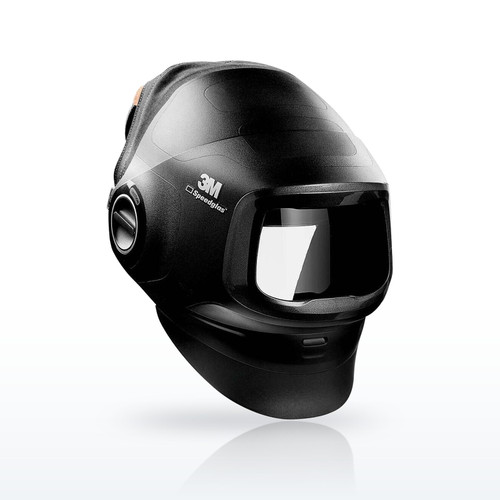
Welding Helmets
Auto-darkening and passive welding helmets, hoods, lenses and cover plates from 3M Speedglas, Miller, Lincoln, Jackson and Best Welds. Shade range and viewing area are in the name.
In this category
204 products from 3M, Jackson Safety, Miller Electric, Fibre-Metal, Lincoln Electric and 14 more brands. Type: Passive Welding Helmet (12), Outside Protection Plate (3), Inside Protection Plate (3), Replacement Headgear (3), Headgear (3), Welding Helmet Variable ADF (3) and 29 more. Material: Polycarbonate (45), Nylon (8), Thermoplastic (4), Leather (4), Glass (4), Flame-Retardant Fabric (3) and 14 more. Sold by the pack (23), by the case (8), by the bag (4).
Brands in this category: 3M (48) · Jackson Safety (36) · Miller Electric (34) · Fibre-Metal (27) · Lincoln Electric (20) · Best Welds (9) · North (6) · Optrel (5) · Sellstrom (3) · Studson (3) · PIP (2) · Dynaflux (2) · Dynamic (2) · RPB Safety (2) · Anchor Brand (1) · Draeger (1) · Harris Product Group (1) · MSA (1) · Victor (1)
Browse by type
Welding Lenses & Cover Plates (58)
What the rules say about welding helmets
OSHA 1910.252 Welding, Cutting and Brazing, Protection of Personnel: what it requires and the equipment it names: 29 CFR 1910.252(b)(2) requires helmets or hand shields during all arc welding and arc cutting (except submerged arc), with proper eye protection for helpers, goggles or other suitable eye protection for all gas welding and oxygen cutting, transparent face shields or goggles for resistance welding, and goggles where needed for brazing; the helmets, shields and goggles must insulate against heat and electricity, resist flame, protect the face, neck and ears from the arc, carry easily removed filter and cover plates, and have lenses marked with the source and shade. OSHA 1926.102 Eye and Face Protection (Construction): what it requires and the equipment it names: 29 CFR 1926.102 requires each affected construction employee to use appropriate eye or face protection when exposed to flying particles, molten metal, liquid chemicals, acids or caustic liquids, chemical gases or vapors, or potentially injurious light radiation; side protection against flying objects; eye protection that incorporates or fits over prescription lenses; and protectors marked with the manufacturer that are protective, reasonably comfortable, snug, durable, disinfectable and cleanable. ANSI/ISEA Z87.1 Occupational Eye and Face Protection: what it requires and the equipment it names: ANSI/ISEA Z87.1 is the American National Standard for occupational and educational personal eye and face protection devices. OSHA requires protectors built to it: 29 CFR 1910.133(b) and 1926.102(b) name the 2010, 2003 and 1989 editions, and the current edition (manufacturers now mark to Z87.1-2020 and the 2025 revision) is accepted under OSHA's equivalence clause because each revision tests at least as hard. Every rule page lists the equipment the rule names with the products we carry for it; the safety rules index has them all.
Guides for welding helmets
What shade lens for MIG, TIG, stick and plasma cutting? The OSHA welding lens shade chart · How does an auto-darkening welding helmet work, and what do the ratings mean? · What PPE does OSHA require for welding? 1910.252 explained · Is welding dangerous? The hazards OSHA names, and the PPE that addresses each one · Respirators for welding fumes: what OSHA and NIOSH require · What toxic fumes come from welding stainless steel, and what protects you?
Welding Helmets questions
What is the hardest welding to learn? The process descriptions on this page explain why TIG is usually named: it needs both hands (torch and filler rod) and a foot pedal, a steady arc length on a tungsten that must not touch the puddle, and clean metal. Stick asks for arc control on a burning rod and MIG is the fastest to learn because the machine feeds the wire; the PPE for each is in the cards above. More in the guide: MIG vs stick vs TIG welding: what each process is, and what PPE each one needs
Why do welders lose their eyesight? Arc eye (photokeratitis) is the ultraviolet burn to the cornea from looking at an arc without a filter; it is painful, temporary and preventable, and repeated UV and infrared exposure over a career raises the risk of cataracts, which is why 1910.252(b)(2) requires a filter lens of the shade in its table for the welder and eye protection for everyone else exposed to the arc. A filter of the right shade stops both; the shade chart on this page and the lens shade guide give the number for each process. More in the guide: Is welding dangerous? The hazards OSHA names, and the PPE that addresses each one
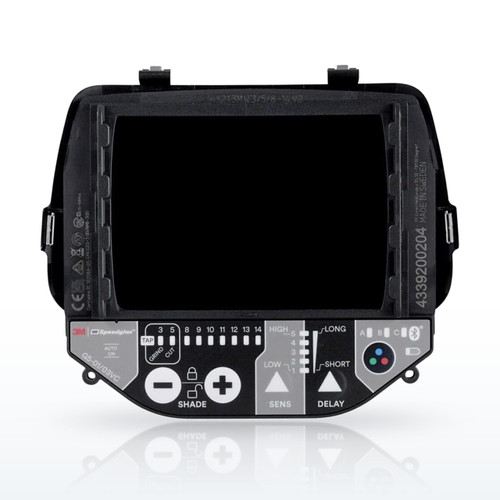
What is the helmet that welders wear? A welding helmet: a shell that covers the face and neck with a window holding a filter lens, either a fixed passive shade plate or the auto-darkening filter this page describes. OSHA 1910.252(b)(2) requires helmets or hand shields for arc welding with the filter shade from its table, and the shell and lens must meet ANSI Z87.1. Fibre-Metal's Pipeliner and Tigerhood are the fixed-shade shells on this site; the auto-darkening models list their shade range, switching time and sensors on the product page. A hard hat adapter lets the helmet mount on a cap-style hard hat where head protection is also required. More in the guide: How does an auto-darkening welding helmet work, and what do the ratings mean?
Do you have to wear safety glasses under a welding helmet? Where chips, slag or grinding dust can fly, yes: the helmet has no side protection, and OSHA requires side protection for flying-object hazards. OSHA’s guidance lists welding helmets as worn over primary eye protection. (1910.133(a)(2); Appendix B Note 9.) More in the guide: How does an auto-darkening welding helmet work, and what do the ratings mean?
What is the purpose of the filter lens in a welding helmet? To cut the arc's ultraviolet, visible and infrared radiation to a level the eye can take: the W-marked shade plate or auto-darkening filter in the helmet window is the filter 1910.252(b)(2) requires, with the shade number from OSHA's table (10 to 14 for arc welding by process and electrode size). The shade 3 and shade 5 safety glasses on this page are for torch brazing and light cutting, not for arc welding; the welding shade chart guide gives the numbers. More in the guide: Safety glasses lens tints explained: clear, gray, amber, indoor/outdoor, mirror and shade, and the Z87.1 marks that go with them
Do welders wear hard hats? Where the site requires head protection, yes: the welding helmet mounts on a cap-style hard hat with an adapter, which is one reason welders wear the cap style rather than the full brim. Where there is no falling-object hazard the welding helmet alone is the head covering, and a leather or FR cap under it keeps sparks off the hair. More in the guide: Full-brim vs cap-style hard hats
Studson series
Studson Face Shields and Mounts.
Jackson Safety series
Jackson Safety Huntsman welding helmets, Jackson Safety NexGen welding helmets, Jackson Safety Insight welding helmets, Jackson Safety TrueSight II welding helmets, Jackson Safety Element welding helmets, Jackson Safety HSL passive welding helmets, Jackson Safety HLX 100 welding helmets, Jackson Safety welding helmet safety plates, Jackson Safety 370 Speed Dial headgear, Jackson Safety HHIS hard hat interchange, Jackson Safety face shield headgear and cap adapters, Jackson Safety Auto-darkening filters, Jackson Safety Welding filter plates and cover plates, Jackson Safety welding helmet parts.
MSA series
3M series
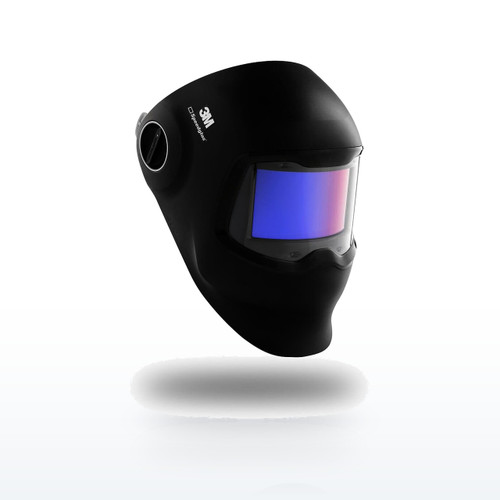
3M GoggleGear 500 Series, 3M Speedglas 100, 3M Speedglas 9000, 3M Speedglas 9100, 3M Speedglas G5-02, 3M Adflo Welding PAPR, 3M Speedglas G5-01 and G5-03 Pro Air Welding Helmets, 3M Versaflo S-Series and M-Series Headtops, 3M Versaflo TR-300+ PAPR.
Sellstrom series
Sellstrom 290 passive welding helmets, Sellstrom Advantage and Premium welding helmets, Sellstrom goggles and glasses, Sellstrom Welding filter plates and cover plates.
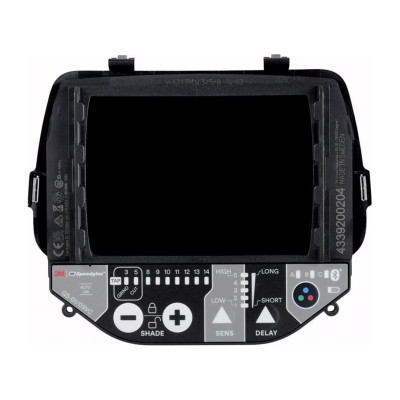 Welding Lenses
-
-
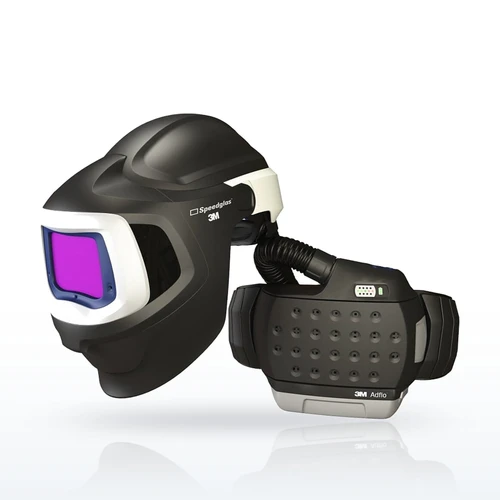 3M™
3M 37-1101-30iSW Speedglas 9100 MP Welding Helmet with 9100XXi ADF and Adflo PAPR
Item # 7100260623$3,135.08 -
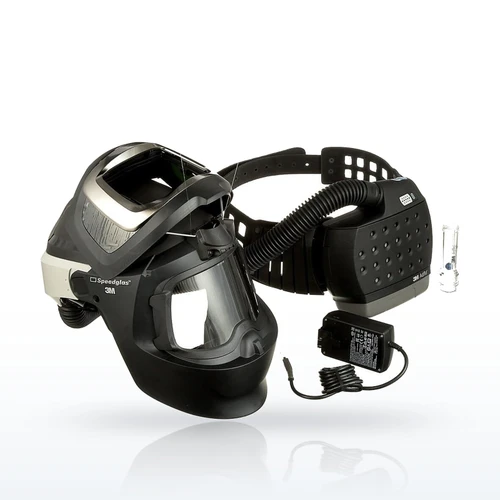 3M™
3M 37-1101-00SW Speedglas 9100 MP Welding Helmet with Adflo PAPR, No ADF
Item # 7100262933$2,776.58 -
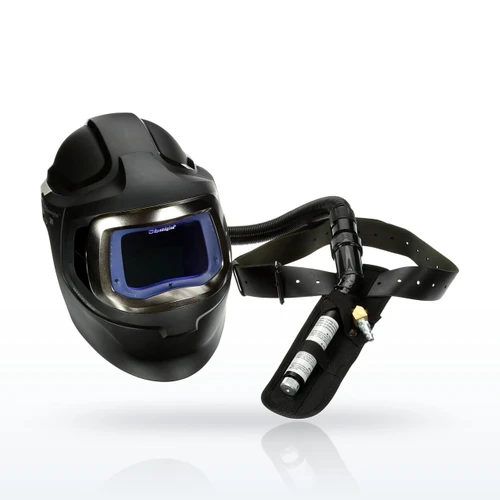 3M™
3M 27-5702-30iSW Speedglas 9100 MP Supplied Air Welding Helmet with V-100 Valve
Item # 7100194535$2,594.48 -

-

-

-
-

-
-

-

-

-
-
 3M™
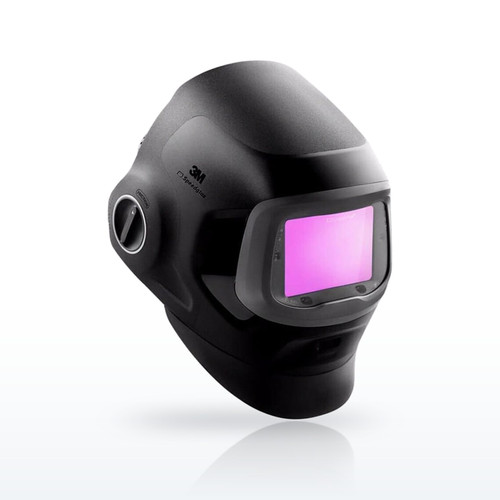
3M 46-1101-30TW Speedglas G5-01 Heavy-Duty Welding Helmet with G5TW ADF and Adflo PAPR
Item # 7100349662$2,592.77 -
 3M™
3M 46-1101-00 Speedglas G5-01 Heavy-Duty Welding Helmet with Adflo PAPR, No ADF
Item # 7100260394$2,179.58 -
 3M™
3M G5-03 Hard Hat Accessories, Speedglas Hard Hat Adapter for SecureFit
Item # 7100312232$50.24 -
-
-
-

-
 3M™
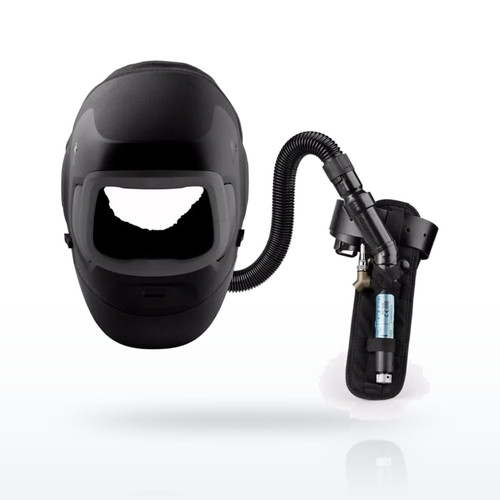
3M 45-5702-00 Speedglas G5-03 Pro Air Supplied Air Welding Helmet with V-100 Valve
Item # 7100311731$1,279.44 -
 3M™
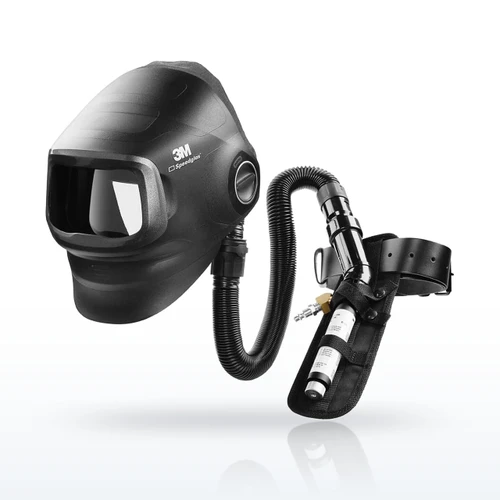
3M 46-5702-00 Speedglas G5-01 Supplied Air Welding Helmet with V-100 Valve, No ADF
Item # 7100349755$1,574.95 -